Dong Nai requires 1.5 billion USD for transport infrastructure by 2020

The southern province of Dong Nai has announced that it needs a total of 55.4 trillion VND (2.37 billion USD) to develop its infrastructure during the 2018-2020 period.
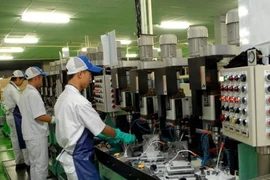
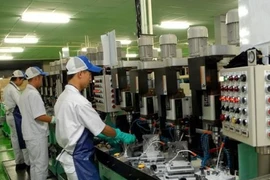
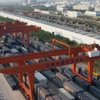
Dong Nai requires 1.5 billion USD for transport infrastructure by 2020 ảnh 1Illustrative image (Source: baochinhphu.vn)

Dong Nai (VNA) – The southern province of Dong Nai has announcedthat it needs a total of 55.4 trillion VND (2.37 billion USD) to develop its infrastructureduring the 2018-2020 period.

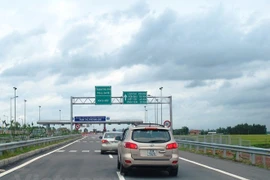
Of the total, 34.9 trillion VND (1.5 billion USD) will beinvested in transport infrastructure, according to the provincial PartyCommittee.

Specifically, construction on a number of roads connectingDong Nai with other localities in the key southern economic region will becarried out, including the Ben Luc-Long Thanh highway, the Dau Giay-Phan Thiethighway, the Dau Giay-Da Lat highway, and the Tan Van-Nhon Trach belt road 3.

In addition, the province is working with related offices atthe central level to reach a consensus on the implementation of projects on ahighway linking Bien Hoa with Vung Tau of the southern province of Ba Ria-VungTau, as well as a metro line connecting Bien Hoa with Ho Chi Minh City.

For roads managed by the province, it will give priority toimportant ones such as 25B Nhon Trach road, Road No.768 and Road No.319 whichlink up to the Long Thanh-Dau Giay highway, and a road leading to Phuoc Anport.

Along with upgrading roads, from now until 2020, Dong Naiwill focus on developing the port system, including Phuoc An and Go Dau ports, aswell as several inland container depots and logistics centres.

The local Party Committee expects that these infrastructurefacilities, once completed, will help create a breakthrough for the province’ssocio-economic development. –VNA 
VNA

See more

Elderly people take part in activities at a daytime care centre for senior citizens. (Photo: VNA)

Making breakthroughs via policies for older persons

The Politburo’s Resolution No. 72-NQ/TW on groundbreaking solutions to strengthen the protection, care and improvement of public health sets the target of raising average life expectancy to 75.5 years by 2030, with at least 68 years lived in good health.

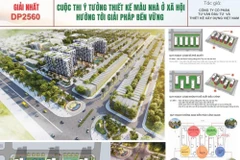
One of the first-prize winning entries in the “Social housing prototype design ideas – Towards sustainable solutions” contest. (Photo courtesy of the organising board)

Highly applicable social housing design ideas honoured

According to the organising board, the award-winning entries will provide an important foundation for the Ministry of Construction to continue research and develop prototype and typical designs for broad use in localities.

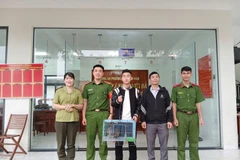
Trinh Quoc Phu (centre) voluntarily hands over a rare forest night heron to the police and authorities of Quy Nhon Nam ward. (Photo: baogialai.com.vn)

Gia Lai rangers receive rare forest night heron

The handover reflects the growing awareness and sense of responsibility among local residents in protecting wildlife, contributing to law compliance and biodiversity conservation efforts in the area.

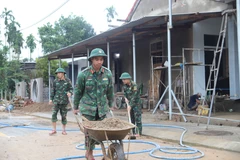
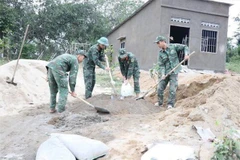
Hue officers, soldiers and local residents in the central city of Hue are working at full speed to complete solid new homes for natural disaster-hit families (Photo: VNA)

Swift campaign brings Tet homes to storm-hit residents in Hue

Quang Trung Campaign is not merely a task, but a political responsibility and a heartfelt commitment to the people. The guiding principle is to act as swiftly and decisively as possible, ensuring no family is left without shelter, especially in the days leading up to Tet, said Major General Nguyen Thanh Tuan, Director of the Hue Department of Public Security.

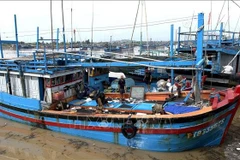
Fishermen in the Dong Tac fishery port of Phu Yen ward, Dak Lak province, prepare for a new trip after storm. (Photo: VNA)

Dak Lak supports fishermen in occupational transition

As of December 5, 2025, Dak Lak had 2,556 fishing vessels, with an annual marine catch of around 68,000 tonnes. An estimated 2,900 workers are in need of occupational transition, as most have limited educational backgrounds, unstable incomes and are increasingly ageing.