Hanoi (VNA) – With 16.5 million older persons, accounting for around 16% of the population, Vietnam has made a strong shift from awareness to action, turning the challenges of population ageing into opportunities to improve its healthcare and comprehensive social security systems.
Refining policies, expanding social protection
According to the latest statistics, the country’s average life expectancy has reached 74.7 years, with healthy life expectancy standing at 65.4 years.
The Politburo’s Resolution No. 72-NQ/TW on groundbreaking solutions to strengthen the protection, care and improvement of public health sets the target of raising average life expectancy to 75.5 years by 2030, with at least 68 years lived in good health. From 2026, citizens will be entitled to free annual health check-ups or screenings and the establishment of electronic health records for lifecycle health management, gradually easing the burden of medical costs. By 2030, basic hospital fees are expected to be waived within the scope of health insurance benefits, according to a phased roadmap.
Notably, from July 1, 2025, people aged 75 and above have officially become eligible for a social pension. Currently, more than 2.4 million older persons nationwide receive monthly social allowances and social pensions, with total State budget spending nearing 7 trillion VND (266.46 million USD). This figure is projected to rise to around 3 million beneficiaries in 2026.
On February 21, 2025, the Prime Minister issued Decision No. 383/QD-TTg approving the national strategy on the elderly to 2035, with a vision to 2045. This marks the first time the term “silver economy” has been officially included in a State administrative document, underscoring a strategic orientation towards harnessing the potential and contributions of the group to the economy.
The 2025 Law on Employment, effective from January 1, 2026, clearly stipulates priority policies to support employment for older workers, encouraging their participation in public employment programmes linked to socio-economic development projects, including access to start-up loans, the maintenance and expansion of production and business activities, and vocational training and skills upgrading.
Strengthening healthcare system, improving access to services
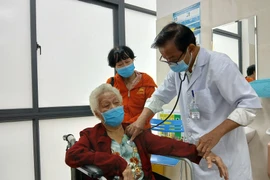
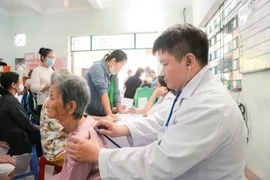
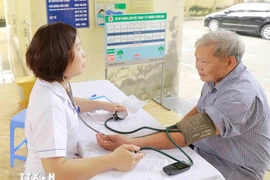
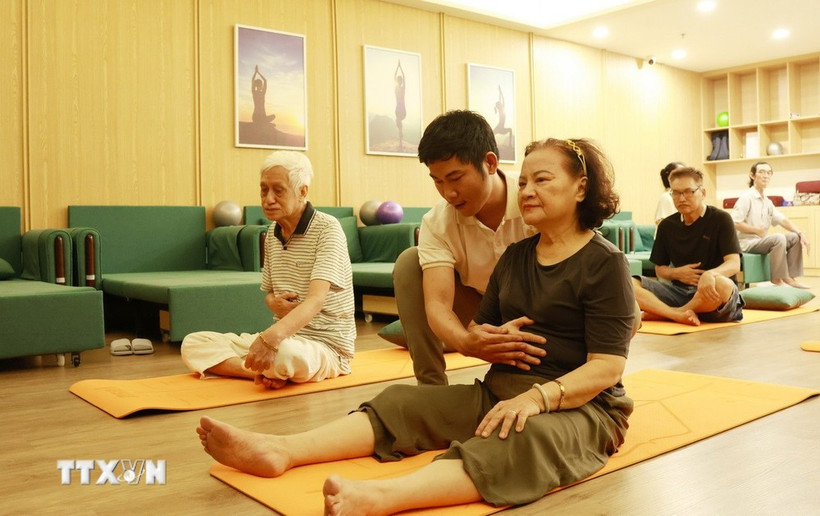
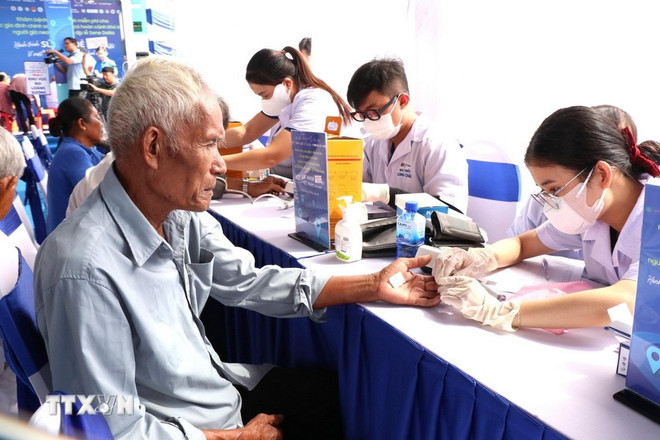
Alongside policy refinement, healthcare services for the elderly continue to be strengthened. Nationwide, there are currently three specialised geriatric hospitals and around 110 central- and provincial-level hospitals with geriatric departments, supported by nearly 1,800 healthcare workers formally trained in the field. To date, 80% of the aged group have had basic health management records established, and more than 69% receive at least one health check-up annually.
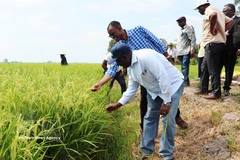
Older persons are no longer viewed as a “burden”; instead, they are increasingly becoming a new driving force for social development through the “silver economy” and community activities. Across the country, more than 95,000 of the group own farms or production and business establishments, while 1.1 million are involved in crime prevention and the maintenance of public order at the grassroots level.
The network of intergenerational self-help clubs continues to expand, with more than 9,000 clubs and 330,000 members nationwide.
Diversifying care models, creating jobs
The United Nations Population Fund (UNFPA) recommended Vietnam to develop a strategy to diversify care models at home, in the community and in institutional settings, ensuring flexible access to services tailored to older persons’ health conditions and financial capacities.
UNFPA also noted the need for the country to further refine financial mechanisms, encourage private investment, promote public-private partnerships, and narrow gender gaps in care work, with a view to building an active and sustainable ageing society.
According to Dr Phan Van Hung, Vice President of the Vietnam Association of the Elderly, the potential of the “silver economy” has yet to be fully tapped, despite the steadily growing demand and market size of the older population. A comprehensive recognition of both challenges and opportunities in this context will provide an important basis for policymaking, while encouraging economic stakeholders to invest in sectors that better meet the needs of older persons and enhance their role in the country’s next stage of development./.