Hanoi (VNA) - Population ageing and healthcare for older people were among the key issues discussed by National Assembly deputies during the morning session on December 2, as they debated a draft Resolution on breakthrough policy mechanisms for protecting, caring for and improving public health, as well as the investment policy for the National Target Programme on healthcare, population and development for the 2026–2035 period.
Highlighting that Vietnam will officially enter the ageing-society stage by 2036, while public resources remain constrained, deputies said it is essential to put in place mechanisms to mobilise social resources to jointly participate in elderly care.
According to Tran Thi Hien, a deputy from Ninh Binh province, Viet Nam entered the population ageing phase in 2011, is projected to become an ageing society by 2036, and a super-aged society by 2049. This trend will place significant pressure on the State budget and social resources for healthcare, social security and infrastructure for older people, particularly the system of professional nursing homes. With limited public investment, accelerating socialisation and attracting private-sector investment into elderly care services has become an urgent requirement.
However, she noted that the draft Resolution on breakthrough mechanisms and policies for public health protection and care has yet to clearly identify breakthrough solutions to address bottlenecks in implementing Resolution 72 on developing elderly care facilities and encouraging private-sector participation. Within the national target programme, although Project 4 focuses on developing social assistance facilities, many aspects remain misaligned with planning requirements and policies encouraging private investment in elderly care services.
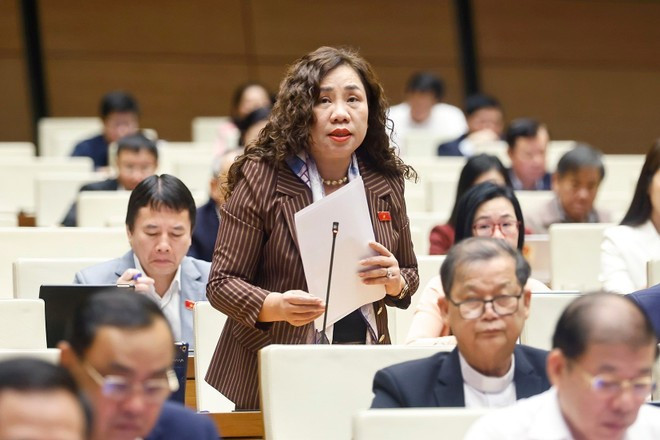
Hien pointed out that, according to the programme’s annex, existing social protection facilities currently meet only 30% of demand. Public facilities include just 46 elderly care institutions out of a total of 425 social protection establishments nationwide, accounting for nearly 11%, while many localities still lack specialised facilities for older people.
Sub-project 1 under Project 4 aims to build 60 new facilities by 2030 and 70 by 2035. However, under the national planning for the social assistance network, at least 90 elderly care facilities (both public and non-public) will be needed by 2030. Hien therefore argued that breakthrough mechanisms are required to mobilise social resources to develop an additional 30 facilities over the next five years.
Regarding investment mobilisation, the deputy noted that legally mobilised non-budget capital currently stands at just 594 billion VND, or 0.67% of total funding, which is far too low to meet actual needs.
To unlock social resources, she said, bottlenecks related to land and finance must be addressed. In particular, nursing homes providing long-term care and rehabilitation services for older people are not yet recognised as medical facilities and therefore do not qualify for land-use incentives.
Without suitable cleared land allocated by local authorities, it will be difficult to attract investors. Professional nursing homes require large initial capital, long payback periods and specialised equipment, making it essential to provide preferential credit policies, interest-rate support and corporate income tax incentives.
Hien proposed recognising nursing homes that provide medical examination, long-term care and rehabilitation as healthcare facilities, enabling them to access incentives related to land, taxation and finance. She also called for additional research activities to refine mechanisms for mobilising social resources, improving technical standards, and piloting semi-residential care models for older people.
Sharing similar concerns, Nguyen Van Manh, a deputy from Vinh Phuc province, noted that Viet Nam is among the countries with the fastest population ageing rates in the world. The Party has issued several resolutions, including Resolution 21 and Resolution 72, which call for increasing the fertility rate, reducing gender imbalance at birth, adapting to population ageing and improving population quality.
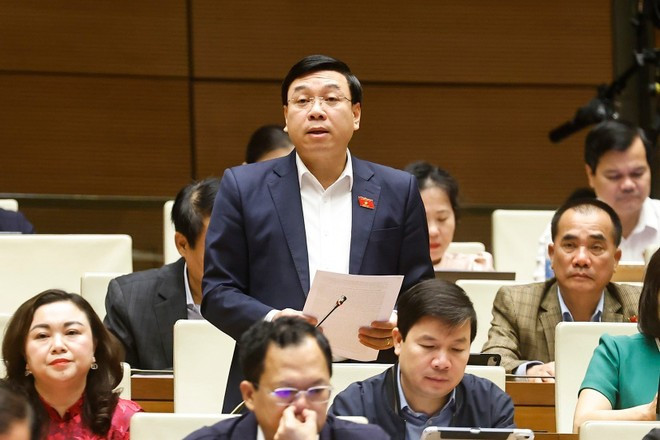
However, he observed that investment levels for these priorities under the national target programme remain disproportionate.
Manh therefore proposed increasing investment in population and development to ensure the effective implementation of Resolution 20, Conclusion 149 and Resolution 72. He noted that Resolution 72 requires each province or city to have at least one geriatric hospital or a general hospital with a geriatric department, but this has not yet been clearly incorporated into the national target programme.
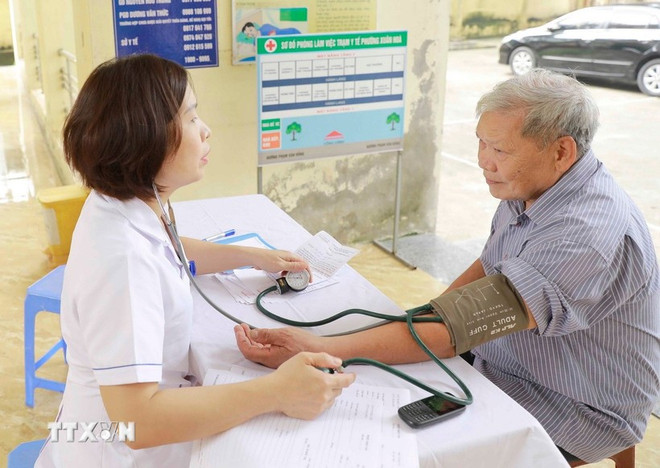
Addressing elderly care from a social security perspective, Duong Khac Mai, a deputy from Lam Dong province, focused on the health insurance system for older people. While agreeing with the policy of covering 100% of medical examination and treatment costs for those aged 75 and above, he suggested lowering the threshold to 70 to better reflect the health realities of Vietnamese people, whose healthy life expectancy is only around 68 years./.