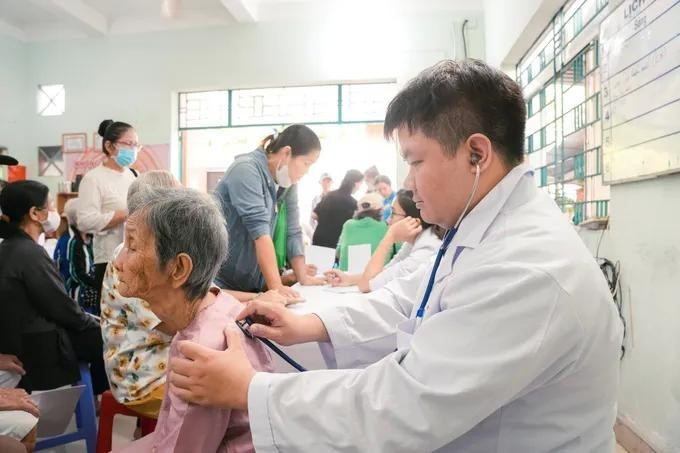
HCM City (VNS/VNA) - Ho Chi Minh City is entering a period of rapid population ageing, creating an urgent need to strengthen and expand its long-term care system for the elderly.
The issue was highlighted by experts and policymakers at a consultation workshop on developing the city’s elderly care network, organised by the city’s Department of Health on December 26.
According to Nguyen Tang Minh, Deputy Director of the Department of Health, HCM City officially entered the ageing phase in 2017, when the proportion of residents aged 60 and above exceeded the threshold that defines an ageing society under national criteria.
As of November 30, the city had around 1.6 million residents aged 60 and above, accounting for 11% of its population — the highest number of elderly nationwide.
The pace of ageing has been faster than projected, placing growing pressure on the healthcare system and social welfare services.
Associate Professor Tang Chi Thuong, Director of the Department of Health, said that demand of long-term care for the elderly is rising sharply, but the city currently has only 36 elderly care facilities, providing services to over 3,500 people.
He noted that the existing care system remains limited in both scale and diversity, unable to meet the market's demand.
Services are largely concentrated in residential nursing homes, while flexible models such as home-based care, day-care centres, assisted living, palliative care and end-of-life services are still underdeveloped.
Uneven distribution of facilities, high service costs and a lack of support mechanisms have also made access difficult, particularly for elderly people on low and middle incomes.
Human resources pose another major challenge. According to the Vietnam Nursing Association, around 70% of older people suffer from two or more illinesses. While life expectancy is increasing, many elderly citizens spend their later years living with illness, driving up demand for long-term care.
Meanwhile, community- and home-based caregivers remain in short supply and often lack formal training.
Experts therefore agreed that the city should adopt a multi-tier long-term care ecosystem, rather than rely on fragmented solutions.
Such a system would be planned across multiple service levels, from home and community care to nursing homes and end-of-life care, ensuring that elderly people receive appropriate support at the right time.
They also stressed the need to standardise service quality, develop clear standards for each type of care, and recognise elderly care as a specialised profession.
Closer integration between healthcare and social welfare, greater use of technology, a focus on home-based care and age-friendly infrastructure planning were among the key recommendations.
The Department of Health said it will work with relevant agencies to advise the municipal People’s Committee on developing a master plan for the city’s elderly care system for the 2025–2030 period and beyond.
The plan aims to build a connected, multi-tier long-term care ecosystem centred on the needs of older people in response to rapid population ageing and in support of the city’s sustainable development goals./.

Legislators seek breakthrough mechanisms to mobilise social resources for elderly care
Existing social protection facilities currently meet only about 30% of demand.