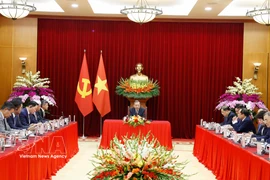
HCM City (VNA) – Commenting on the draft documents to be submitted to the 14th National Party Congress, trade union officials, members and workers in the southern region have emphasised the need to awaken internal strength and promote the mettle, intellect and pioneering role of the Vietnamese working class in the national industrialisation and modernisation process.
Affirming the role of the working class
Regarding Resolution No. 20-NQ/TW dated January 28, 2008 of the 10th Central Committee of the Communist Party of Vietnam on building the Vietnamese working class in the country’s national industrialisation and modernisation, Nguyen Kim Loan, Vice Chairwoman of the Ho Chi Minh City Federation of Labour, noted that after nearly two decades of implementation, the resolution has shown limitations due to the strong development of the Fourth Industrial Revolution. She said it is essential to issue a new resolution with more comprehensive thinking, aiming to develop a working class with high qualifications, industrial discipline, creativity and firm political will.
The official proposed that the State and socio-political organisations adopt coherent policies to develop the working class, expand Party and mass organisation networks in non-state and foreign-invested enterprises, and preserve its nature while ensuring comprehensive leadership.
Promoting the trade union’s role
Nguyen Phu Hoang, Chairman of the Lam Dong Federation of Labour, said the draft continues to affirm the working class as the leading revolutionary force. He suggested including a section on “Developing human resources and building the Vietnamese working class.”
Regarding the National Programme on Developing the Vietnamese Working Class for 2026–2035, Hoang stressed that the Vietnam Trade Union should serve as the main coordinating body. He proposed linking the development of the working class with economic restructuring, industrialisation, renewable energy expansion, and the digital and green economies, while supporting digital skills training for workers in industrial and economic zones.
Hoang also underlined the importance of “developing workers’ culture,” aimed at shaping Vietnamese citizens in the new era with ambition, discipline and social responsibility. The draft, he said, should clarify the trade union’s role in the social security system, particularly in caring for and protecting workers’ legitimate rights and interests, and in promoting grassroots democracy through social supervision and cricitism mechanisms.
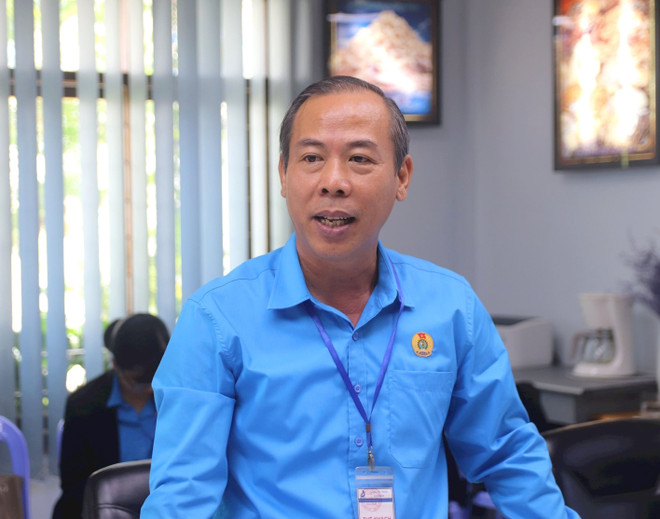
Sharing this view, Huynh Thi Tuyet Vui, Chairwoman of the Dong Thap Federation of Labour, proposed strengthening the trade union’s role within the alliance of workers, farmers and intellectuals, serving as a central force connecting social groups to form a strong bloc of unity.
Adapting to the digital era
Workers in southern provinces stressed the need to build the working class in line with economic restructuring and the changing labour environment in the digital age. Hoang said developing the working class must be a central task in national digital transformation, as workers are both beneficiaries and direct participants mastering technology to enhance productivity and competitiveness. He proposed renewing patriotic emulation movements towards “Creative Labour – Higher Productivity – Digital Application.”
He also recommended adding a direction on accelerating digital transformation within the Vietnam Fatherland Front and socio-political organisations, with the Vietnam Trade Union taking the lead in building a “digital trade union.” This, he noted, would enhance the representation and protection of workers in the digital era.
Similarly, Nguyen Huu Dai, head of the Information and Education Division of the Dong Nai Federation of Labour, praised the draft documents for reflecting aspirations for national development and integration. He noted that the working class plays a decisive role in economic growth and competitiveness while leading the implementation of the Party’s reform policies.
Dai proposed that the drafts include a more detailed assessment of the working class’s position and contributions, and underlined that building a modern working class must go hand in hand with digital transformation, improving welfares, digital skills and cultural life to foster creativity and integration among workers. /.