Brussels (VNA) - The EU-Vietnam Free Trade Agreement (EVFTA) holds multifaceted significance in strategic political and socio-economic terms for both sides, as it has further strengthened the strategic trust that has been built between Vietnam and the EU over the past 35 years and served as an important instrument for connecting the two continents, according to Vietnamese Deputy Minister of Foreign Affairs Nguyen Minh Hang.
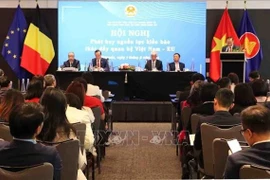
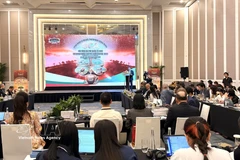
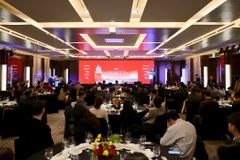
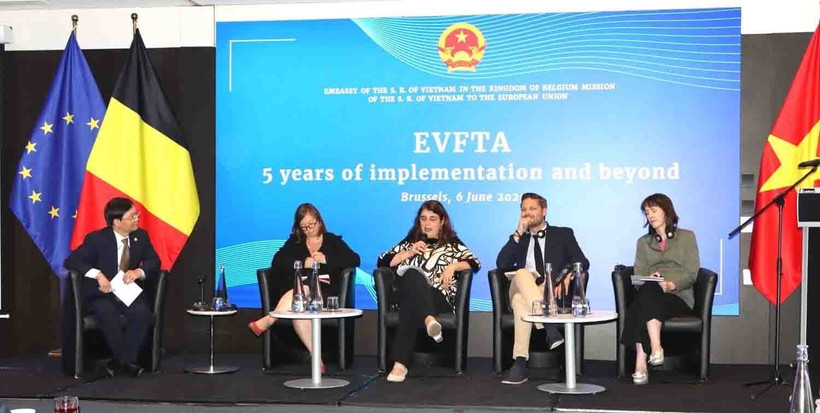
Addressing a seminar themed “EVFTA: 5 Years of Implementation and beyond,” held in Brussels on June 6 by the Vietnamese Embassy in Belgium and the Vietnamese Mission to the European Union, Hang said that the EVFTA is likened to a “modern expressway” that has strongly promoted trade relations between the two sides, and also helped enhance Vietnam’s position as an attractive investment destination in the region.
The commitments within the trade deal, particularly those related to intellectual property, the environment, labour, and sustainable development, have driven institutional reforms and the improvement of Vietnam’s legal system in line with international standards, thereby fostering a more transparent and open business environment, she added.
At the seminar, speakers discussed the impact of the agreement on both Vietnam and the EU, as well as the bilateral relations over the past five years, highlighting achievements, existing challenges, and lessons learned. They also assessed the evolving international and regional contexts and proposed several solutions to further enhance the effective implementation of the EVFTA in the next five-year period, from 2025 to 2030.
Nguyen Van Thao, Vietnamese Ambassador to Belgium and head of the Vietnamese Mission to the EU, emphasised that over the past five years, the EVFTA has proven to be a vital instrument for economic cooperation, especially in the context of major global upheavals that occurred shortly after the agreement came into effect, such as the COVID-19 pandemic and rising geopolitical tensions.
The deal has not only strongly boosted trade and investment relations between Vietnam and the EU but also contributed to mitigating disruptions in global supply chains. However, the ambassador also noted that, along with the positive outcomes achieved, the potential for bilateral cooperation, as well as the untapped opportunities within the EVFTA, remain substantial and should be further promoted in the coming period.
According to the diplomat, the economic structures of Vietnam and the EU are complementary rather than competitive, which helps expand the scope for cooperation, especially in a global context where supply chain diversification is increasingly essential.
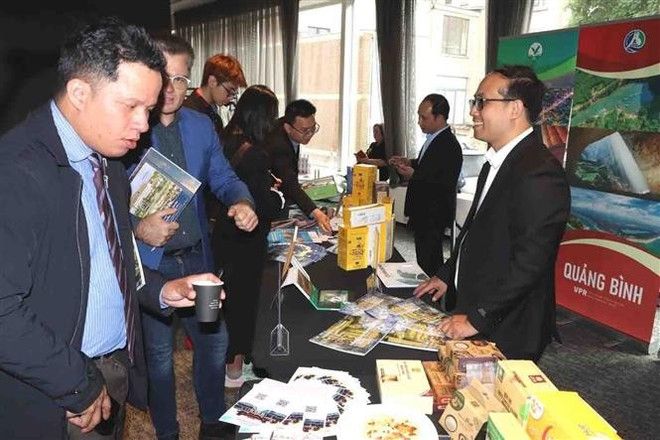
In addition, both sides have shown strong interest in and commitment to the bilateral relationship. The presence of over 1,400 EU enterprises operating in Vietnam, along with recent high-level visits from EU member states, underscores Vietnam’s growing importance in the EU’s regional strategy, he noted.
To fully capitalise on the above advantages, Vietnam and the EU need to focus on five strategic pillars of cooperation, the ambassador stated. The first pillar is a shared commitment to supporting a rules-based multilateral trading system that ensures fairness, transparency, and sustainability. The second involves joint efforts to diversify cooperation and international integration, with Vietnam currently being a party to 17 free trade agreements and playing a central role in the EU’s Indo-Pacific Strategy. The third focuses on enhancing cooperation in high value-added sectors such as science, technology, and innovation - areas where the EU has strengths and Vietnam has an urgent need for development. The fourth is institutional reform, infrastructure development, and human resources improvement, aimed at increasing Vietnam’s competitiveness and improving its investment environment. And the fifth is promoting EU investment, not only in terms of scale but also in depth, to strengthen economic ties and foster sustainable development.
Both Iuliu Winkler, Vice Chair of the European Parliament's Committee on International Trade and Rapporteur on Vietnam–EU trade relations, and Maria Martin-Prat De Abreu, Deputy Director-General for Trade and Economic Security at the European Commission's Directorate-General for Trade, affirmed that Vietnam and the EU currently share many common priorities and development orientations, particularly in areas such as green growth, enhancing competitiveness, and sustainable development, with a strong focus on high technology.
The EVFTA has not only brought bilateral benefits but also been considered one of the EU’s successful free trade agreements. While there are still some challenges and obstacles in the implementation process, the EU hopes that, based on the strong foundation of the existing partnership and the EVFTA, both sides will continue to expand cooperation, especially in trade and investment, they stated.
On the occasion of the 35th anniversary of diplomatic relations, the EU hopes to work with Vietnam toward upgrading the relationship to a Comprehensive Strategic Partnership, and also reaffirms its commitment to being a reliable partner, ready to closely cooperate with Vietnam to promote free trade and enhance the effective implementation of the EVFTA in the coming period./.