EVN submits two-component pricing model

Vietnam Electricity (EVN) has completed the project 'Developing a Two-Component Electricity Pricing System (Capacity Price and Energy Price) and Roadmap for Implementation in Vietnam’s Power Sector'.

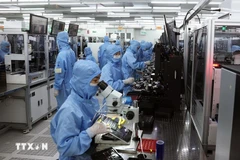
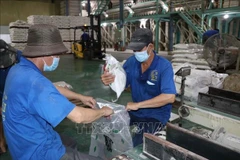
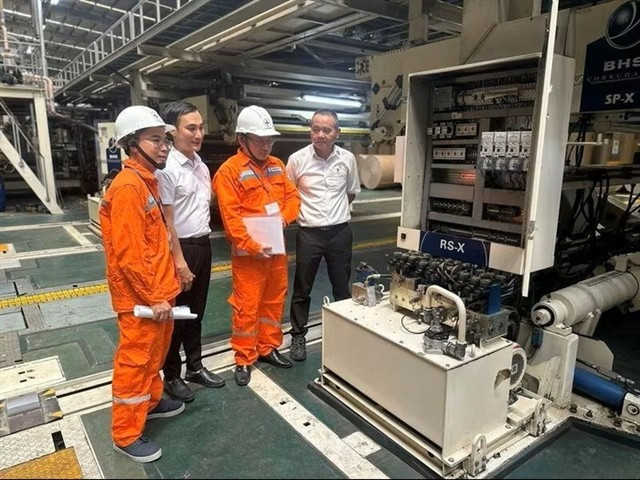
EVN engineers inspect electrical equipment at a factory in Hanoii (Photo: VNA)

Hanoi (VNS/VNA) - Following the direction of the Ministry of Industry and Trade, state utility Vietnam Electricity (EVN) has completed the project 'Developing a Two-Component Electricity Pricing System (Capacity Price and Energy Price) and Roadmap for Implementation in Vietnam’s Power Sector'.

It has now been submitted to the Ministry for review and approval to conduct a trial paper-based calculation from October 2025.

Under the plan, the pilot includes industrial customers with an average monthly electricity consumption of at least 200,000 kWh (based on the latest 12-month average), who buy power directly from EVN’s member units.

The paper-based simulation, using actual data, is a preparatory step towards implementing the two-component electricity pricing mechanism stipulated in Article 50 of the revised Electricity Law 2024.

It will gradually replace the existing one-component retail tariff structure, ensuring consistency with the technical infrastructure of the electricity sector, relevant legal frameworks, and consumers’ readiness to adapt to the new pricing model.

The two-component electricity tariff consists of a capacity price and an energy price. Accordingly, the customer’s electricity bill will include two parts: one for the maximum capacity used - reflecting the fixed costs of electricity supply - and one for the actual energy consumed - reflecting the variable costs incurred from generation, transmission, and distribution.

This design encourages customers to optimise their power use. With the same total energy consumption, those who manage to reduce their maximum demand (Pmax) will pay less, while also helping the electricity system reduce peak load capacity. This contributes to more efficient system operation, lower investment costs, and more rational use of social resources.

This move concretises Article 50 of the revised Electricity Law 2024, which mandates a shift towards a transparent pricing structure that accurately reflects the true cost of power supply and promotes efficient, economical electricity use.

Under the trial mechanism, electricity bills for participating customers will be calculated as under a trial two-component pricing model, which is based on Capacity price (Cp x Pmax).

This reflects the fixed costs of the electricity system, corresponding to the customer’s peak capacity use in a given month and Energy price (Ca x Ap): Calculated based on actual energy consumption, reflecting the variable costs of power generation, transmission, and distribution.

This principle encourages customers to adjust their production schedules and avoid excessive peak demand, thereby reducing strain on the national grid, optimising generation and grid investment, and enhancing economic and technical efficiency.

For the group of industrial customers selected for the paper-based pilot, EVN’s power corporations and electricity companies will send the results of the two-component bill calculations along with comparisons against current one-component bills. This allows businesses to assess the impact and provide feedback before official implementation.

Introducing the two-component electricity tariff marks a fundamental reform in the roadmap for operating a competitive retail electricity market. By reflecting both fixed and variable costs accurately, the new mechanism motivates consumers to adjust their electricity usage behaviour, invest in energy-saving technologies, and optimise production efficiency.

It is also an important policy instrument for fulfilling Vietnam’s commitments to emissions reduction under the Just Energy Transition Partnership (JETP) and achieving net-zero emissions by 2050.

The paper-based pilot in 2025 will not only enable EVN and the Ministry of Industry and Trade to refine formulas, metering infrastructure, and data management systems, but will also serve as a test of readiness among industrial producers - the country’s largest electricity consumers./.
VNA

See more

A dancing performance at the opening ceremony of the 2025 K–Vietnam Pop-up Festa in Dalat on November 8 (Photo: VNA)

K-Market Vietnam 2025 held in Lam Dong

The event features a series of cultural and trade exchange activities between Vietnam and the Republic of Korea (RoK), with more than 100 Lam Dong and Korean enterprises showcasing typical products from both sides.

Workers handle the preliminary processing of sea grapes before production. (Photo: VNA)

Company brings Vietnamese sea grapes to the world

The Tri Tin Seaweed Company, founded by Le Ben, has pioneered a new path for the province’s aquaculture sector by establishing a fully integrated production chain, applying high-tech processes, and adhering strictly to international standards.

Prime Minister Pham Minh Chinh addresses the 21st meeting of the State steering committee for national key projects in the transport sector. (Photo: VNA)

Entire Cao Bang - Ca Mau expressway must be inaugurated on December 19: PM

PM Chinh, who is head of the steering committee, asked all parties involved to strive hard to achieve the goal of putting 3,000 kilometres of expressways and approximately 1,700 kilometres of coastal roads into operation in 2025, thus creating momentum to welcome the 14th National Party Congress and meeting the travel needs of the people during New Year 2026 and the Lunar New Year Festival.

Prime Minister Pham Minh Chinh (C) presides over the 21st meeting of the State steering committee for national key projects in the transport sector. (Photo: VNA)

Government leader presides over meeting on national key transport projects

Noting that there are less than two months left until December 19 - the date set for the simultaneous ground-breaking and inauguration ceremonies of major projects, the PM emphasised that this is a crucial period to accelerate progress and make breakthroughs in the implementation of key projects and works.

Harvesting cage-farmed tilapia (Photo: VNA)

Vietnam exports first shipment of tilapia to Brazil

This shipment is one of 32 containers, totalling 700 tonnes of tilapia, ordered and imported by JBS Group from Vietnam. The products will first be distributed through HORECA supermarket and distribution network, and showcased in JBS's product display centre in Brazil.

Road leading to VSIP Can Tho at the intersection with National Highway 80 (Photo: VNA)

Green industry lures more FDI to Mekong Delta

The Mekong Delta region, having earned the monikers of the rice bowl, fruit and seafood basket of the country, and following the restructuring of administrative units, is now standing at the threshold of becoming a modern, sustainable industrial centre.

The codification of Resolution 42 into the law, effective from mid this month, is an important step, marking a key milestone in completing Vietnam’s NPL resolution process. (Photo: thoibaonganhang.vn)

Bad debt settlement fully benefits from new policy from H2 2026

Resolution 42, enacted in 2017 to pilot bad debt settlement for credit institutions, was introduced in response to a sharp rise in non-performing loans (NPLs). It empowered credit institutions to seize and liquidate collateral assets, expediting debt recovery. After more than six years of implementation, the resolution delivered certain results but expired last year.

The total retail sales of goods and consumer service revenue were estimated at 5.7 quadrillion VND for the first 10 months of the year. (Photo: VNA)

Retail sales growth remains stable over 10 months

With the current recovery momentum, the trade and services sector is expected to continue being a bright spot in Q4, driving GDP growth and ensuring a balance between domestic consumption and exports amid ongoing global economic fluctuations.

Delegates at the event (Photo: Ministry of Finance)

ASEAN meeting to drive regional cooperation, growth by removing barriers

Running from November 5–11, CCS 111 focuses on advancing service liberalisation and facilitation in ASEAN by removing barriers, enhancing transparency, reducing policy risks, and simplifying administrative procedures to enable businesses and service providers to operate more efficiently.

Goods at Hai Phong Port in northern port city of Hai Phong. (Photo: VNA)

Vietnam determined to build transparent global trade system

The Government of Vietnam on November 6 updated the World Trade Organisation (WTO)’s Committee on Rules of Origin (CRO) on adjustments to the agencies and organisations authorised to issue certificates of origin (C/O), as well as on the application of QR codes in the C/O issuance process.

SemiExpo Vietnam 2025, themed “Powering Vietnam’s Semiconductor Ambition,” brings together around 5,000 delegates and feature 200 booths from major global technology corporations (Photo: VNA)

Vietnam opens largest int’l semiconductor exhibition

SemiExpo Vietnam 2025, themed “Powering Vietnam’s Semiconductor Ambition,” brings together around 5,000 delegates and feature 200 booths from major global technology corporations such as Lam Research, Coherent, Qorvo, Amkor, GlobalFoundries, Micron, Tokyo Electron, KLA, STMicroelectronics, Soitec, and Siemens.