Expert backs proposal to invest in refinery complex in Ba Ria-Vung Tau

A proposal by the Vietnam Oil and Gas Group (Petrovietnam) to invest in a petrochemical and refinery complex and national oil storage facility with total investment of nearly 19 billion USD in the southern province of Ba Ria-Vung Tau is a good idea, said Dr. Nguyen Quoc Thap, Chairman of the Vietnam Oil and Gas Association.
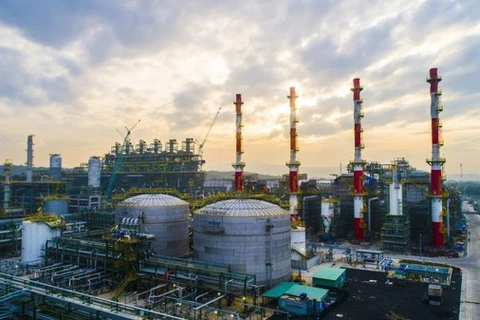
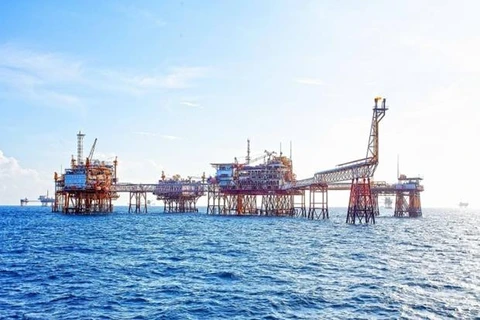
Expert backs proposal to invest in refinery complex in Ba Ria-Vung Tau ảnh 1Illustrative image (Source: VNA)
Hanoi (VNA) – A proposal by the Vietnam Oil and Gas Group (Petrovietnam) to invest in a petrochemical and refinery complex and national oil storage facility with total investment of nearly 19 billion USD in the southern province of Ba Ria-Vung Tau is a good idea, said Dr. Nguyen Quoc Thap, Chairman of the Vietnam Oil and Gas Association.

In a recent interview granted to the Vietnam News Agency, Thap underlined the necessity to develop more petrochemical and refinery plants in the context of increasing demand for petroleum in the domestic market.

He gave his assessment of the feasibility of the project, saying that it needs support from the Government so that pre-feasibility and feasibility studies for the project can be made.

The association will contribute critical advice once the pre-feasibility and feasibility studies are allowed to be made, he said.

According to Thap, with domestic demand for petroleum at about 18 million tonnes per year, if the two existing domestic refineries, Dung Quat and Nghi Son, operate at their full capacity, they will meet about 70% of demand.

Vietnam will face a big shortage of petroleum if it does not invest in building new refinery and petrochemical plants, he noted, citing that the current domestic production capacity will only meet about 50% of the demand in 2025 and 40% in 2030.

If the project is approved, Petrovietnam needs to prepare for negotiations to select investment partners carefully, he noted.

To ensure the supply of raw materials for the new refinery in the context of decreasing domestic crude oil production, PetroVietnam needs to carefully calculate imports of raw materials, he said.
Expert backs proposal to invest in refinery complex in Ba Ria-Vung Tau ảnh 2Dr. Nguyen Quoc Thap, Chairman of the Vietnam Oil and Gas Association (Photo: VNA)
Developing a national underground oil facility to store crude oil and petroleum is necessary to ensure energy security and respond to market fluctuations when oil prices fluctuate, Thap stressed.  

Under the proposal of PetroVietnam, the third petrochemical and refinery complex in Ba Ria – Vung Tau will comprise two parts – a petrochemical and refinery plant, and a project to build a national storage facility for crude oil and petrol products.

In the first phase, the petrochemical and refinery plant will have a capacity of processing 12-13 million tonnes of crude oil per year, along with 0.66 million tonnes of condensate, LPG and ethane. The output of the plant will reach 7-9 million tonnes of petroleum and 2-3 million tonnes of petrochemicals each year.

In the second phase, the plant will receive additional investment to increase its output by 3-5 million tonnes of petroleum and 5.5-7.5 million tonnes of petrochemicals per year.

Petrovietnam plans to finalise dossiers for the proposal and submit them to the Government in January next year. The firm will make a feasibility study report from June to December 2023 and expects to receive the project’s investment approval in the first quarter of 2024. After that, it will select engineering-procurement and construction contractors from January 2024 to December 2027.

According to Petrovietnam, gasoline consumption demand in the domestic market hit 18 million tonnes in 2020, and will reach about 25 million tonnes in 2025 and up to 33 million tonnes in 2030.

Petrovietnam pumped 5.48 million tonnes of crude oil in the first six months of this year, surpassing its target by 23%.

Meanwhile, gasoline production exceeded 14% of the plan, fertilizer production exceeded 8% of the plan, and production and supply of gas, electricity and other energy products were also up.

The group’s revenue in the period was estimated at 468.3 trillion VND (20 billion USD), up 55% year-on-year and double the six-month goal.

It contributed 66.1 trillion VND to the State budget, 2.2 times more than the half-year plan and an increase of 41% compared to the same period last year./.
VNA
See more

An overview of the meeting in Ho Chi Minh City to discuss measures to ease pressures on production and trade, and stablise the domestic market amid the escalating conflict in the Middle East. (Photo: VNA)

Measures sought to address business challenges amid Middle East conflict

Vietnam is facing a three-stage ripple effect - first on transport and fuel-dependent industries, then on sectors relying on their outputs, and ultimately on consumers. Volatility in key commodities like fuel is disrupting the entire supply chain and increasing the risk of market instability.

Workers load rice bags onto a vessel for delivery. (Photo: VNA)

PM directs tasks to accelerate 2026 export growth

During January – February, Vietnam’s total export-import value hit 155.7 billion USD, up 22.3% year-on-year. Of the total, exports were estimated at 76.4 billion USD, up 18.3%, while imports totaled 79.3 billion USD, up 26.3%.

A quick report from data analytics platform Metric shows the number of active sellers across Shopee, TikTok Shop, Lazada and Tiki has dropped to just over 602,000, marking a year-on-year decline of more than 7%. (Illustrative photo: VNA)

Higher marketplace fees weigh on online sellers

Analysts identify rising operational costs as the key factor behind the exodus. In 2025, platforms simultaneously rolled out fee hikes ranging from 10–15%, significantly increasing the financial burden on merchants.

The latest approvals underscore the growing presence of Vietnamese rice in one of the world’s most demanding markets. (Photo: VNA)

Fragrant rice deepens EU market presence

Although the volume of individual shipments remains relatively modest, industry experts say the steady flow of exports reflects stable demand in the EU for high-quality rice.

Promoting stronger foreign direct investment (FDI) inflows is considered an important solution to help drive economic growth. (Photo: VNA)

Vietnam emerges as hub for high-quality FDI

Vietnam is gradually becoming a strategic destination for high-quality global FDI. Investment flows are increasingly directed toward sectors such as high-tech manufacturing, electronics, digital infrastructure, modern logistics, and industries that are closely linked to global supply chains.

Shrimp processing for export at Huy Nam company, An Giang province. (Photo: VNA)

Fisheries sector proactively adjusts to emerging challenges

In addition to food safety regulations, the US continues to closely monitor the origin of imported seafood through the Seafood Import Monitoring Programme (SIMP) administered by the National Oceanic and Atmospheric Administration (NOAA). Requirements linked to the Marine Mammal Protection Act (MMPA) are also a major concern for businesses.