Experts analyse Vietnam's economic growth model

Without quick improvements in investment and human resources quality, Vietnam risks falling behind when the Fourth Industrial Revolution and green transition become standards for global development, said an expert from the University of Economics.

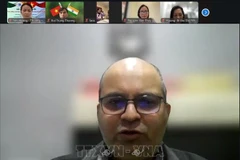
Dr. Le Xuan Sang, Deputy Director of the Institute of Vietnam and World Economy (Photo: VNA)

Hanoi (VNA) – A shift to a growth model based on science, technology, and innovation is critical for Vietnam’s sustainable and high-quality growth, analysed experts at a recent international conference on drivers of Vietnam's economic growth in the new era.

Dr. Le Xuan Sang, Deputy Director of the Institute of Vietnam and World Economy, noted that the country's growth has been largely driven by capital, low-cost labour, and foreign direct investment (FDI) while total factor productivity (TFP) contributes less.

From 2001 to 2023, the TFP’s role diminished, indicating that growth has not been truly powered by innovation or technological advancements. The economic vulnerabilities exposed by the pandemic, geopolitical conflicts, and climate change further highlight weaknesses in governance, financial market efficiency, and FDI firms' connectivity with domestic businesses, he said.

Sang proposed five key strategies to improve the country’s growth model – ensuring macroeconomic stability and preparing for shocks; reforming government and promoting transparency and accountability; enhancing the efficiency of capital, stock, and real estate markets; fostering linkages between FDI and domestic enterprises, and developing renewable industry; and improving social trust, social capital, and workforce quality.

Meanwhile, Dr. Nguyen Quynh Trang from the University of Economics under the Vietnam National University, Hanoi, observed that Vietnam’s GDP growth in recent years faces great pressure from global downturns and trade tensions. Domestically, household consumption shows sluggish recovery post-pandemic, private investment is constrained by high capital costs, and public investment disbursement has fallen short of expectations. Long-term growth is hampered by weak production capacity, inadequate infrastructure, and low labour productivity and TFP.

She cautioned that without quick improvements in investment and human resources quality, Vietnam risks falling behind when the Fourth Industrial Revolution and green transition become standards for global development.

Trang recommended domestic consumption be spurred through tax relief and credit policies, expediting public investment disbursement for multiplier effects, supporting exporters with financing, logistics and trade promotion, and improving workforce quality via vocational training, digital skills, and high-tech education.

She also highlighted the need for strategic infrastructure development, from transportation, logistics and clean energy to digital infrastructure, to enhance national competitiveness. Lowering logistics costs, ensuring energy stability, and expanding digital infrastructure will help emerging sectors thrive.

Dr. Dang Hai Anh, a World Bank expert, emphasised the importance of social safety nets for long-term growth. While Vietnam has made strides in near-universal health insurance coverage, access to social and unemployment insurance remains uneven among regions and income groups. The informal workforce, a large part of the labour market, still has low productivity and are vulnerable to changes.

Without expanding and improving the social safety net, Vietnam's economy could face the risk of instability, particularly amid rapid population aging, Anh warned.

The expert argued that social welfare policies should not only serve as a safety net but also drive growth. Expanding insurance coverage, increasing vocational training, and aligning labour standards with international norms will raise productivity, better working conditions, and reduce inequality – key steps for fostering inclusive growth, strengthening social cohesion, ensuring macroeconomic stability, and attracting long-term investment.

Given Vietnam’s aging population, Anh suggested redesigning pension, unemployment insurance, and social assistance policies to support both formal and informal workers. He recommended creating flexible and voluntary insurance schemes backed by the state budget to expand coverage and reduce burden on the budget in the long term./.

VNA
See more

Prime Minister Pham Minh Chinh addresses the 21st meeting of the State steering committee for national key projects in the transport sector. (Photo: VNA)

Entire Cao Bang - Ca Mau expressway must be inaugurated on December 19: PM

PM Chinh, who is head of the steering committee, asked all parties involved to strive hard to achieve the goal of putting 3,000 kilometres of expressways and approximately 1,700 kilometres of coastal roads into operation in 2025, thus creating momentum to welcome the 14th National Party Congress and meeting the travel needs of the people during New Year 2026 and the Lunar New Year Festival.

Prime Minister Pham Minh Chinh (C) presides over the 21st meeting of the State steering committee for national key projects in the transport sector. (Photo: VNA)

Government leader presides over meeting on national key transport projects

Noting that there are less than two months left until December 19 - the date set for the simultaneous ground-breaking and inauguration ceremonies of major projects, the PM emphasised that this is a crucial period to accelerate progress and make breakthroughs in the implementation of key projects and works.

Harvesting cage-farmed tilapia (Photo: VNA)

Vietnam exports first shipment of tilapia to Brazil

This shipment is one of 32 containers, totalling 700 tonnes of tilapia, ordered and imported by JBS Group from Vietnam. The products will first be distributed through HORECA supermarket and distribution network, and showcased in JBS's product display centre in Brazil.

Road leading to VSIP Can Tho at the intersection with National Highway 80 (Photo: VNA)

Green industry lures more FDI to Mekong Delta

The Mekong Delta region, having earned the monikers of the rice bowl, fruit and seafood basket of the country, and following the restructuring of administrative units, is now standing at the threshold of becoming a modern, sustainable industrial centre.

The codification of Resolution 42 into the law, effective from mid this month, is an important step, marking a key milestone in completing Vietnam’s NPL resolution process. (Photo: thoibaonganhang.vn)

Bad debt settlement fully benefits from new policy from H2 2026

Resolution 42, enacted in 2017 to pilot bad debt settlement for credit institutions, was introduced in response to a sharp rise in non-performing loans (NPLs). It empowered credit institutions to seize and liquidate collateral assets, expediting debt recovery. After more than six years of implementation, the resolution delivered certain results but expired last year.

The total retail sales of goods and consumer service revenue were estimated at 5.7 quadrillion VND for the first 10 months of the year. (Photo: VNA)

Retail sales growth remains stable over 10 months

With the current recovery momentum, the trade and services sector is expected to continue being a bright spot in Q4, driving GDP growth and ensuring a balance between domestic consumption and exports amid ongoing global economic fluctuations.

Delegates at the event (Photo: Ministry of Finance)

ASEAN meeting to drive regional cooperation, growth by removing barriers

Running from November 5–11, CCS 111 focuses on advancing service liberalisation and facilitation in ASEAN by removing barriers, enhancing transparency, reducing policy risks, and simplifying administrative procedures to enable businesses and service providers to operate more efficiently.

Goods at Hai Phong Port in northern port city of Hai Phong. (Photo: VNA)

Vietnam determined to build transparent global trade system

The Government of Vietnam on November 6 updated the World Trade Organisation (WTO)’s Committee on Rules of Origin (CRO) on adjustments to the agencies and organisations authorised to issue certificates of origin (C/O), as well as on the application of QR codes in the C/O issuance process.

SemiExpo Vietnam 2025, themed “Powering Vietnam’s Semiconductor Ambition,” brings together around 5,000 delegates and feature 200 booths from major global technology corporations (Photo: VNA)

Vietnam opens largest int’l semiconductor exhibition

SemiExpo Vietnam 2025, themed “Powering Vietnam’s Semiconductor Ambition,” brings together around 5,000 delegates and feature 200 booths from major global technology corporations such as Lam Research, Coherent, Qorvo, Amkor, GlobalFoundries, Micron, Tokyo Electron, KLA, STMicroelectronics, Soitec, and Siemens.

Consumers learn about Hanoi's OCOP products. (Photo: VNA)

Hanoi launches digital booths to promote e-commerce

Hanoi will open an online store showcasing Hanoi's products on the e-commerce platform Shopee. It will introduce digital tools such as electronic signatures, e-contracts, e-invoices, and product traceability systems for local producers and businesses participating in the booth.