Hanoi (VNA) – Vietnamese enterprises have set records across multiple areas, demonstrating strong export momentum that not only expands trade but also reinforces Vietnam’s position in global supply chains.
Strong growth from key sectors
As of October 15, the computer and electronics group had generated nearly 82 billion USD in export revenue, with an estimated total exceeding 86 billion USD by the end of the month, posting a record high.
A surge in orders since the second half of last year, especially in the third quarter of 2025, has helped this group become a key driver of export growth. Electronics alone contributed significantly to the country’s total exports, estimated at 390 billion USD after 10 months, marking an increase of 14 billion USD from the previous year’s figure, reflecting an impressive pace of market recovery and expansion.
The machinery, equipment, tools, and spare parts group also showed clear progress, reaching 48 billion USD in the reviewed period, up nearly 13.5% year-on-year. It is projected to add another 6.5–7 billion USD in the remaining months of the year, lifting the total to around 55 billion USD.
The strong performance of these two key industrial sectors has significantly contributed to sustaining export growth amid global demand that has yet to fully recover.
The agricultural sector also saw strong gains, highlighted by coffee, which is enjoying both higher volume and prices. As of October 15, Vietnam had exported 1.27 million tonnes of coffee, earning 7.2 billion USD. The average export price reached 5,658 USD per tonne, 45% higher than last year.
According to Nguyen Nam Hai, Chairman of the Vietnam Coffee - Cocoa Association (VICOFA), the 2024–2025 season recorded the highest prices in history, reaching up to 5,850 USD per tonne at times. Europe remains the biggest buyer of Vietnamese coffee, importing 710,000 tonnes worth over 4 billion USD, with the 27 EU countries alone accounting for 40.1% of Vietnam’s coffee export volume and 39.4% of its value.
Free trade agreements (FTAs), especially the EU – Vietnam Free Trade Agreement (EVFTA), have helped cut tariffs for coffee exported to the EU, from 7–11% to 0% for green beans and from 9–12% to 0% for processed products, thus increasing the export value fivefold.
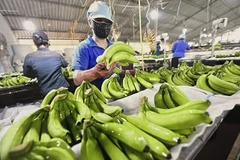
Other agricultural products such as rice, cashews, and fruits are also benefiting from new-generation FTAs. Many companies have quickly standardised processes to meet origin and food safety requirements, helping Vietnamese goods expand their presence in demanding markets like the EU, Japan, the Republic of Korea, and Canada.
Strengthening position in global value chains
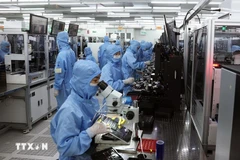
Alongside farm produce, electronics and hi-tech enterprises are becoming key drivers of export growth and a “pillar” in global value chains. Thanks to FDI inflows poured into hi-tech industries and expanded production capacity, Vietnam has become a crucial link in the global electronics supply chain and emerged as a leading assembly hub in Southeast Asia.
According to the World Bank, electronics, computers, components, and phones now make up over 33% of Vietnam’s exports, driven by major players, like Samsung, LG, Foxconn, Amkor, and Hana Micron, along with expanding network of Vietnamese tier-2 and tier-3 suppliers. The localities such as Bac Ninh, Thai Nguyen, and Hai Phong have become key electronics hubs, employing tens of thousands of skilled workers.
The Global Innovation Index (GII) report by the World Intellectual Property Organisation (WIPO) shows Vietnam among the world leading countries in high-tech exports, which account for 36.1% of total trade. Over a third of Vietnam’s exports come from electronics, telecommunications, computers, and components — key sectors for attracting strategic FDI in semiconductors, energy batteries, and smart devices.
Experts said this is the time for Vietnam to shift from a “manufacturing hub” to a “centre of innovation and technology” by increasing investment in research and development (R&D) and supporting domestic firms to engage more deeply in value chains.
If managed well, 2026–2030 could mark a breakthrough period for Vietnam, bringing it closer to becoming a modern industrial nation, with high-tech exports accounting for over 45% of total trade, they noted./.
VNA