Hanoi (VNA) - With improvements to the Investment Law and the Enterprise Law, along with tax incentives and the digitalisation of administrative procedures, foreign investment in Vietnam’s real estate sector in the first quarter of 2025 recorded remarkable results in both growth rate and the quality of capital inflows.
According to a report released by the Ministry of Construction, Vietnam’s corporate bond market, particularly in the real estate sector, experienced notable fluctuations in Q1.
Specifically, the total value of newly-issued bonds reached 25.13 trillion VND (965.2 million USD), down 12% compared to the same period last year - the lowest level in the past five years. This decline is mainly attributed to a lack of private placement activities.
Meanwhile, real estate corporate bonds issued to the public totalled 23.13 trillion VND, a 68% increase year-on-year and the highest in the past five years, mainly driven by the contributions of banks and securities companies.
In the remaining months of this year, the total value of mature bonds will reach 181.9 trillion VND, of which the real estate sector accounts for 53.1%, or 96.5 trillion VND. In Q1, there were three new cases of delayed interest payments totalling 4.85 trillion VND, mainly from companies in the real estate and cement industries.
The data show a cautious recovery in new issuances, with the total value of new bonds issued across the market reaching 25.13 trillion VND. However, the real estate sector only accounted for about 30.3% of new bonds.
Although there has been an improvement in public bond issuance, up 68% year-on-year, most real estate enterprises are still not ready to raise capital through bonds as in previous years, said Vuong Duy Dung, Deputy Director of the Department of Housing and Real Estate Market Management under the Ministry of Construction.
According to the Ministry of Finance’s Foreign Investment Agency (FIA), in the first three months, the total registered foreign direct investment (FDI) in Vietnam reached nearly 10.98 billion USD, up 34.7% compared to the same period last year. Among these, the real estate sector ranked second with a total registered investment of over 2.39 billion USD, accounting for 21.8% of the total registered capital, up 44.1% year-on-year.
Vietnam has a strategic geographical location, situated in the heart of Southeast Asia, close to major markets such as China, Japan, the Republic of Korea, and ASEAN countries. It boasts a young, dynamic workforce with the ability to quickly learn and adapt to new technologies, and labour costs are low compared to many countries in the region (such as China and Thailand).
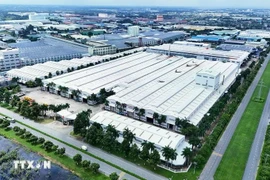
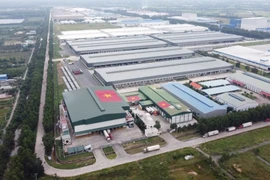
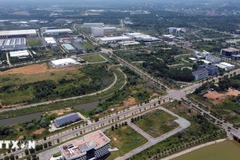
Notably, the country has continuously improved its Investment Law and Enterprise Law in recent years. In addition, to support foreign investors, many industrial parks and export processing zones have offered tax incentives, long-term land leases, and administrative procedures that are increasingly being digitalised and simplified.
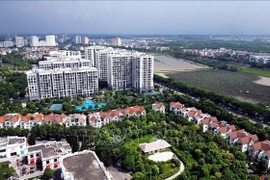
Dung said that FDI capital in the real estate sector in Q1 achieved remarkable results in both growth rate and the quality of capital flows. This is a positive sign reflecting international investors’ confidence in the domestic market and serves as an important driver for the recovery and development of urban infrastructure, industry, and tourism.
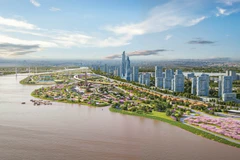
For example, a golf and hotel complex project in Hung Yen, comprises two 54-hole golf courses, a hotel, resort, and modern residential area complex, with a total investment of 1.5 billion USD. Phuong Trach Tower Project in Hanoi, a joint venture between BRG Group (Vietnam) and Sumitomo Group (Japan) is another project that reflects confidence in Vietnam’s real estate sector. The project includes a 600m tower with 108 floors, expected to become the tallest building in Vietnam and serve as the centerpiece of a 272-hectare smart city project in Dong Anh district, with a total investment of approximately 1.55 billion USD for infrastructure and land development./.