FDI inflows into Hanoi soar over 30% in four months

Total FDI poured into Hanoi during the first four months hit 1.48 billion USD, up 31% year-on-year, according to local authorities.

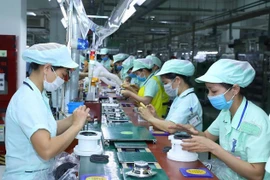
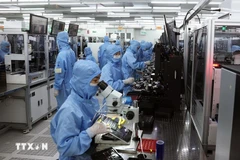
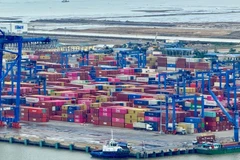
Total FDI poured into Hanoi during the first four months hit 1.48 billion USD, up 31% year-on-year. (Photo: VNA)

Hanoi (VNA) – Despite a dip in the number of newly established firms, Hanoi recorded strong foreign direct investment (FDI) inflows in the first four months of 2025, signalling an increasingly attractive investment climate in the capital.

According to the municipal authorities, around 9,400 new enterprises were licensed during the period, down 2.7% in number and 22.3% in registered capital year-on-year. However, nearly 4,800 businesses resumed operations, marking a 5.5% increase. Online business registration remained fully digital, ensuring timely and high-quality processing.

In April alone, Hanoi welcomed 2,634 new enterprises with total registered capital of 24.4 trillion VND (over 939.9 million USD), while 967 firms resumed operations, up 19.4% from the previous month. Meanwhile, 2,221 businesses temporarily suspended activities, and 343 were dissolved.

FDI attraction maintained strong momentum. The city lured 64.1 million USD in April through 33 newly licensed projects, 11 capital-adjustment projects, and 23 instances of capital contributions or share purchases by foreign investors.

Total FDI poured into Hanoi during the first four months hit 1.48 billion USD, up 31% year-on-year, comprising 114 new projects (41 million USD), 45 capital-raising projects (almost 1.2 billion USD), and 111 capital contributions or share purchases (241 million USD).

Retail and consumer services continued to expand. April’s total retail and service revenue reached 76.8 trillion VND, a 2.1% monthly and 13.1% annual rise. This included 49 trillion VND in retail sales, 10.4 trillion VND from accommodation and food services, 2.7 trillion VND from tourism, and 14.7 trillion VND from other services.

The four-month figure stood at 303.5 trillion VND, up 13.4% year-on-year. Of this, retail sales posted 194.4 trillion VND to make up 64.1%, while accommodation and food 40.1 trillion VND, tourism 10.2 trillion VND, and other services 58.8 trillion VND, statistics show.

To sustain this momentum, Hanoi is intensifying administrative reforms, enhancing digital public services for business and investment procedures, and addressing obstacles faced by investors. The capital is also advancing digital transformation to foster a transparent, accessible, and investor-friendly environment, while boosting regional connectivity and investment promotion abroad./.

VNA

See more

Chili peppers are on the list of essential goods in Indonesia (Photo: VNA)

Indonesia reduces imports of strategic food commodities

In 2026, Indonesia is expected to have approximately 12 million tonnes of rice carried over from the previous year, supported by annual production of around 34.7 million tonnes. With projected consumption of 31.1 million tonnes, national rice reserves could reach approximately 16 million tonnes by the end of the year.

Hanoi’s roadmap to implement low-emission zones from July is providing a strong boost to the electric two-wheeler market (Photo: VNA)

Low-emission zone roadmap drives electric two-wheeler boom in Hanoi

From July 1, Hanoi will introduce time-based or area-based restrictions on petrol-powered motorcycles within Ring Road 1, with plans to expand coverage across the entire zone by 2028 and extend to areas within Ring Road 3 by 2030. The policy is expected to reshape travel habits for millions of urban residents.

Delegates at the opening ceremony of the Made in Da Nang Expo 2026 (Photo: VNA)

Nearly 300 firms join Made in Da Nang Expo 2026

Speaking at the opening ceremony, Vice Chairman of the Da Nang People’s Committee Tran Chi Cuong said the exhibition is a large-scale trade promotion event aimed at showcasing products, connecting markets, and helping businesses enhance competitiveness while expanding domestic and export markets.

 Green production, standardised value chains key to fruit, vegetable sector growth

Green production, standardised value chains key to fruit, vegetable sector growth

Facing mounting pressure from increasingly stringent domestic and international standards, Vietnam’s fruit and vegetable sector is accelerating its shift toward green, safe, and sustainable production models. Beyond changing farming practices, localities and businesses are stepping up efforts to standardise value chains and build brands to achieve growth targets for 2026.

Hiep Phuoc Industrial Park in Ho Chi Minh City. (Photo: VNA)

Southern industrial real estate enters strategic growth phase

Key industrial hubs in the south, including Ho Chi Minh City, Dong Nai and Tay Ninh, are transitioning from a period driven largely by supply expansion and rising land prices to a more refined growth model. This new phase is shaped by infrastructure upgrades, supply chain restructuring, product improvement and greater emphasis on operational performance.