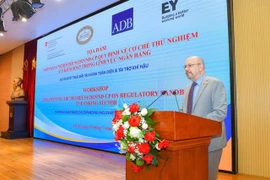
Hanoi (VNA) – The controlled sandbox mechanism in the banking sector is expected to significantly enhance access to capital for small and medium-sized enterprises (SMEs), experts said at a recent seminar on the implementation of Government Decree No. 94.
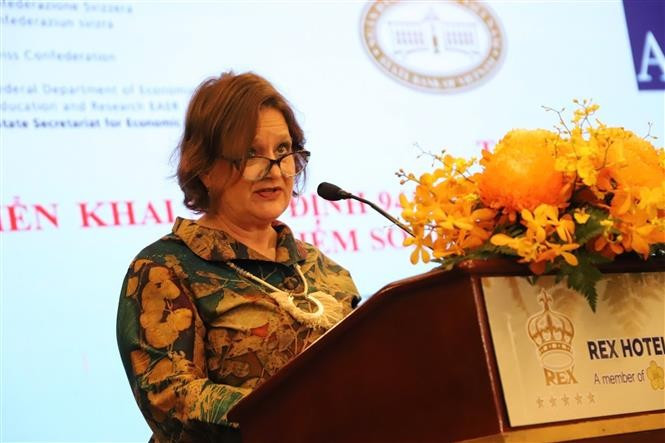
Speaking at the July 2 event, Andri Meier, Deputy Head of Development Cooperation at the Swiss Embassy in Vietnam, noted that SMEs account for more than 95% of registered businesses in the country. As the backbone of the private sector, SMEs are regarded as a key driver of economic growth, innovation, and digital transformation in Vietnam.
However, SMEs often face difficulties in accessing formal financing. Many banks still consider them high-risk borrowers, leading to loan requirements such as collateral, which become a major barrier. Fintech solutions are seen as a promising way to address these challenges.
For instance, fintech tools, particularly credit scoring systems based on big data and algorithmic analysis, offer faster and more accurate assessments of credit risk than traditional methods. These solutions can help financial institutions expand their lending base to include individuals and businesses previously underserved by conventional banks.
Kelly Hattel, Senior Financial Sector Specialist at the Asian Development Bank (ADB) in Vietnam, said Decree 94 marks a milestone in establishing a legal framework that allows fintech companies to pilot innovative products and services under close supervision by the State Bank of Vietnam (SBV).
The sandbox is expected to accelerate the digital transformation of the banking sector by providing a clearly regulated environment where innovative financial services can be tested and refined before full-scale deployment. This enables regulators to evaluate risks, ensure consumer protection, and adjust legal frameworks to scale digital solutions safely and effectively.
Hattel stressed that technology-driven innovations supported by the sandbox will improve financial inclusion for SMEs and the general population, especially in rural areas.
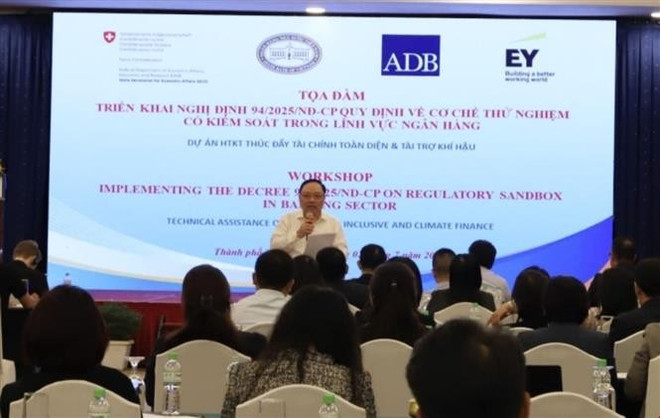
Director of the SBV’s Payment Department Pham Anh Tuan said the issuance of Decree 94 provides a legal basis for sandbox participants to trial new products, services, and business models in real-life conditions, ultimately benefiting customers.
The sandbox also strengthens regulatory oversight of innovation in the banking sector by allowing authorities to assess both risks and benefits posed by fintech solutions, contributing to cybersecurity, consumer protection, and risk management.
In addition, the results of the sandbox programme serve as valuable input for updating and refining the legal framework of Vietnam’s banking system, with a view to fostering fintech development.
This mechanism is especially timely as the fintech sector in Vietnam has grown rapidly. According to preliminary data from the SBV, the number of fintech firms in the country has surged from about 40 in 2016 to over 200 today, covering areas such as payments, peer-to-peer (P2P) lending, credit scoring, and personal financial management.
Major Vietnamese technology companies like FPT, Viettel, VNPT, and Vingroup have also joined the fintech space, either by directly investing in fintech firms or indirectly through venture capital funds and startup incubators.
In Ho Chi Minh City and Da Nang, fintech sandbox activities are part of broader plans to establish international financial centre. This calls for efficient implementation of testing mechanisms to stimulate innovation, encourage investment, and promote inclusive finance, particularly for vulnerable groups in remote areas.
Experts at the seminar agreed that fintech has a positive impact on the economy. Crowdfunding platforms and online lending services provide businesses with greater opportunities to access capital more easily.
Tuan noted that the central bank will continue updating and evaluating potential new business models for inclusion in future sandbox trials./.