First blood cancer patient successfully treated, using CAR-T cell therapy

This method offers numerous advantages over traditional treatment options, including fewer side effects, high treatment effectiveness, prolonged survival for patients, and significantly improved quality of life after treatment.

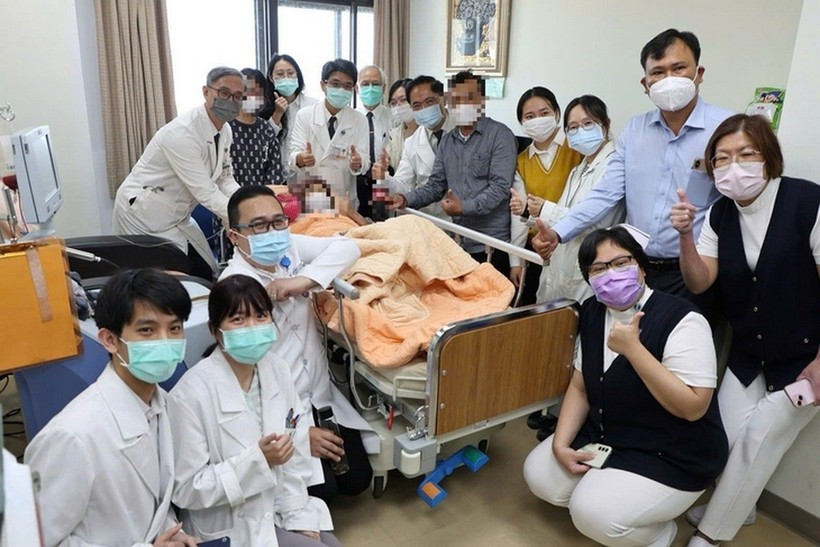
After more than a year of CAR-T cell infusion, the patient's health is stable, and she is still under continued treatment and monitoring at the hospital. (Photo: Blood Transfusion – Hematology Hospital in Ho Chi Minh City)

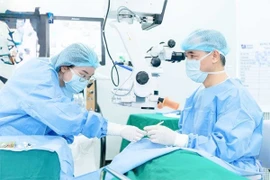
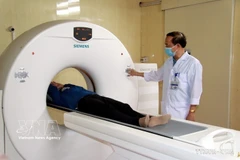
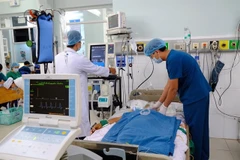
Hanoi (VNA) – The Blood Transfusion – Hematology Hospital in Ho Chi Minh City has successfully treated a case of leukemia using the CAR-T cell therapy for the first time, with the collaboration of experts from Taiwan (China).

This is the most advanced and challenging cancer treatment method available today.

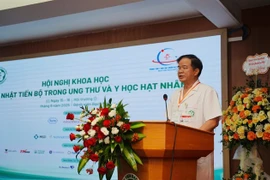
This information was shared by the hospital’s Director Prof. Dr. Phu Chi Dung at the 8th Vietnam Blood Transfusion and Hematology Conference, the 8th Vietnamese-French Open Conference on Transfusion – Transplantation – Cell Therapy, and the 30th Congress of Asia – Pacific Blood and Marrow Transplantation, which simultaneously opened in HCM City on September 16.

The patient, a 12-year-old girl, was diagnosed with high-risk B-cell acute lymphoblastic leukemia. After undergoing chemotherapy, she experienced a first relapse and was then given a half-matched bone marrow transplant from her father, but still relapsed a second time.

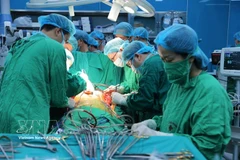
Doctors at the Blood Transfusion – Hematology Hospital in HCM City and Taiwanese experts have used the CAR-T therapy, an immune therapy that uses the patient's own T cells genetically modified in a laboratory to recognise and destroy cancer cells.

After more than a year of CAR-T cell infusion, the patient's health is stable, and she is still under continued treatment and monitoring at the hospital.

This method offers numerous advantages over traditional treatment options, including fewer side effects, high treatment effectiveness, prolonged survival for patients, and significantly improved quality of life after treatment.

In particular, the CAR-T therapy has the potential to generate long-lasting immune responses, helping to reduce the risk of disease recurrence. However, the greatest challenge of this therapy today is its extremely high treatment cost as the production of CAR-T cells requires complex technology and advanced equipment.

Director Dung said the hospital is gearing up infrastructure and manpower, along with support from foreign experts, to produce CAR-T cells in Vietnam to cut the cost./.
VNA

See more

Most infections were reported among children under 10 years old, making up 99.3%, with those aged 1–5 accounting for the highest proportion (92.7%). (Illustrative photo: VNA)

Hand, foot and mouth cases increase five-fold in Q1

Most infections were reported among children under 10 years old, making up 99.3%, with those aged 1–5 accounting for the highest proportion (92.7%) due to close contact in kindergartens and limited hygiene practices.

From 2026, all residents in Ho Chi Minh City will receive periodic health check-ups or screening at least once a year under a roadmap. Illustrative image. (Photo: VNA)

Ho Chi Minh City to offer annual health check-ups for residents

In the initial phase in 2026, priority will be given to children under 24 months old, students, out-of-school minors, contracted employees, probationary workers, apprentices, public officials, members of the armed forces, social protection beneficiaries and people aged 60 and above.

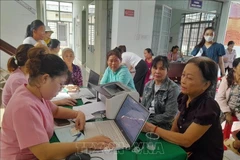
Patients register at the reception desk upon arrival for medical examination. (Photo: VNA)

Ho Chi Minh City targets free basic hospital fees for residents by 2030

Under the programme, the southern largest economic hub has set several key health targets to be achieved by 2030. The average height of children and adolescents under 18 is expected to increase by at least 1.5cm, while the average life expectancy of residents is projected to reach around 77 years, including at least 68 years of healthy living.

Vietnamese Ambassador to Laos Nguyen Minh Tam extends greetings to leaders and staff of the Hanoi – Vientiane General Hospital on the occasion of the 71st anniversary of the Vietnamese Doctors’ Day on February 27. (Photo: VNA)

Vietnamese doctors in Laos help foster bilateral solidarity

Commending the Hanoi – Vientiane General Hospital’s 13-year development, Ambassador Nguyen Minh Tam noted that prioritising conscience and virtue has helped it build a strong reputation among Lao citizens, the Vietnamese community and international friends in Laos.

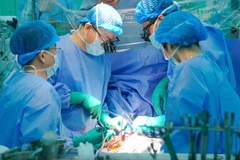
Organ transplantation at the University Medical Centre Ho Chi Minh City (Photo: the University Medical Centre Ho Chi Minh City)

Professional excellence, dedication define Vietnam’s healthcare system

When patients pull through from the brink of death, when their vital signs stabilise and transplanted hearts begin beating strongly in new bodies, the joy shared by the entire medical team is overwhelming. And when the country welcomes the New Year, saving lives takes on an even more profound significance — offering patients and their families a new spring of hope.

At Phu Rieng communal medical station in Dong Nai province (Photo: VNA)

Vietnam fosters maternal and child healthcare, advances toward 2035 goals

The under-five mortality rate in Vietnam in 2025 was estimated at below 16 per 1,000 live births, more than three times lower than the 1990 level. The infant mortality rate (under one year) declined fourfold to below 11 per 1,000, while the neonatal mortality rate dropped fivefold, from 44 per 1,000 in 1990 to 8.8 per 1,000 in 2025.

Medicine support programmes provide significant benefits to patients throughout their course of treatment. (Photo: VNA)

Over 6,000 patients receive free medicines

The schemes focus primarily on cancer, rare diseases and severe chronic conditions, areas where treatment costs are high and often require expensive biological and originator drugs.

A lung transplant surgery at the National Lung Hospital (Photo: VNA)

Vietnam reaches new height in organ transplantation

From demanding cross-country transplants to highly specialised procedures nearing regional and international standards, the sector has created new chances of survival for thousands of patients. However, persistent bottlenecks in organ donation and the legal framework highlight the urgent need to further perfect the national donation–transplantation system. In the era of advanced medicine, progress is measured not only by surgical mastery, but also by the ability to turn loss into hope and sustain life.

The DAV asks pharmacy producers and distributors to increase medicine supply capacity during Tet to meet increasing demand (Photo: VNA)

Measures rolled out to ensure adequate medicine supply during Tet

Accordingly, provincial and municipal health departments are required to direct hospitals, centres for disease control and health care facilities to urgently develop plans and carry out medicine procurement to ensure sufficient supply, absolutely avoiding shortages. Medicines must meet quality standards and be sold at reasonable prices, with no sudden price increases allowed.