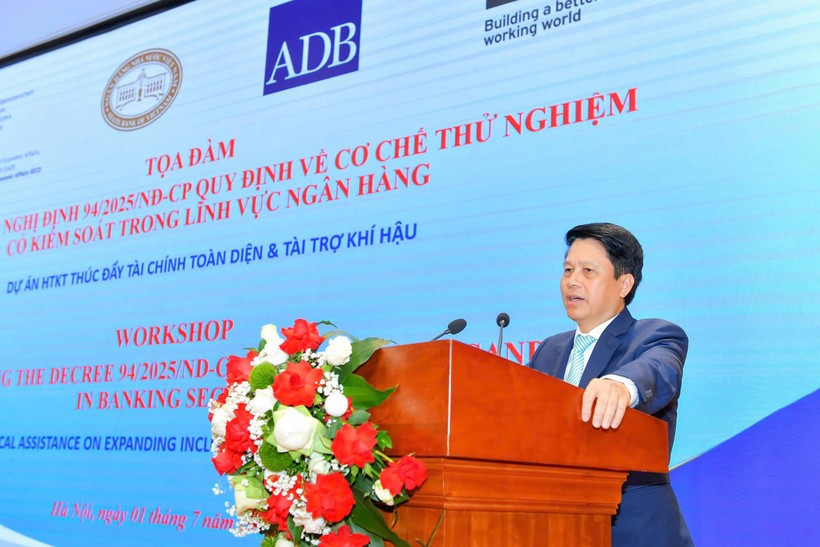
Hanoi (VNA) – With the regulatory sandbox, fintech companies in Vietnam will keep contributing to the development of the financial sector, especially a system that helps vulnerable groups access affordable and quality financial services.
The statement was made by Deputy Governor of the State Bank of Vietnam (SBV) Pham Tien Dung at a seminar on implementing Decree 94/2025/ND-CP, dated April 29, 2025, on regulatory sandbox in the banking sector. The event was jointly organised by the Asian Development Bank (ADB) and the SBV in Hanoi on July 1.
First three solutions tested in the sandbox
The sandbox is a regulatory framework that allows a limited number of businesses to test new technologies and business models in a real-world environment but with defined scope and duration. This testing occurs under the supervision of regulators, with appropriate risk-mitigation plans in place to prevent any negative consequences that can significantly impact the national financial system.
According to experts, Decree 94 is an important legal document in the fintech sector as it represents a critical step in creating a legal framework for controlled testing of fintech solutions in a real-world environment. This helps organisations have the legal basis to implement new business activities. The decree also supports authorities in monitoring, supervising, and assessing risks, which in turn helps improve the legal framework for fintech. Ultimately, it facilitates digital transformation in the banking sector, enhances access to financial services, and contributes to the formation of a national digital economy.

Deputy Governor Dung said under Decree 94, there are three solutions considered to be carried out in the sandbox: credit scoring, data sharing via open API, and peer-to-peer lending (P2P Lending).
During the decree implementation, the central bank will continue to review and update new products, services, and business models in the banking sector to evaluate and propose adding more solutions to the regulatory sandbox.
Driving force for fintech innovation
Ron H. Slangen, Deputy Country Director, Vietnam Resident Mission of the ADB, said that in Vietnam, the banking sector, including Fintech, has made significant progress in digital transformation with increased availability of mobile wallets, digital lending platforms and API-driven banking services.
The SBV has taken decisive action to promote digital banking transformation and the development of a vibrant fintech ecosystem. Significant policy and regulatory reforms have been made, especially the 2024 Law on Credit Institutions, which includes a critical provision on the fintech sandbox, setting the legal basis for a more open and innovative financial landscape.
The newly issued Decree 94/2025/ND-CP on the fintech regulatory sandbox represents an important milestone in establishing a legal framework for fintech firms to pilot new products and services under the close supervision of the SBV, Slangen noted.
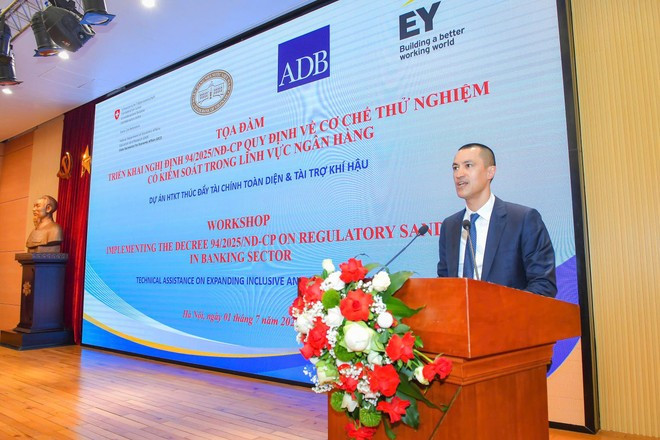
The sandbox will further accelerate banking digital transformation by providing a clear, controlled environment where innovative financial products and services can be tested and refined before widespread implementation. This allows regulators to assess risk, ensure consumer protection, and fine-tune regulatory frameworks, enabling the safe and effective scaling of digital solutions that enhance financial inclusion, particularly in rural areas, he stated.
Meanwhile, Swiss Ambassador to Vietnam Thomas Gass said that the decree provides a space enabling fintech companies to test and scale solutions in a controlled environment. This not only encourages innovation from existing providers but also lowers entry barriers for start-ups and new market players. By offering a simplified, flexible, and time-bound licensing process, this decree enables new technologies such as AI, blockchain and open banking, to emerge and scale up safely./.