Five economies seen powering ASEAN’s next growth cycle

The MIT-PV economies are quickly becoming the mainstay of ASEAN’s next growth supercycle, supported by booming populations, rising wealth, structural reforms, and stategic convergence of human resources development, infrastructure modernisation, and resources.

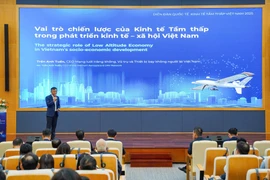
Chief Economist at IQI Global Shan Saeed (Photo: VNA)

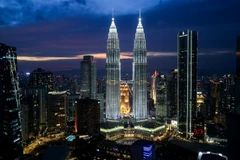
Kuala Lumpur (VNA) – ASEAN is poised to enter 2025–2026 with strong momentum, anchored by five dynamic economies, namely Malaysia, Indonesia, Thailand, the Philippines and Vietnam (MIT-PV), according to Chief Economist at IQI Global Shan Saeed.

He said the MIT-PV economies are quickly becoming the mainstay of ASEAN’s next growth supercycle, supported by booming populations, rising wealth, structural reforms, and stategic convergence of human resources development, infrastructure modernisation, and resources.

Vietnam is now at a growth peak with GDP expansion expected at 7–8%, driven by its young population and rapid development of a tech-savvy workforce at the higher education level. Indonesia, the bloc’s largest economy, continue to post 5–6% growth by tapping into its population scale, downstream industrialisation initiatives, and rich natural resources from nickel and bauxite to energy and agriculture.

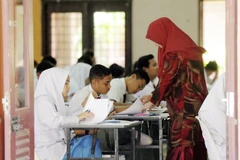
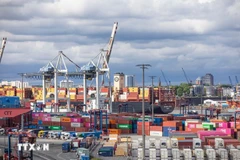
Supported by increasing per capita income and an expanding middle class, Malaysia and the Philippines are expected to grow 4.5–5.5%, reflecting robust dometic demand and diversifying economic engines. Meanwhile, Thailand is set for 3–4% growth, powered by world-class infrastructure, recovering tourism, and supply-chain restructuring, consolidating its role as a logistics and manufacturing hub in the region.

Saeed highlighted ASEAN’s demographic advantage, with a population of about 680 million people, 34% of workers under 25, and those aged 18–49 making up the majority of the workforce, which is fuelling productivity, innovation, and domestic consumption.

In addition, ASEAN is creating a skillful, diverse, and more competitive workforce. Investment is being strongly channelled into infrastructure while high-quality FDI and abundant commodity resources, from Indonesia's crucial minerals to Malaysia's energy reserves and the Philippines' resources, are reinforcing the MIT-PV countries' position as a structural foundation for ASEAN's long-term economic resilience.

He stressed that these five economies are not isolated growth successes but together forming a cornerstone for the next structural expansion of ASEAN. With a large population, a young and skillful workforce, rising aggregate demand, solid sovereignty, and expanding regional integration, ASEAN is poised for not only growth but also transition, becoming an economic hub capable of competing with the world's leading ones such as the EU, North America, and Northeast Asia./.

VNA
See more

Tourists inside a beer shop in Thailand. (Photo: AFP)

Thailand eases alcohol sales restrictions

Thailand ranked 16th out of nearly 200 countries for the most road traffic deaths per capita in 2021, WHO data shows. Nearly 33,000 people were killed in drunk driving incidents in the country from 2019 to 2023, according to public health ministry figures.

Illustrative image (Photo: tribune.net.ph)

Philippines dismisses over 9,000 police personnel

Data from the PNP Directorate for Personnel and Records Management released on December 3 showed that from July 2016 to November 26, 2025, a total of 32,698 police personnel were found guilty of various administrative offenses.

Intel to invest additional 208 million USD in Malaysia (Photo: invezz.com)

Intel to boost investment in Malaysia

The US is Malaysia’s third-largest market for semiconductor exports. In 2024, Malaysia exported 120 billion MYR (28 billion USD) in electrical and electronic products to the US, with around half related to chips.

A military parade and march held to celebrate the 50th National Day of the Lao People’s Democratic Republic. (Photo: VNA)

Laos marks 50th National Day with solemn ceremony

In his address, General Secretary and President Thongloun recalled that 50 years ago, the site hosted a mass mobilisation of revolutionary forces and patriotic Lao people to seize power in Vientiane, paving the way for the National Congress to abolish colonial and feudal rule and proclaim the establishment of the Lao PDR on December 2, 1975. He stressed that the historic victory profoundly changed the nation’s destiny, ushering in a new era of independence, unity and development, and ensuring a peaceful, prosperous and happy life for all ethnic groups in Laos.

Illustrative photo (Photo: nst.com.my)

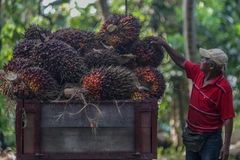
Malaysia works to regain palm oil market share in China

China has been a key and strategic market for Malaysia, maintaining its position as one of the country's top palm oil export destinations for over a decade. The sharp decline suggests deeper challenges relating not only to competitiveness and logistics but also to pricing dynamics and market positioning.