Hanoi (VNA) – Beyond intensifying enforcement to have the European Commission (EC)'s “yellow card” warning over illegal, unreported and unregulated (IUU) fishing lifted, Vietnam is undertaking a broad restructuring of its fisheries sector, focusing on moving away from intensive harvest toward sustainable value creation rooted in marine resource conservation.
Occupational shifts, deliberate fleet downsizing and new livelihoods for fishermen have emerged as big three moves to forge responsible fisheries practices, while bolstering the reputation and global standing of Vietnam’s seafood industry.
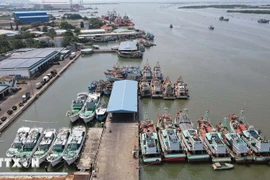
To ease pressure on fish stocks, numerous coastal localities have rolled out incentives to replace high-impact fishing gear with more eco-friendly alternatives. Concurrently, authorities are gradually retiring excess vessels to better match fleet capacity with resource availability. Officials view this dual approach as essential to enhancing productivity, vessel quality and operational efficiency; securing stable employment and income for fishermen while tightening discipline in combating IUU fishing.
In Ho Chi Minh City, the plan is to overhaul 6% of its fishing vessels by 2030, zeroing in on trawlers – the underwater bulldozers notorious for chewing up everything in their path. Specifically, 100% of the small-shrimp and krill-chasing nearshore trawlers must switch to longline gear; half the mid-shore trawlers go to gillnets; and 20% of offshore trawlers will trade their nets for longlines, gillnets, lift nets or cage traps. Older vessels past their depreciation cycles face encouragement to decommission voluntarily, aligning the fleet with allocated quotas.
The city has earmarked funding for new gear purchases, vessel retrofits and equipment upgrades, complemented by job training, technical assistance and career counseling to safeguard incomes during the changeover.
Pham Thi Na, Deputy Director of the municipal Department of Agriculture and Environment, described the shift in fishing practices as inevitable, not only to meet global integration requirements and European Commission’s guidance on anti-IUU fishing, but also restore marine resources, protect marine ecosystems and increase the added value of local fisheries sector. She noted that success requires coordinated action by government agencies and, crucially, the consensus of fishing community as the direct stakeholders in the transition.
In the central city of Da Nang, a fisheries development support resolution for the 2026–2030 period focuses on pushing boats farther offshore, ditching banned trawling for legal methods and weeding out junk vessels. Fishermen can score up to 50% of the bill for new gear and boat modifications, capped at 50 million VND per vessel, plus extra payouts based on vessel size if they agree to scrap the old clunkers voluntarily.
Under the national master plan for aquatic resource protection and exploitation through 2030, with a vision to 2050, the central province of Quang Ngai is modernising its fleet while progressively cutting vessels under 15m in nearshore waters. Trawling's share has fallen from over 31% in 2020 to about 25% today, even services backing far-off fishing trips have boomed.
The rate of trawling activities has declined from more than 31% in 2020 to about 25% currently, while fisheries logistics services supporting offshore operations have expanded. Many fishermen accessed loans and retraining to adopt eco-friendlier techniques.
In the Mekong Delta province of Dong Thap, decommissioning and occupational-transition policies target owners of high-impact vessels who voluntarily exit operations.
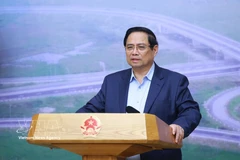
Prime Minister Pham Minh Chinh had ever underscored that the overriding goal extends beyond merely removing the EC yellow card. It encompasses construction of a lasting, long-term fisheries industry: curbing high-risk extraction, scaling aquaculture and deep processing, and generating stable employment that actually improves material life for citizens.
These local policies demonstrate that occupational transition is no longer a temporary measure but a central pillar in Vietnam’s fisheries restructuring strategy, striking a balance between marine economic growth, ecosystem preservation and global responsibility./.