Frozen IPO market makes it difficult to attract foreign capital

The lack of initial public offerings (IPOs) from new market entrants makes it difficult for the securities market of Vietnam, which is dominated by banking stocks, to attract foreign capital.
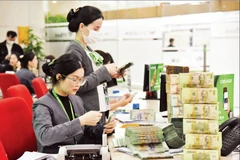
Frozen IPO market makes it difficult to attract foreign capital ảnh 1At Bao Viet Securities (Photo: VNA)
Hanoi (VNS/VNA) - The lack of initial public offerings (IPOs) fromnew market entrants makes it difficult for the securities market of Vietnam,which is dominated by banking stocks, to attract foreign capital.

The IPO market in Vietnam had been frozen during the past four years after therobust period of 2017-19, which saw IPOs of big names such as Petrolimex (PLX),Vinhomes (VHM), Vincom Retail (VRE), Techcombank (TCB), VPBank (VPB), Binh Son Refiningand Petrochemical Joint Stock Company (BSR) and PV Power (POW).

A report by Deloitte Vietnam earlier this year showed that there were onlyeight successful IPOs in Vietnam in 2022 which raised a total of 71 billion USD,compared to 42 IPOs in Thailand which raised 3.6 billion USD and 59 inIndonesia with 2.3 billion USD raised.

Since the COVID-19 pandemic, there were new options coming from the switchingof listings to HCM City Stock Exchange (HOSE) such as Duc Giang Chemicals(DGC), Vietnam Rubber Corporation (GVR), Becamex (IJC), Viettel Construction(CTR). However, the stocks with low liquidity of free-float were not tastes offoreign investors.

Different from the robust period in 2018, the recent IPOs were not attractiveto cash inflow with many stocks tumbling significantly after IPOs.

One of the reasons for the frozen IPO market was the stagnant equitisation ofseveral State-owned enterprises (SOEs) including Agribank, VNPT, MobiFone,Vinataba, Vinachem and HUD which still had no specific date for completion.

The problems in asset valuation caused the IPO of SOEs to be stuck, creating abottleneck in attracting foreign indirect investment (FII) flows in Vietnam, NguyenDuy Linh, general director of VPBank Securities said.

With estimates that the US Federal Reserve was likely to make significant ratecuts next year, beginning earlier than previously forecasted, together with therecovery of emerging economies, the FII would be more selective towards marketswith stories for investment. Vietnam would be a destination, Linh said.

“The upgradation of the market status plays an important role,” Linh said,adding that the Government should strengthen IPOs, capital divestment at SOEsas well as upgrading the stock market status in 2024-25 to attract FII.

He said that FII inflow depended on the quality of economic growth, stocks, themarket transparency and enterprises themselves meeting criteria for investment.“There are opportunities even in the most difficult time,” Linh said.

According to Chairman of Dragon Capital Vietnam Dominic Scriven, the stockmarket should not rely too much on the IPOs of SOEs alone. He said the solutionshould be promoting the listings of private enterprises. “The diversity ofstocks will help attract foreign capital,” he said.

The lack of diversity of stocks made it difficult for investors and funds todevelop their portfolios because currently banking and real estate stocksaccount for the majority of the Vietnam’s stock market.

For example, Pyn Elite Fund spent more than half of their net asset value,estimated at around 800 million USD, in banking stocks. The 1.6 billion USD VEILunder Dragon Capital also held 60% of their net asset value in banking and realestate stocks.

Banking stocks were too dominant. Statistics shows that banks account fornearly 40% of the capitalisation on HCM City Stock Exchange, in whichVietcombank (VCB) and BIDV (BID) alone make up for 15%. There are 14 bankingstocks in the VN30 basket. Sixteen out of 41 companies with a marketcapitalisation from 1 billion USD were banks.

New market entrants would be important if Vietnam wanted to take advantage ofthe foreign cash inflow when the market status was updated, he said.

“When the bottlenecks in the IPOs of SOEs cannot be solved immediately, theexpectation should be on the private sector,” he said.

Many private companies planned to IPO worth billions of US dollar in the lasttwo years, including Hung Thinh Land, CP Vietnam, VSIP, Giao Hang Tiet Kiem, BachHoa Xanh and Thaco.

Vietnam is currently classified as a “frontier market” by global ratingsorganisations FTSE Russell and MSCI.

FTSE Russell’s September 2023 ranking report placed Vietnam on a watch list forpossible reclassification to secondary emerging market status./.
VNA
See more

An image of a Vietnamese game. CIS region has potential for gaming developers from Viet Nam. (Photo: Courtesy of cellphones.com.vn_

CIS: Opportunity for game developers in Vietnam

The CIS region, which includes Eastern Europe and Central Asia, has potential for gaming developers from Vietnam as this market displays user behaviour patterns that are highly favourable for mobile gaming growth, particularly around major holiday periods.

Banks, including MB Bank, have issued alerts about scams conducted via social media platforms such as Zalo and Facebook, where criminals impersonate acquaintances. (Photo: The Courtesy of MBBank)

Financial scams surge ahead of Tet

As the Lunar New Year (Tet) approaches, financial and banking scams in Vietnam are showing a sharp upward trend, prompting banks and law enforcement agencies to issue repeated warnings.

Hai Phong targets 4.3 billion USD in FDI in 2026 (Photo: VNA)

Hai Phong city targets 4.3 billion USD in FDI in 2026

Hai Phong’s investment appeal is underpinned by a rapidly expanding development space, including the Southern Coastal Economic Zone covering more than 20,000 hectares, a planned free trade zone, deep-water ports at Lach Huyen, and 12 industrial parks newly established in 2025.

The relocation of check-in counters aims to better meet the travel needs of residents and visitors. (Photo: VNA)

Vietjet shifts domestic check-in at Tan Son Nhat from January 13

During the recent New Year 2026 holiday peak, Vietjet added 380 flights, equivalent to nearly 78,000 additional seats, on many key domestic routes linking Hanoi and Ho Chi Minh City with destinations such as Vinh, Thanh Hoa, Hai Phong, Da Nang, Phu Quoc, Nha Trang and Da Lat.

Commercial banks are providing approximately 88% of total green credit outstanding in Vietnam. (Photo: nhandan.vn)

Capital sources expanded for sustainable growth

According to the State Bank of Vietnam (SBV), by the end of November 2025, outstanding green credit was estimated at around 750 trillion VND (28.55 billion USD), with an average growth rate exceeding that of overall credit in the economy.

Customers select goods at a supermarket. (Photo: VNA)

Retail market expands sharply, sustainability challenges persist

According to a report on recently released by the Ministry of Industry and Trade’s Agency for Domestic Market Surveillance and Development, the size of the market reached more than 7 quadrillion VND (about 266 billion USD) in 2025, up around 10% compared with 2024.

Oil rigs at the Bach Ho oil field. (Photo: VNA)

Resolution 79: State economy to lead growth

Resolution 79 is described as a “clear action declaration” by the Politburo, saying the state economy is not only responsible for maintaining macroeconomic stability, but must also become the force leading a new growth model that is green and sustainable.

Workers at Garment 10 Corporation produce apparel for export. (Photo: Nhan Dan)

Vietnam leverages export advantages within RCEP region

In 2025, seafood exports to China alone exceeded 2.2 billion USD, up about 33% compared to 2024. Shipments to Japan fetched nearly 1.7 billion USD, a year-on-year increase of 14.6%, while those to the Republic of Korea and Australia grew by 9.6% and 3.2%, respectively.

Certificates of membership in the Vietnam International Financial Centre in Da Nang are awarded at the conference on January 9. (Photo: VNA)

Da Nang continues targeted investment promotion approaches

According to Chairman of the Da Nang People’s Committee Pham Duc An, the city prioritises building sustainable economic ecosystems and focuses on key breakthrough sectors with strong spillover effects, including high technology and digital transformation, logistics, urban infrastructure, finance, processing and manufacturing industries, high-tech agriculture, and the pharmaceutical and medicinal herb industry.

In 2025, Hyundai sales reached 53,229 vehicles across the Vietnamese market. (Illustrative photo: Yonhap/VNA)

Hyundai sales in Vietnam rise almost 23% in December

In 2025, sales reached 53,229 vehicles across the market, a result considered a testament to the efforts by TC Group, Hyundai Thanh Cong, and the entire Hyundai dealership network nationwide amidst a volatile market.