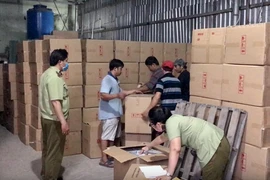
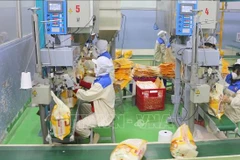
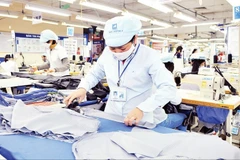
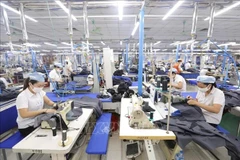
Illustrative image (Photo: VNA)
 Hanoi (VNS/VNA) -Amid the coronavirus epidemic, many textile businesses in Vietnam have shiftedto producing antibacterial masks to serve market demand.
As the Ministry of Health says Vietnam needs 10 million masks every day,textile enterprises have rushed to fill orders.
Since early February, Vinatex and its members have cut part of their clothingproduction lines to produce antibacterial masks. In the last week of February,they supplied more than 5.5 million products and expect to produce 12 millionmore in March.
According to Le Tien Truong, Vinatex’s deputy director, the production of clothmasks has reflected market adaption and quickly responded to the new demand oflocal textile businesses.
The production output of six units in the group reached nearly 35 tonnes ofantibacterial knitted fabric and nine tonnes of non-woven fabric per day.
As the most active firm in the production of masks, Tran Viet, general directorof Dong Xuan Knitting One Member Co., said: “Our firm is not a medical unit,but in such a situation, we have learned Japanese technology for antibacterialfabric production.”
With fabric production and supply of seven to eight tonnes per day, Viet’s firmand its satellite companies can produce approximately 300,000 masks per day.
They also transferred the technology to Nam Dinh Textile Joint StockCorporation (Natexco) and Nam Dinh Garment Joint Stock Company (Nagaco) and apart to Hung Yen Garment Corporation (Hugaco) to boost production.
Thai Nguyen-based TNG Investment & Trading Joint Stock Company (ThaiNguyen) also shifted to produce masks. Chairman of the firm, Nguyen Van Thoi,said “We have implemented production in just three days after getting standardsapproval from the Ministry of Health.”
TNG factories also stopped some other lines to prioritise mask production. Thoiplans to produce about two million products first. Half of them will be givenout for free to local people in the area.
Using US-imported antibacterial materials to produce masks, Tran Van Quy,General Director of Trung Quy Textile and Garment Co., said “Our firm’santibacterial cloth masks can be used up to 30 times.”
Quy’s firm cooperated with GarmentTech Pro Company, which had stopped allclothing production to switch to making masks. On average, they make 100,000masks each day but still cannot meet demand.
So far, they have provided at least 2.5 million antibacterial cloth maskssupplied to the city's supermarket system and large enterprises.
Truong Thanh Hoai, Director of the Ministry of Industry and Trade's IndustryDepartment estimated that as much as 400 tonnes of antibacterial cloth isneeded to serve local demand. He added local textile enterprises could meet thedemand.
Though most cloth masks aresold at low prices of less than 10,000 VND each, Nguyen Van Bach, a freelancesalesperson said “They can boost their image and at the same time attract morecustomers to buy their products.”
While lining up to pay for her masks at a Dong Xuan Knitting store in HaNoi, Nguyen Phuong Mai, 35, also buys other clothing items.
Mai said: “I pay 70,000 VND for a pack of 10 masks and more than 2 million VNDfor other products.” Mai also said she would not have shopped here if not forthe masks.
To attract more clients, Hoang Duong Trading and Service Joint Stock Companyalso provided 250,000 masks at stable prices.
Saigon Co.op supermarket chain ordered 1.5 million X28 antibacterial masks tosell at low prices. The Big C supermarket system has worked with suppliersto distribute more than one million masks for its customers across 37 supermarketsin 22 provinces in Vietnam.
The cloth masks are also among the best selling items in convenient stores,drugstores and online trading websites./.
As the Ministry of Health says Vietnam needs 10 million masks every day,textile enterprises have rushed to fill orders.
Since early February, Vinatex and its members have cut part of their clothingproduction lines to produce antibacterial masks. In the last week of February,they supplied more than 5.5 million products and expect to produce 12 millionmore in March.
According to Le Tien Truong, Vinatex’s deputy director, the production of clothmasks has reflected market adaption and quickly responded to the new demand oflocal textile businesses.
The production output of six units in the group reached nearly 35 tonnes ofantibacterial knitted fabric and nine tonnes of non-woven fabric per day.
As the most active firm in the production of masks, Tran Viet, general directorof Dong Xuan Knitting One Member Co., said: “Our firm is not a medical unit,but in such a situation, we have learned Japanese technology for antibacterialfabric production.”
With fabric production and supply of seven to eight tonnes per day, Viet’s firmand its satellite companies can produce approximately 300,000 masks per day.
They also transferred the technology to Nam Dinh Textile Joint StockCorporation (Natexco) and Nam Dinh Garment Joint Stock Company (Nagaco) and apart to Hung Yen Garment Corporation (Hugaco) to boost production.
Thai Nguyen-based TNG Investment & Trading Joint Stock Company (ThaiNguyen) also shifted to produce masks. Chairman of the firm, Nguyen Van Thoi,said “We have implemented production in just three days after getting standardsapproval from the Ministry of Health.”
TNG factories also stopped some other lines to prioritise mask production. Thoiplans to produce about two million products first. Half of them will be givenout for free to local people in the area.
Using US-imported antibacterial materials to produce masks, Tran Van Quy,General Director of Trung Quy Textile and Garment Co., said “Our firm’santibacterial cloth masks can be used up to 30 times.”
Quy’s firm cooperated with GarmentTech Pro Company, which had stopped allclothing production to switch to making masks. On average, they make 100,000masks each day but still cannot meet demand.
So far, they have provided at least 2.5 million antibacterial cloth maskssupplied to the city's supermarket system and large enterprises.
Truong Thanh Hoai, Director of the Ministry of Industry and Trade's IndustryDepartment estimated that as much as 400 tonnes of antibacterial cloth isneeded to serve local demand. He added local textile enterprises could meet thedemand.
Though most cloth masks aresold at low prices of less than 10,000 VND each, Nguyen Van Bach, a freelancesalesperson said “They can boost their image and at the same time attract morecustomers to buy their products.”
While lining up to pay for her masks at a Dong Xuan Knitting store in HaNoi, Nguyen Phuong Mai, 35, also buys other clothing items.
Mai said: “I pay 70,000 VND for a pack of 10 masks and more than 2 million VNDfor other products.” Mai also said she would not have shopped here if not forthe masks.
To attract more clients, Hoang Duong Trading and Service Joint Stock Companyalso provided 250,000 masks at stable prices.
Saigon Co.op supermarket chain ordered 1.5 million X28 antibacterial masks tosell at low prices. The Big C supermarket system has worked with suppliersto distribute more than one million masks for its customers across 37 supermarketsin 22 provinces in Vietnam.
The cloth masks are also among the best selling items in convenient stores,drugstores and online trading websites./.
VNA