Hanoi (VNA) – Support industries are regarded as an important foundation for Vietnam’s sustainable economic development, helping reduce dependence on imported materials and components.
However, investment attraction in this sector remains challenging due to constraints in capital, technology and supply chain connectivity.
Decree No. 205/2022/ND-CP, which amends Decree No. 111/2015/ND-CP, was issued to address these bottlenecks and create more favourable conditions for the growth of supporting industries.
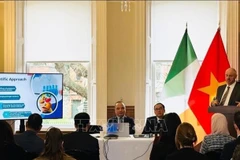
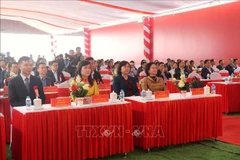
The issue was discussed at a seminar themed “Attracting Investment in Supporting Industries: Policy as a Lever” held by the Industry and Trade magazine in Hanoi on October 13.
Bottlenecks in supporting industry development
In the first nine months of 2025, Vietnam’s import-export turnover reached a record 681 billion USD, including 349 billion USD in exports and 332 billion USD in imports, generating a trade surplus of 17 billion USD.
However, according to Deputy Director of the Industry Agency under the Ministry of Industry and Trade Pham Van Quan, 94% of the country’s imports are still raw materials, spare parts and components — products that could be locally manufactured if it develops a strong base and supporting industrial system.
“We can solve the import problem by developing supporting industries,” he stressed.
Despite great potential, investment capital remains limited, especially from foreign investors. Since 2020, FDI in supporting industries has reached just over 20 billion USD, while domestic investment stands at only 5–6 billion USD.
Quan pointed out two core weaknesses of Vietnamese firms that are capital and technology.
Supporting industries require large-scale investment and advanced technology, but these are the weakest points of domestic enterprises, he said.
To address this, nearly a decade ago the Government issued Decree 111/2015/ND-CP to encourage businesses to invest in supporting industries, considered the backbone of the national industrial sector. Yet, implementation exposed several limitations, prompting the adoption of Decree 205/2022/ND-CP as a crucial update introducing breakthrough measures to resolve issues related to financing, R&D and market linkages.
Under the new decree, FDI firms seeking incentives must sign linkage contracts with small- and medium-sized domestic enterprises. This helps to enhance Vietnamese participation in global supply chains. It also establishes industrial support centres that allow firms to pilot production without incurring heavy costs.
Nevertheless, implementation challenges remain. Quan admitted that policies often have a lag, and many firms are either unaware of or unable to access incentives due to the lack of professional legal advisory units.
To tackle this, the Ministry of Industry and Trade (MoIT) has launched the Industrial Development Support Centre in Hanoi to assist enterprises in utilising incentive programmes and navigating administrative procedures.
Support from inputs to market access
At the local level, Hoang Anh Tuan, Deputy Director of the Department of Industry and Trade of Bac Ninh province, said the province has achieved remarkable progress in developing supporting industries thanks to strong leadership and targeted policies. Bac Ninh’s industrial production value continues to grow steadily, ranking among the top nationwide, with significant contributions from supporting industry enterprises.
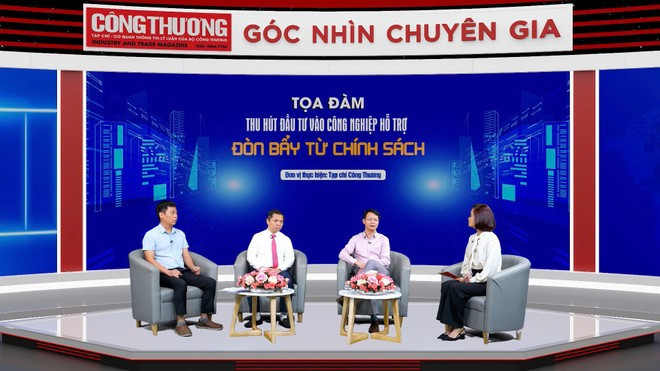
The province has introduced numerous support policies, signing cooperation agreements with the MoIT and Samsung to help local firms improve production capacity. It has also implemented “Green Lane 24h” and “Green Lane 60%” mechanisms to facilitate major projects.
Still, Vietnamese enterprises face hurdles in joining global supply chains. Quan noted that FDI companies often prefer working with their long-established foreign partners rather than local firms, while Vietnamese enterprises remain limited in technology access and industrial discipline.
Decree 205 seeks to address this by requiring closer collaboration between FDI and domestic enterprises to promote localisation and reduce import dependence.
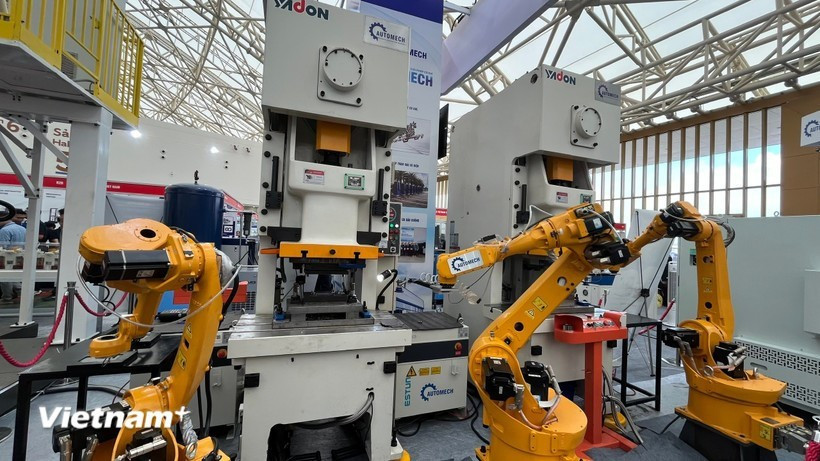
From the business perspective, Ho Ngoc Toan, Deputy General Director of Automech Equipment and Mechanical Solutions JSC, identified three major advantages for Vietnamese supporting industry firms: flexible production capabilities, a young and adaptable engineering workforce, and a favourable ecosystem with vast market potential.
However, they also face five key weaknesses — small scale, limited capital, outdated technology, lack of international standards, and underdeveloped design industries. He suggested firms innovate, invest in R&D and digitalisation to meet market demand.
From a provincial standpoint, Tuan described Decree 205 as a strategic framework providing comprehensive support, from raw materials and production to market access. He said Bac Ninh is committed to effectively implementing the decree through legal assistance, supply chain linkage and development of specialised industrial parks.
He also called on the MoIT to guide technology and R&D connectivity while encouraging provinces to register specific supporting industry products for inclusion in a national development plan./.