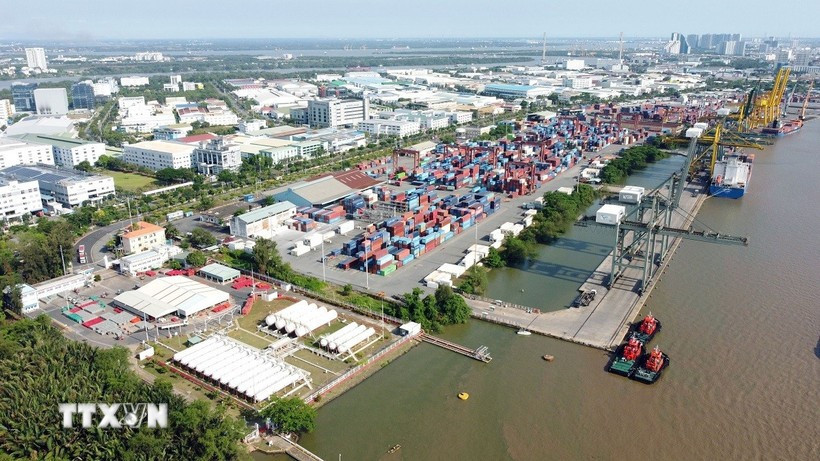
HCM City (VNA) - Ho Chi Minh City holds numerous advantages in attracting the business community and foreign investors; however, it needs to continue administrative reforms and improve policy implementation to mobilise high-quality and sustainable capital for its metropolis development goals.
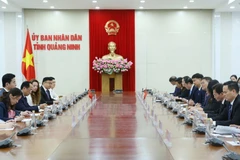
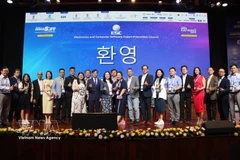
This message was shared at the 2025 conference between the city’s leaders and representatives from foreign-invested enterprises, organised by the Investment and Trade Promotion Centre of Ho Chi Minh City (ITPC) on October 30.
Tran Phu Lu, Director of ITPC, affirmed that the foreign-invested business community has not only contributed capital, technology, and advanced management practices but also helped spread the spirit of integration, innovation, and sustainable development.
Despite challenges in recent years, foreign investors have maintained strong confidence in Ho Chi Minh City’s investment environment, known for its dynamism, openness, and constant renewal. This serves as a driving force for the city to continue streamlining administrative procedures, improving the investment environment, and supporting businesses toward sustainable growth, Lu stated.
Truong Minh Huy Vu, Director of the Ho Chi Minh City Institute for Development Studies, stated that the merger of Binh Duong, Ba Ria–Vung Tau, and Ho Chi Minh City marks an unprecedented turning point in the history of Vietnam’s urban development. This move opens up opportunities to comprehensively redesign the development space, shaping the new Ho Chi Minh City as a special administrative and economic entity - a pioneer that leads and spreads development nationwide, with a vision of becoming an “international metropolis” of Southeast Asia.
For the 2025–2030 period, it aims for rapid and sustainable socio-economic growth, targeting an average GRDP growth rate of 10–11% per year. By 2030, per capita GRDP is expected to reach 14,000–15,000 USD. The city will focus on the quality of growth, striving for total factor productivity (TFP) to contribute 60% to GRDP and for the digital economy to account for 30–40%. The long-term vision toward 2045 is to become an international metropolis, ranked among the top 100 cities in the world.
To realise these goals, HCM City will focus on five strategic solution groups: improving institutions, transforming the growth model, developing strategic infrastructure, attracting investment, and developing human resources.

Travis Mitchell, Executive Director of the American Chamber of Commerce (AmCham) in Vietnam, recommended that Ho Chi Minh City continue improving the investment environment, simplifying administrative procedures, and ensuring policy stability. It also welcomed ongoing administrative reforms, digital transformation initiatives, and the development of the financial centre and high-quality human resources.
US businesses commit to long-term cooperation, and contributions of technology and resources to help the city build a dynamic, integrated, and prosperous economy, he affirmed.
Meanwhile, the European business community in Vietnam expressed strong interest in areas that promote sustainable development. Erick Contreras, Vice-Chair of the European Chamber of Commerce (EuroCham) in Vietnam, noted that with its strategic location, robust infrastructure, and high-quality workforce, Ho Chi Minh City has become one of the most attractive destinations for global investors and holds significant potential for further breakthroughs.
The city's dynamic economy and strategic location position it well to become Vietnam’s sucessful international financial centre. However, to fully realise this potential, it must continue enhancing policy transparency and improving efficiency in governance and implementation.
Okabe Mitsutoshi, Chief Representative of the Japan External Trade Organization (JETRO) in Ho Chi Minh City, also proposed the city continue to simplify administrative procedures, improve legal frameworks, and increase transparency in processes such as business establishment, import procedures, labour permits, and visa issuance, in order to enhance investor satisfaction and attract more Japanese investment.
Appreciating the contributions and recommendations of the foreign-invested business community, Chairman of the municipal People’s Committee Nguyen Van Duoc stated that the city is shaping strategic development corridors to strengthen regional connectivity with neighbouring provinces such as Dong Nai and Tay Ninh. In the coming period, it will continue to reform administrative procedures, innovate governance methods, and reduce time and costs for businesses.
He emphasised that Vietnam in general, and Ho Chi Minh City in particular, do not aim to become a mere “assembly hub” but instead focus on attracting high-quality FDI capital associated with science, technology, and innovation.
Therefore, the city consistently identifies businesses as the centre of development, while pledging to protect the legitimate rights and interests of investors, proactively address difficulties, and promptly solve obstacles faced by enterprises, with the goal of fostering long-term cooperation and shared growth, Duoc stressed./.