History of re-organisation of Vietnamese provinces and cities

Following the re-organisation, the number of provincial-level units could be cut by nearly 50%, and grassroots-level units by over 70%.

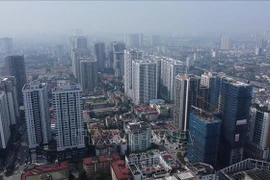
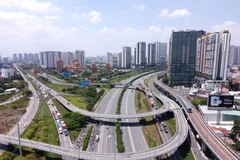
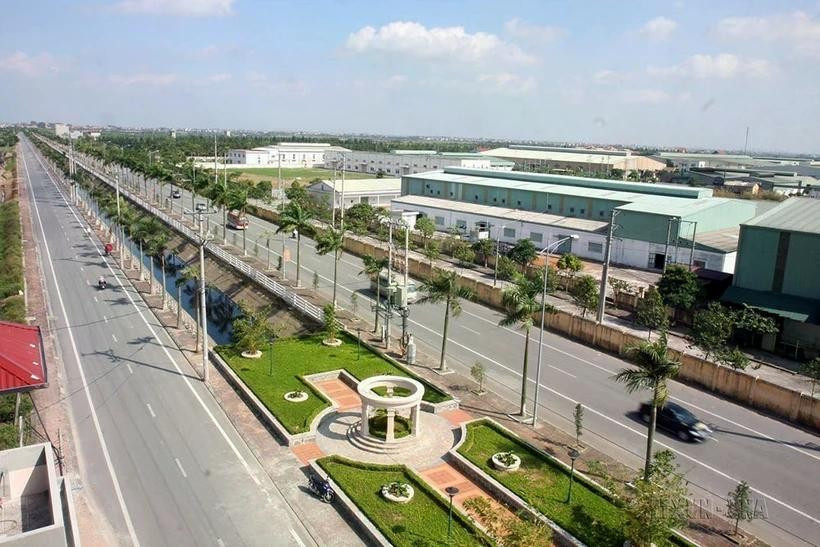
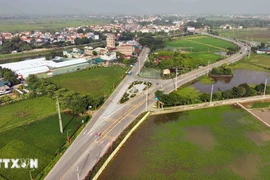
In 2008, the National Assembly approved a resolution to merge Ha Tay province, several communes from Hoa Binh province, and Me Linh district (formerly under Vinh Phuc) into the capital city of Hanoi. In the photo: The inter-communal road of Dan Phuong – the first news-style rural district of Hanoi. (Photo: VNA)

Hanoi (VNA) – Since 1975, Vietnam has undergone numerous major re-organisations at the provincial level. At one point, the number of provinces and centrally-run cities was reduced from 72 to just 38.

Since 2008, Vietnam has maintained 63 provincial-level administrative units, including 57 provinces and six centrally-run cities.

According to a draft proposal on administrative re-organisation and the introduction of a two-level local administrative system, Vietnam plans to restructure its administrative apparatus into two levels - provincial and grassroots. Following the re-organisation, the number of provincial-level units could be cut by nearly 50%, and grassroots-level units by over 70%.

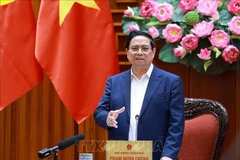
Minister of Home Affairs Pham Thi Thanh Tra said that after receiving the Politburo’s approval in principle for the reorganisation policy, the Government’s Party Committee has collected feedback from ministries, sectors, and localities. A consolidated proposal is expected to be submitted to the Party Central Committee by mid-April 2025. A national conference will be held following the Party Central Committee's meeting to implement the restructuring plan.

Historical overview

Vietnam’s administrative boundaries have changed significantly over time. During feudal times, territorial units such as “chau, quan, dao, lo, phu, thua tuyen, dinh, tinh, tong, and xa” were used, with names and scales varying between dynasties.

The most comprehensive reform came under Emperor Minh Mang (reigned 1820–1840). In 1831–1832, he abolished large regional commands like Bac Thanh and Gia Dinh Thanh and divided the entire country into standardised provincial units (tinh) across three regions - Bac Ky (Northern Region), Trung Ky (Central Region), and Nam Ky (Southern Region).

Specifically, Bac Ky comprised 13 localities from Cao Bang to Ninh Binh, while Trung Ky covered the imperial city of Thua Thien and 11 other provinces from Thanh Hoa to Binh Thuan, and Nam Ky had six provinces, later referred to as Nam Ky Luc Tinh, including Gia Dinh, Bien Hoa, and Ha Tien.

These administrative structures largely remained until the French colonial period.

After the 1945 August Revolution, Vietnam initially had 65 provinces under the new Democratic Republic of Vietnam. Before reunification in 1975, North Vietnam had 28 provinces, cities, and special zones, while South Vietnam had 44.

Following reunification, a sweeping wave of mergers took place in 1975–1976, reducing the total number of provincial-level units to 38.

By 1976, Vietnam had 35 provinces and 3 centrally-governed cities: Hanoi, Hai Phong, and Ho Chi Minh City.

In 1978, the National Assembly approved the expansion of Hanoi’s administrative boundaries, incorporating five additional districts into the capital. In the same year, Cao Lang province was split into two separate provinces - Cao Bang and Lang Son, raising the total number of provinces and centrally-run cities to 39.

Some mergers were later reversed due to administrative inefficiencies and regional identity considerations.

In 2008, Ha Tay merged into Hanoi, along with Me Linh district (from Vinh Phuc) and parts of Luong Son district (Hoa Binh province). Since then, Vietnam has maintained 63 provincial-level units.

Currently, the restructuring of administrative units, in tandem with the streamlining of the organisational apparatus to ensure compactness, strength, efficiency, effectiveness, and high performance, is being prioritised by the Party and State, and has received broad consensus.

The re-organisation of administrative units aims to create space for development, unlocking the potential, opportunities, and competitive advantages of localities in line with current development conditions, and promoting the autonomy, self-reliance, and resilience of all levels of local government. Above all, it seeks to bring the government closer to the people, ensuring that public services are delivered more promptly, conveniently, and effectively — thereby contributing to greater happiness and prosperity for the people./.
VNA

See more

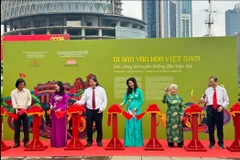
Delegates at the opening of the exhibition (Photo: VNA)

Exhibition highlights vitality of Vietnamese cultural heritage

The exhibition features nearly 200 images showcasing Vietnam’s cultural heritage and efforts to preserve and promote its values in recent years. It is structured around four themes: the legal and policy framework for heritage protection; Vietnamese heritage recognised by UNESCO; the diversity and uniqueness of Vietnamese cultural heritage; and cultural heritage for sustainable development.

During the 2026 New Year holiday, civil servants and public employees will enjoy a continuous four-day break from Thursday, January 1, to Sunday, January 4, 2026. (Photo: VNA)

Civil servants, public employees to have four-day New Year break

Under Official Dispatch No. 12729/VPCP-KGVX dated December 25, civil servants and public employees will have a four-day break from Thursday (January 1) to Sunday (January 4, 2026). To offset this, the working day on Friday (January 2, 2026) will be shifted to Saturday of the following week (January 10, 2026).

The campaign aims to mobilise social resources to support 1.5 million people in need during the upcoming Tet (Lunar New Year) holiday. (Photo courtesy of the VNRC)

Vietnam Red Cross Society launches Tet gift campaign

The campaign aims to mobilise social resources to support 1.5 million disadvantaged individuals, including people with disabilities, the elderly, orphaned children and those affected by natural disasters, for the upcoming Tet (Lunar New Year) holiday.

Illustrative image (Photo: VNA)

Incentives in Population Law expected to reverse birth rate decline

Vietnam’s population has already topped 100 million, but the 2025 population report reveals trends accelerating well beyond earlier forecasts. Fertility has nosedived to all-time lows: the total fertility rate slipped from 2.01 children per woman in 2022 to 1.96 in 2023, then plunged to a record 1.91 in 2024.

Hanoi plans fireworks displays at five locations to welcome New Year 2026. (Photo: qdnd.vn)

VGCL supports proposal for four-day New Year break

Under the plan, civil servants and public employees will take the statutory holiday on January 1, be off work on January 2, and make up the working day on the next Saturday, which falls on January 10, 2026. This would create an uninterrupted four-day break from Thursday (January 1) to Sunday, (January 4, 2026).

Streets flowing toward the heart of HCM City teemed with festive crowds (Photo: chinhphu.vn)

Christmas 2025 in HCM City brings faith and community together

Solidarity and kindness define Christmas in HCM City, where love transcends religion and ethnicity. A striking example is Most Venerable Thich Le Trang, Head of the Vietnam Buddhist Sangha (VBS) Executive Board of HCM City, extended Christmas greetings to Archbishop Nguyen Nang of the Archdiocese of Ho Chi Minh City, and they pledged to guide believers and followers to live virtuous lives in love, compassion, and charity, serving as a vivid testament to religious unity.

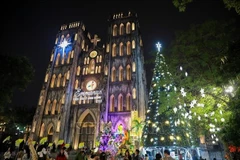
The area around St Joseph’s Cathedral in Hoan Kiem ward is decorated for Christmas 2025 (Photo: VNA)

Christmas in Vietnam blends faith, culture and national unity

Christmas, also known as the Nativity of the Lord, marks the birth of Jesus Christ and is widely celebrated in many countries as a time for family reunions, sharing love and fostering a warm, joyful atmosphere within families and communities.

Illustrative image (Photo: chinhphu.vn)

PM orders urgent post-storm recovery in central region

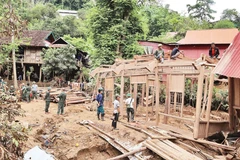
As of December 21, repairs had been completed on more than 33,200 damaged houses (over 95%, with full completion expected by December 31, 2025), while 480 houses that collapsed or were swept away by floods have been rebuilt (over 29%, with full completion expected by January 31, 2026).