HSBC raises Vietnam's growth forecast in 2022 to 6.9%

According to HSBC experts, thanks to a broad-based recovery, Vietnam's GDP in the second quarter increased by 7.7% over the same period last year. The service sector, which once suffered severe economic impacts, has also recovered impressively.
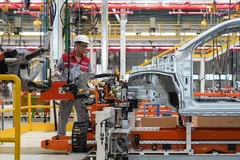
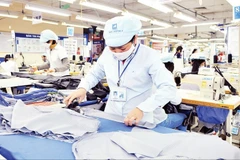
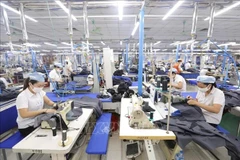
 HSBC raises Vietnam's growth forecast in 2022 to 6.9% ảnh 1Workers of Garment 10 Corporation. (Photo: Duc Duy/Vietnam+)

Hanoi (VNA)- HSBC Global Research has just released the “Vietnam at a glance” report for July 2022, updating key forecasts for the Vietnam market.

Accordingly, HSBC has raised its growth forecast for Vietnam in 2022 to 6.9%, instead of the previous 6.6%. The bank also lowered Vietnam's growth forecast for the full year of 2023 to 6.3% from 6.7%.

According to HSBC, like many other countries, the risks of Omicron mutation are gradually disappearing coupled with easing restrictions, creating the basis for Vietnam to return to normal.

According to the HSBC report, after two quarters of stable reopening, Vietnam’s economic recovery continues to be an outstanding example in the region. Its GDP growth in the second quarter hit 7.7% year-on-year, easily exceeding market expectations (HSBC: 5.8%; research institutions: 5.9%). This is also the highest quarterly GDP growth Vietnam has ever achieved since 2011, thanks to a strong economic recovery across a wide range of sectors.

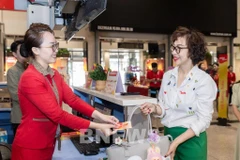
Thanks to the lifting of important domestic and international restrictions in mid-March, the tourism-related sectors, especially transportation and accommodation, have begun to flourish. Meanwhile, the retail sector in the second quarter of 2022 jumped 17% year-on-year, a sign that household consumption has recovered.

The textile and garment, footwear and machinery industries all recorded consistent growth, proving that Vietnam's external dynamics are returning.

The success is partly due to the gradual recovery of the labor market. The unemployment rate fell to 2.3% in the second quarter of 2022, while the number of jobs continued to grow close to pre-pandemic levels.

Besides recovering domestic demand, Vietnam's production has affirmed its leading position. All indicators show steady production growth.

One bright spot that helps Vietnam to protect itself against external risks is a stable FDI source, which helps create a fulcrum for the basic balance. FDI inflows into the manufacturing sector continued to increase, reflecting investor interest and unwavering confidence in Vietnam's fundamentals.

But upon closer analysis, another hidden message also emerges. Although overall growth is very positive, the energy crisis has begun to affect the country’s growth.

According to HSBC, the impact from high energy prices is becoming more and more obvious. On the one hand, the escalation of commodity prices that led to a trade deficit in the second quarter could worsen the already negative situation of the current account. On the other hand, even though household consumption has recovered steadily, high oil prices will likely lighten people's pockets and slowing recovery in the past time. In fact, price pressures have begun to manifest, although still at a manageable level compared to other countries in the region.

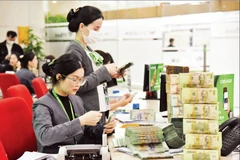
HSBC believes that inflation will surpass 4% from the fourth quarter of 2022 to the second quarter of 2023, requiring the State Bank to start normalizing monetary policy. The State Bank forecasts an interest rate increase by 50 basis points from the third quarter of 2022 and increase by 50 basis points each quarter until the third quarter of 2023. Thus, by the end of 2023, the regulatory interest rate could be up to 6.5%.

“Vietnam benefits from reopening its economy. Domestic demand is returning while external dynamics continue to be favorable. However, Vietnam should be cautious of increasing risks to growth, especially risks from escalating energy prices,” HSBC expert emphasized./.

VNA

See more

Vietnam is emerging as a preferred destination for many foreign enterprises (Photo: hanoimoi.vn)

Vietnam emerges as bright spot of growth, trusted and responsible partner

Despite a volatile global environment, Vietnam recorded solid gains in 2025. With flexible and proactive policies under the leadership of the Communist Party of Vietnam and the Government, all 15 key socio-economic targets were met or exceeded, while GDP expanded by about 8.02%, surpassing expectations.

An image of a Vietnamese game. CIS region has potential for gaming developers from Viet Nam. (Photo: Courtesy of cellphones.com.vn_

CIS: Opportunity for game developers in Vietnam

The CIS region, which includes Eastern Europe and Central Asia, has potential for gaming developers from Vietnam as this market displays user behaviour patterns that are highly favourable for mobile gaming growth, particularly around major holiday periods.

Banks, including MB Bank, have issued alerts about scams conducted via social media platforms such as Zalo and Facebook, where criminals impersonate acquaintances. (Photo: The Courtesy of MBBank)

Financial scams surge ahead of Tet

As the Lunar New Year (Tet) approaches, financial and banking scams in Vietnam are showing a sharp upward trend, prompting banks and law enforcement agencies to issue repeated warnings.

Hai Phong targets 4.3 billion USD in FDI in 2026 (Photo: VNA)

Hai Phong city targets 4.3 billion USD in FDI in 2026

Hai Phong’s investment appeal is underpinned by a rapidly expanding development space, including the Southern Coastal Economic Zone covering more than 20,000 hectares, a planned free trade zone, deep-water ports at Lach Huyen, and 12 industrial parks newly established in 2025.

The relocation of check-in counters aims to better meet the travel needs of residents and visitors. (Photo: VNA)

Vietjet shifts domestic check-in at Tan Son Nhat from January 13

During the recent New Year 2026 holiday peak, Vietjet added 380 flights, equivalent to nearly 78,000 additional seats, on many key domestic routes linking Hanoi and Ho Chi Minh City with destinations such as Vinh, Thanh Hoa, Hai Phong, Da Nang, Phu Quoc, Nha Trang and Da Lat.

Commercial banks are providing approximately 88% of total green credit outstanding in Vietnam. (Photo: nhandan.vn)

Capital sources expanded for sustainable growth

According to the State Bank of Vietnam (SBV), by the end of November 2025, outstanding green credit was estimated at around 750 trillion VND (28.55 billion USD), with an average growth rate exceeding that of overall credit in the economy.

Customers select goods at a supermarket. (Photo: VNA)

Retail market expands sharply, sustainability challenges persist

According to a report on recently released by the Ministry of Industry and Trade’s Agency for Domestic Market Surveillance and Development, the size of the market reached more than 7 quadrillion VND (about 266 billion USD) in 2025, up around 10% compared with 2024.

Oil rigs at the Bach Ho oil field. (Photo: VNA)

Resolution 79: State economy to lead growth

Resolution 79 is described as a “clear action declaration” by the Politburo, saying the state economy is not only responsible for maintaining macroeconomic stability, but must also become the force leading a new growth model that is green and sustainable.

Workers at Garment 10 Corporation produce apparel for export. (Photo: Nhan Dan)

Vietnam leverages export advantages within RCEP region

In 2025, seafood exports to China alone exceeded 2.2 billion USD, up about 33% compared to 2024. Shipments to Japan fetched nearly 1.7 billion USD, a year-on-year increase of 14.6%, while those to the Republic of Korea and Australia grew by 9.6% and 3.2%, respectively.

Certificates of membership in the Vietnam International Financial Centre in Da Nang are awarded at the conference on January 9. (Photo: VNA)

Da Nang continues targeted investment promotion approaches

According to Chairman of the Da Nang People’s Committee Pham Duc An, the city prioritises building sustainable economic ecosystems and focuses on key breakthrough sectors with strong spillover effects, including high technology and digital transformation, logistics, urban infrastructure, finance, processing and manufacturing industries, high-tech agriculture, and the pharmaceutical and medicinal herb industry.