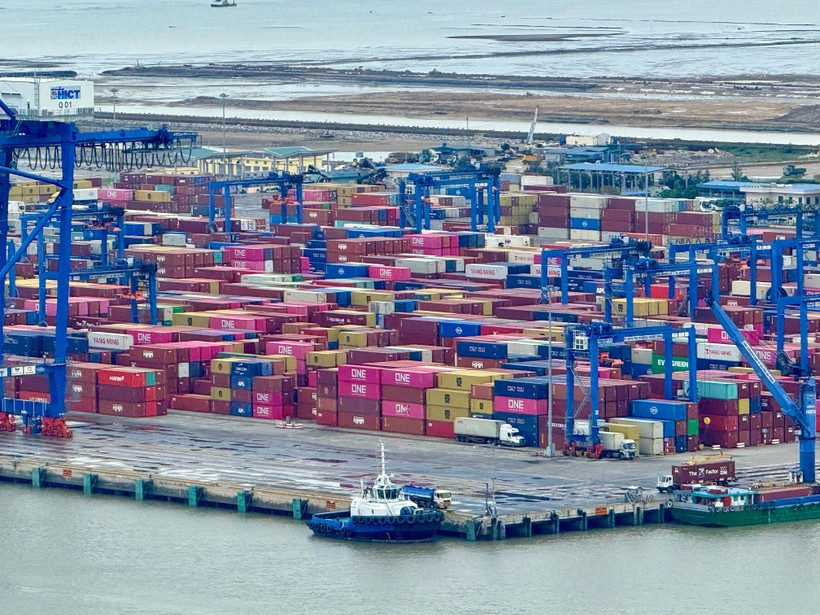
Import–export reaches new record, domestic capacity concerns remain

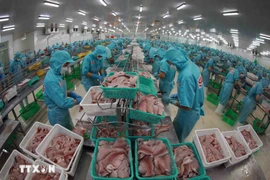
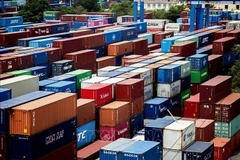
It is estimated that Vietnam’s total import–export turnover in 2025 will reach a record high of 920 billion USD. (Photo: VietnamPlus)

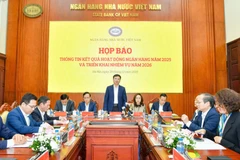
Hanoi (VNA) - Vietnam’s trade is poised to hit a new record this year, underscoring the country’s growing role in global markets but also exposing persistent structural weaknesses that could weigh on long-term sustainability, experts said at a conference on December 16.

The conference was organised by the Ministry of Industry and Trade’s Agency of Foreign Trade to discuss solutions to maintain strong and sustainable export growth in 2026 and the years ahead. The ministry estimated that total import-export revenue could reach 920 billion USD this year, a record high that would place Vietnam among the world’s top 15 countries by trade value.

Vietnam has recorded its 10th consecutive year of trade surplus in 2025, reinforcing its position as one of the most open economies in the region. Total trade has expanded sharply over the past three decades from just 13.4 billion USD in 1995 to 786.9 billion USD in 2024.
img-4517.jpg
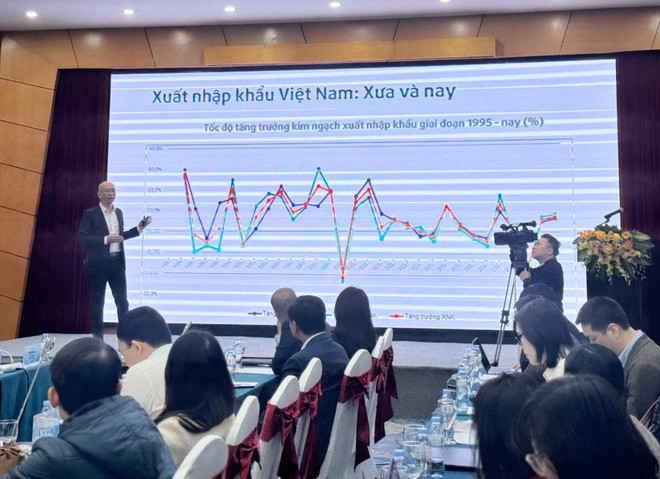
Tran Thanh Hai, Deputy Director of the Import–Export Department under the Ministry of Industry and Trade, notes that Vietnam is consolidating its strong position on the global trade map, as reflected in its impressive growth figures. (Photo: VietnamPlus)

The agency’s Deputy Director Tran Thanh Hai said the country’s total trade surplus was estimated at about 22 billion USD this year, reflecting robust external performance amid global uncertainty.

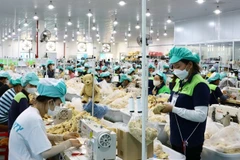
The structure of exports also improved, with processed and manufactured goods accounting for about 85% of total export value. Seven product categories each surpassed 10 billion USD in export turnover, while new-generation free trade agreements such as the Comprehensive and Progressive Agreement for Trans-Pacific Partnership (CPTPP) and the EU–Vietnam Free Trade Agreement (EVFTA) helped further open access to high-standard markets.

According to Nguyen Anh Son, Director of the Agency of Foreign Trade, Vietnam’s trade has witnessed a boom during the 2020–2025 period and has become a key pillar of economic growth. Exports expanded at an average of 10% per year, enabling Vietnam to join the world’s top 20 exporting economies from 2023.

After earning 430.2 billion USD in exports in the first 11 months of this year, Vietnam is poised to reach a record total export value of more than 470 billion USD, up 16% over 2024. “Despite impressive results, Vietnam’s exports are facing significant difficulties and challenges,” Son said.

In the global market, slow economic recovery, prolonged geopolitical conflicts, trade fragmentation, production shifts and rising protectionism are narrowing traditional growth space for exports, according to Son.

In addition, stricter requirements related to sustainability, emissions reduction, origin traceability, social responsibility and green supply chains are becoming mandatory and creating pressure on exporters, especially small and medium-sized enterprises (SMEs), to transition.

Another problem is the heavy dependence of export growth on the foreign-invested sector, while domestic enterprises have yet to climb global value chains.

Many sectors remain heavily dependent on imports for raw materials and components, making production and exports vulnerable to external shocks and posing risks of supply chain disruptions.

New requirements

According to Hai, the challenges, however, are creating a historic opportunity for Vietnam amid the global restructuring of supply chains. The US–China trade tension, the COVID-19 pandemic and the conflict in Ukraine have highlighted the risks of reliance on a single manufacturing hub, prompting a strong wave of production shifts out of China.

As multinational corporations seek to diversify risks, Vietnam is emerging as a strategic destination for investment. In the globalisation process, regionalisation and protectionism are rising, while the pandemic and geopolitical conflicts have fragmented global trade into multiple layers of standards and requirements.

Countries around the world tend to impose more technical barriers to promote domestic production. Notably, changes in US trade policy following the return of President Donald Trump are expected to have a strong impact and create additional pressure on Vietnam to adapt to policy shifts in this key market.

Tran Van Trong, General Secretary of the Vietnam E-commerce Association, said cross-border e-commerce was opening up significant room for export expansion, especially for SMEs. However, it also required urgent improvements in digital capacity, logistics and compliance with international market regulations.

Nguyen Thi Thu Trang, former Director of the WTO and Integration Centre under the Vietnam Chamber of Commerce and Industry, said meeting sustainability standards related to the environment, labour, social responsibility and corporate governance was no longer optional but a mandatory requirement for exports.

“Proactively adapting to sustainability standards will help Vietnamese businesses enhance competitiveness, reduce trade risks and lay the foundation for long-term growth,” Trang said.

At the conference, Son stressed that exports must continue to serve as a core growth driver but with a decisive shift from extensive growth to deeper, more efficient and sustainable development.

The focus must be on increasing value added, technological content, localisation rates and strengthening economic self-reliance while gradually reducing dependence on traditional cost-based advantages, Son said.

Experts at the conference said it was necessary to better utilise free trade agreements, particularly new-generation FTAs, through improved market information, stronger support for rules-of-origin compliance and technical standards.

State support measures such as institutional reforms, logistics infrastructure development, green and digital transformation and efforts to enhance corporate competitiveness were also needed to promote exports./.

VNA

See more

Representatives of Central Retail Vietnam and Lotte Plaza Market sign a distribution cooperation agreement at the networking event in Ho Chi Minh City on March 13. (Photo: VNA)

Vietnamese firms step up cooperation with international distribution chains

Connecting Vietnamese businesses with international distribution networks has been a key component of government-led trade promotion programmes for many years, which are designed to help domestic companies place goods directly into global retail systems rather than exporting solely through intermediaries.

Direct Hanoi–Amsterdam flights by Vietnam Airlines to begin on June 16. (Photo: Vietnam Airlines)

Vietnam Airlines to launch direct Hanoi–Amsterdam service on June 16

Under the plan, the Hanoi–Amsterdam route will commence operations on June 16, 2026, with an expected frequency of three return flights per week using modern wide-body Airbus A350 aircraft. This will be the first direct air link between Vietnam and the Netherlands, helping to shorten travel time and enhance connectivity between Vietnam and one of Europe’s key economic, logistics and aviation transit hubs.

Farmers harvest the 2025 Winter–Spring rice crop in An Giang province. (Photo: VNA)

An Giang accelerates export shift to meet green consumption trends

To enhance competitiveness, authorities are assisting businesses in obtaining globally recognised certifications such as GlobalG.A.P., Organic and HACCP, enabling key exports including rice, seafood and clean agricultural products to strengthen their position in global markets, according to Quang Xuan Lua, Director of the An Giang Centre for Trade and Investment Promotion.

Motorcycle riders refill their vehicles at a petrol station in Hanoi (Photo: VNA)

E5 RON92 biofuel price falls in latest adjustment

Since the beginning of this year, domestic fuel prices have undergone 14 adjustments, including five decreases and nine increases for RON95 and six declines and eight hikes for E5 RON92. Meanwhile, diesel price has fallen three times and risen 11 times.

A French customer is tasting Vietnamese lychee. (Photo: VNA)

Vietnamese agricultural products boost global brand recognition

Vietnam aims to achieve about 74 billion USD in agro-forestry-fishery export turnover this year. Expanding value-added products, improving quality standards and strengthening brand building, especially through international supermarket systems, will be key to enhancing the competitiveness and global recognition of Vietnamese agricultural products.

An apartment building developed by BCONS in Binh Duong (Photo: VNA)

Resolution 68 boosts businesses entering market

By the end of 2025, Vietnam had more than one million active enterprises. In the first two months of 2026, about 64,500 enterprises entered or re-entered the market, up 29.4% year-on-year, averaging 32,200 newly established or returning businesses per month.

A Vinh Long official introduces signature local products to Korean guests. (Photo: VNA)

Vinh Long courts Korean investment in key sectors

Vice Chairman of the provincial People’s Committee Nguyen Truc Son vowed to accompany investors and provide them with optimal conditions, while building a transparent and stable business environment to secure long-term engagement from foreign enterprises, particularly those from Daejeon.

Delegates at the launching ceremony (Photo: VNA)

Digital platform on overseas market development launched

With Vietnam’s network of 64 trade offices overseas, Deputy PM Son noted that connecting them through a modern digital platform could help establish a unified national trade information system that operates efficiently, transparently and with strong forecasting capacity.

The Government’s issuance of Decree No. 72/2026/ND-CP revising preferential import tariffs on several petrol products and raw materials is a timely move to diversify supply sources. (Photo: VNA)

Fuel import tariff cuts strengthen Vietnam’s energy resilience: experts

Economic expert Dinh Trong Thinh said revising fuel import tariffs helps diversify supply sources and reduce reliance on traditional markets, thereby strengthening Vietnam’s ability to cope with potential global supply shocks. Ensuring access to multiple energy sources is also vital for safeguarding national energy security, he added.

Leaders of Dak Lak province inspect IUU fishing prevention and control efforts at Phu Lac fishing port, Hoa Hiep ward. (Photo: daklak.gov.vn)

Dak Lak readies for EC mission on anti-IUU fishing efforts

Dak Lak province is completing preparations for an upcoming European Commission (EC) inspection on efforts to combat illegal, unreported and unregulated (IUU) fishing, with a view to having the fisheries “yellow card” removed.

Vietnamese Ambassador to Argentina Ngo Minh Nguyet speaks at the event. (Photo: VNA)

Vietnam, Argentina promote trade, investment cooperation

On relations with South America, Nguyet noted that in December 2025, Vietnam and the Southern Common Market (MERCOSUR) announced the launch of negotiations for a Preferential Trade Agreement (PTA). She expressed her hope that the agreement will be signed soon, thereby further boosting trade and investment between Vietnam and MERCOSUR member states, including Argentina.

Customers buy petrol at a Petrolimex petrol station in Tran Hung Dao ward, Hung Yen province. (Photo: VNA)

PM orders stronger measures to ensure stable petrol supply

The MoIT was instructed to direct key petrol producers and traders to proactively develop supply plans to guarantee adequate fuel provision for distribution systems, maintain regular sale operations, and sell products at listed prices. It must also closely monitor developments in global and domestic petrol markets and adopt appropriate management measures when necessary.