Indonesia assigns local governments to monitor air pollution

As of early June 2025, 11 companies in Indonesia had been suspended for causing air pollution.

Jakarta (VNA) – Indonesia’s government has emphasised the responsibility at all levels – from central to local administrations – in an effort to reduce sources of air pollution.

Data from the Ministry of Environment showed that as of early June 2025, 11 companies in the country had been suspended for causing air pollution. The ministry initiated action against 116 companies in the Greater Jakarta area for contributing to air pollution during the 2023–2025 period, adding that it is currently preparing a national roadmap for monitoring industrial areas as part of efforts to curb pollution.

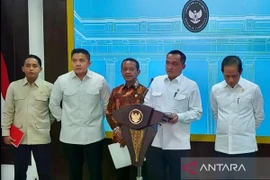
The ministry's Director of Air Quality Protection and Management, Edward Nixon Pakpahan, noted on June 12 that air pollution in Greater Jakarta has become a recurring issue and therefore requires stronger action not only from the Ministry of Environment but also from regional governments. He emphasised the need to increase monitoring and supervision in their respective regions.

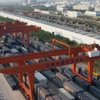
Air pollution in Greater Jakarta mainly occurs in industrial zones with industrial emissions, especially those using coal, accounting for 14% of air pollution in the area. Illegal open burning of waste and agricultural land clearing are also factors causing pollution during the dry season.

Pakpahan also ensured that the ministry will provide support, including supervising industrial areas and taking legal action against those who violate environmental regulations./.

VNA

See more

Indonesia spots four Sumatran tigers at national park

Indonesia spots four Sumatran tigers at national park

Camera traps installed in Bukit Tigapuluh National Park of Indonesia have recorded four individual Sumatran tigers (Panthera tigris sumatrae), providing strong evidence that the conservation area's ecosystem remains well preserved.

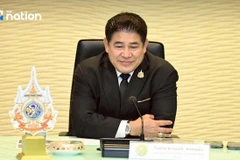
Deputy Prime Minister and Agriculture Minister of Thailand Thammanat Prompao (Photo: The Nation)

Agricultural envoys ordered to boost Thai crop exports

Deputy Prime Minister and Agriculture Minister of Thailand Thammanat Prompao said that the ministry is prioritising a “market-led, innovation-supported, higher income” strategy, built on three key pillars: strengthening confidence in core, established markets to protect Thailand’s market share; targeting high-potential products to open new opportunities, including dried seahorses, dried geckos, live crocodiles for consumption, and breeding crocodile parent stock for farming; and expanding networks by deepening cooperation with key trading partners, including China, and widening sales channels, such as digital platforms, so Thai products can reach consumers more directly.

Illustrative image (Photo: Internet)

Thailand maps out national semiconductor strategy

Under the strategy, Thailand will prioritise power, sensor, photonics, discrete and analog semiconductors, which are closely linked to the country’s established electronics manufacturing base and supply chains serving the automotive, energy, data centre and industrial sectors.

MDEC headquarters (Photo: nabalunews.com)

Malaysia’s digital exports surge

Malaysia's digital exports recorded 6.8 billion RM (1.67 billion USD) between 2024 and the first half of 2025, marking a milestone in the country’s development journey of digital economy.

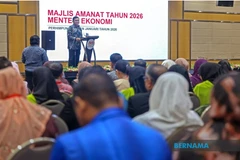
Malaysian Minister of Economy Akmal Nasrullah Nasir speaks at the Economy Minister Mandate 2026 on January 8. (Photo: Bernama)

Malaysia seeks to translate economic policies into practice

Malaysia enters the preparatory phase for the 13MP on the back of encouraging economic indicators in 2025. Gross domestic product (GDP) expanded by 5.2% in the third quarter of 2025, bringing average growth for the first nine months of the year to 4.7%.

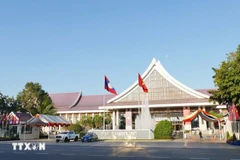
The Lao National Convention Centre in Vientiane, the venue of the 12th National Congress of the Lao People’s Revolutionary Party. (Photo: VNA)

Laos steps up drive to move beyond least developed country status

The Lao Government will also work to foster strong development momentum by mobilising public participation, encouraging self-reliance among citizens and businesses, and improving the quality of human resources, while building an independent and self-reliant economy capable of deeper regional and global integration.

CEO of Bioeconomy Corporation Mohd Khairul Fidzal Abdul Razak (Photo: The Star)

Malaysia boosts bio-economy, targets high revenue in 2026

MOSTI Minister Chang Lih Kang said the Bioeconomy Corporation, the ministry’s lead development agency for Malaysia’s biotechnology industry, will drive this growth and steer the country’s bioeconomy toward greater global competitiveness.