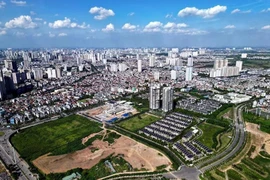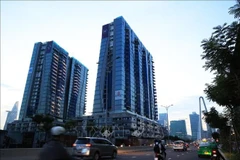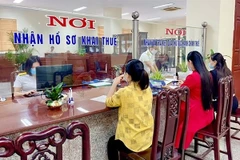
Hanoi (VNA) – Vietnam’s ongoing administrative reforms, marked by the rollout of a two-tier local administration model and the mergence of administrative units, is ushering in significant changes to local governance methods, expected to remove procedural bottlenecks while enhancing transparency and expanding the real estate sector’s appeal to investors, according to insiders.
Assessing the impact of the new model, Director at Savills Vietnam’s Advisory Services Do Thi Thu Giang said that the deeper decentralisation of authority to local administrations will help reduce processing time for construction permits and project approvals, thereby reducing opportunity costs and increasing investment efficiency.
One of the business community’s major expectations is that the overhaul will be accompanied with significant improvements in transparency and information accessibility, she said, adding consolidating approval authority at the provincial level is seen as an effective way to eliminate overlapping in approval and inconsistent legal interpretations – one of the biggest barriers for foreign investors.
Digital transformation initiatives such as building a national land database system and implementing electronic licencing will contribute to enhanced transparency in land management. Giang said this provides the foundation for the real estate market to better align with international standards.
Together with the two-tier local administration model, the mergence of localities also impacts land valuation and land finance policies. Under the 2024 Land Law, following the emergence, localities must develop new land prices appropriate to each area’s characteristics.
Giang analysed that the law clearly stipulates principles for land price differentiation by specific location, potentially down to individual plots if sufficient data exists while preventing the application of uniform pricing that lacks accuracy.
Experts believed that granting higher autonomy to localities in investment attraction policies is expected to promote healthy competition between regions. However, this requires investors, particularly international investors, thoroughly assess the locality's governance capacity, development orientation, and regional compatibility with business strategies.
According to Giang, alongside tax and land use incentives, site clearance ability, infrastructure, and dialogues between local administrations and enterprises will play an increasingly important role in investment decisions.
Assoc. Prof. Dr. Tran Dinh Thien, member of the Prime Minister’s Policy Advisory Council, observed the bold and pioneering approaches by several localities like Ninh Thuan and Quang Binh, stating administrative reforms are effective only if they are accompanied with breakthrough policies and strong strategic approaches.
While the potential is clear, experts also noted that the actual impact of the reforms hinges on the enforcement of policies from the central to local levels. Therefore, continued legal reforms in such areas as land, housing, and investment, along with better capacity of officials in operating the new model, are the key to the realty market's development.
Senior Director at Hanoi CBRE’s Hanoi branch Nguyen Hoai An pointed out that one of the major challenges is legal complications, including determining land prices, calculating land use fees, and land clearance. The formation of a land use right trading floor will help establish land prices closer to market rates, limiting speculation, price manipulation, and realty bubble.
Meanwhile, Associate Director of CBRE Vietnam's Housing Project Marketing Vo Huynh Tuan Kiet warned not all land parcels become "diamond" after merging, stating land prices truly increase with sound planning, infrastructure, and development plans./.
See more
Vinh Long, Singaporean company eye cooperation in renewable energy, eco-industrial parks
Lawrence Chan, Head of Vietnam–Singapore Industrial Park (VSIP) in Vietnam, said Sembcorp is a global group that focuses on energy and urban development, with a mission to promote a sustainable and responsible energy transition.
“Vietnam Wood” certification mark launched as symbol of validation
The “Vietnam Wood” mark represents a strong commitment to legally sourced timber, high quality, and environmental and social responsibility, serving as a legal safeguard for Vietnamese products and enhancing business competitiveness.
MoIT to roll out product traceability system on December 23
Built with a people- and business-centred approach, the system is designed to serve as a bridge between enterprises and consumers, helping strengthen market confidence.
Agro-forestry-fishery exports poised to hit record high in 2025
Agro-forestry-aquatic exports totalled 64.01 billion USD in the first 11 months of 2025. If performance in the final month matches that of recent months, the figure could approach 70 billion USD, far exceeding the 65-billion-USD target set for the year.
Vietnam’s textile-garment industry under pressure for deeper restructuring
To achieve the industry's targets, enterprises must accelerate market, product, and customer diversification while boosting investment attraction to the supply segments Vietnam still faces shortages in, and developing human resources in parallel with science and technology promotion.
Circular on domestic maritime transport permits for foreign vessels issued
Under the circular, which will take effect from February 1 next year, the Minister of Construction will grant the permits for cases such as transporting oversized or overweight cargo or other types of goods using specialised vessels; clearing congested cargo, passengers, and luggage at ports when Vietnamese ships are unable to handle them; and conducting disaster relief, disease control, or emergency humanitarian aid.
International Financial Centre in HCM City hoped to become new growth engine
The International Financial Centre in Ho Chi Minh City is expected to become a new growth driver while enhancing Vietnam’s and HCM City’s position on the global financial map.
Decree regulates corporate income tax incentives
A CIT rate of 15% applies to enterprises with a total revenue in the preceding year of not more than 3 billion VND (114,000 USD), while a CIT rate of 17% applies to enterprises with a total revenue in the preceding year of over 3 billion VND but not more than 50 billion VND.
FAO Representative hails Vietnam’s progress in sustainable agriculture
Mr. Vinod Ahuja, Food and Agriculture Organization of the United Nations (FAO) Representative for Vietnam hails Vietnam’s progress in sustainable agriculture, particularly low-emission rice, in an exclusive interview with the Vietnam News Agency as 2025 wraps up.
GOE Alliance commits to partnering with HCM City IFC
The GOE Alliance was officially launched at the Autumn Economic Forum in November 2025, bringing together technology firms, financial institutions, policy experts and international partners, including Viettel Digital Services, Dragon Capital, Tether, Ava Labs, Sky Mavis, Republic and Onchain Academy. The alliance aims to pilot on-chain economic models within a policy-oriented legal framework.
Vietnam joins elite group of 15 largest trading countries
The country recorded its first trade surplus in 2012 and has maintained a continuous streak of surplus for 10 years since 2016. The surplus grew steadily, hitting 19.9 billion USD in 2020, a record of 28.3 billion USD in 2023, and 24.9 billion USD in 2024.
Reference exchange up slightly at week’s beginning
With the current trading band of +/- 5%, the ceiling rate applicable for commercial banks during the day is 26,406 VND/USD, and the floor rate 23,892 VND/USD.
State budget revenue hits 94 billion USD by mid-December
The structure of the revenue continues to shift towards sustainability, with the production and business sector playing a leading role.
Official describes VIFTA as new driving force for Vietnam – Israel trade
The substantive tariff preferences under VIFTA have quickly encouraged businesses from both countries to expand transactions, which have been translated directly into tangible trade growth.
Vietnam OCOP Festival 2025 opens in Hanoi
The festival functions as a space to bring together regional OCOP excellence, a forum connecting OCOP stakeholders with distributors, investors, experts and consumers, and a platform to spread pride in indigenous culture, local knowledge, and the aspiration for legitimate prosperity.
Top projects honoured at Startup Festival 2025 finals
The Startup Festival 2025 marked the largest annual event summarising a year-long startup support programme.
Modern, comprehensive infrastructure – a need for fast, sustainable development: PM
The Party and State continue to define infrastructure development as one of the three strategic breakthroughs, with priority given to building comprehensive and modern infrastructure, particularly transport facilities, technological infrastructure, and green – digital transition infrastructure, to help realise the national target of double-digit growth, the PM said.
Mercosur, Vietnam launch preferential trade agreement negotiations
The parties are finalising terms of reference that will define the scope, structure, and methodology for talks, according to a statement posted on the Brazilian government's website.
Green transition emerges as new engine of growth
Green growth and sustainable development are not an easy path, but they promise many “sweet fruits” commensurate with businesses’ efforts.
Vietnam’s International Financial Centre officially comes into being
The IFC establishment is an urgent requirement in reality and based on Vietnam’s potential, advantages, and epochal vision for fast and sustainable development.