Savills expert points out three drivers of FDI attraction in Vietnamese real estate

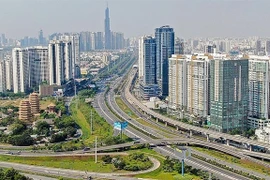
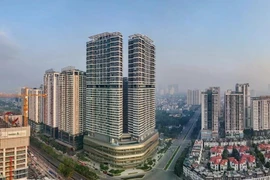
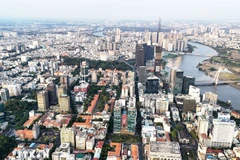
A notable trend is the shift toward satellite regions. With land scarcity and soaring prices in Ho Chi Minh City and Hanoi, investors are eyeing provinces like Hung Yen, Bac Ninh, and Hai Phong, which are benefiting from improved technical infrastructure and transport connectivity.

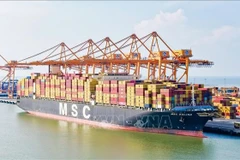
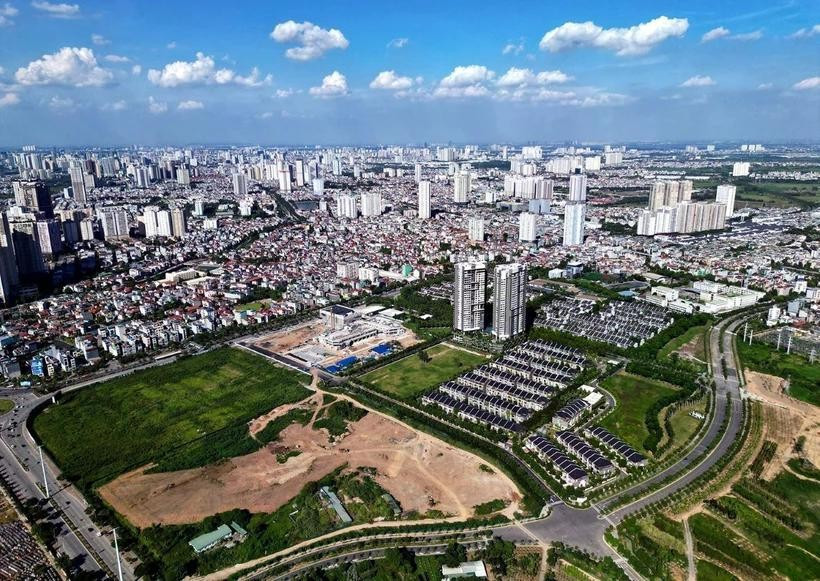
Vietnam is becoming a new hub in the regional supply chain, leading to a sharp increase in demand for industrial real estate, logistics and housing for foreign experts. (Photo: VNA)

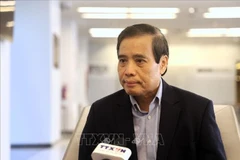
Hanoi (VNA) - Vietnam’s real estate market is on the cusp of a boom in the second half of 2025, fueled by sweeping legal reforms, proactive economic diplomacy, and a pivot toward emerging segments and flexible partnership models, said head of Investment Consulting at Savills Hanoi Nguyen Le Dung.

A suite of newly enacted laws, including the 2024 Land Law, the 2023 Law on Real Estate Business, decrees guiding their enforcement, and another on land use and lease fees, is dismantling long-standing regulatory barriers and laying the groundwork for a more transparent, stable, and investor-friendly legal environment that aligns with international standards.

The reforms are particularly critical for high-end residential, urban development, industrial, and hospitality projects, which are drawing significant foreign interest, Dung said.

Vietnam’s expanding network of Comprehensive Strategic Partnerships with major economies is further reinforcing its image as an attractive investment destination. Recent high-profile events hosted in Vietnam, such as the Partnership for Green Growth and the Global Goals 2030 (P4G) Summit, the UNCTAD Ministerial Conference, and the ASEAN Future Forum 2025, have spotlighted the country’s growing geopolitical significance.

The market is evolving to meet new demands, with the data centre sector emerging as a hotspot. Global players like Nvidia, Gaw Capital, Viettel IDC, and CMC Telecom are ramping up investments, driven by Vietnam’s role as a hub in regional supply chains.

“Investment decisions are no longer influenced solely by traditional economic metrics,” Dung noted. “They are now deeply intertwined with broader trends such as geopolitical shifts, supply chain restructuring, and global trade protectionism”.

Vietnam’s neutral stance and balanced relations with powers like the US, China, Japan, and Europe have fueled demand for industrial parks, logistics infrastructure, and housing for expatriate professionals. However, FDI remains sensitive to macro-financial factors, such as exchange rate fluctuations and capital costs, which can impact profit repatriation. Domestic interest rates and credit policies also play a pivotal role in project viability and local demand.

Foreign investors are increasingly prioritising projects with clear legal frameworks, willing to pay premiums for transparency and faster capital deployment, Dung said. Environmental, Social, and Governance (ESG) criteria are now a must for many, particularly European and North American funds, with projects incorporating green spaces, sustainable materials, and robust risk management gaining an edge.

A notable trend is the shift toward satellite regions. With land scarcity and soaring prices in Ho Chi Minh City and Hanoi, investors are eyeing provinces like Hung Yen, Bac Ninh, and Hai Phong, which are benefiting from improved technical infrastructure and transport connectivity./.

VNA
See more

Illustrative image (Photo: VNA)

Vietnam’s property prices to remain stable next year

In 2026, the outlook is expected to improve further, and analysts do not foresee a return of widespread price surges. Dr Can Van Luc, Chief Economist at BIDV, said the market is moving from a phase of “technical recovery” to “structural stabilisation”.

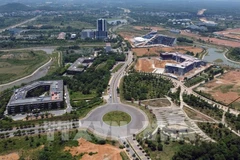
A view of the Hoa Lac Hi-tech Park in Hanoi (Photo: VNA)

Hanoi seeks to boost investment, business in hi-tech parks, IZs

In 2025, Hanoi’s high-tech parks and IZs posted strong performance, with estimated revenue of 12.14 billion USD, contributing about 19.12% to the city’s GRDP, while budget contributions reached 450 million USD and export turnover amounted to 7.42 billion USD.

Sun PhuQuoc Airways launches its first flights on November 1, 2025. (Photo: Sun Group)

The aviation ecosystem game: Can Sun Group Win?

These are among the most notable assessments made by the Centre for Aviation (CAPA) – the world’s leading aviation data and analytics platform – when evaluating the development prospects of Phu Quoc in the coming years.

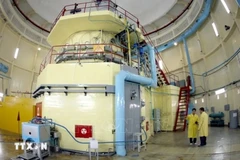
A nuclear reactor at the DaLat Nuclear Research Institute (Photo: VNA)

New decree sets roadmap for nuclear infrastructure and workforce development

The decree also covers simulation systems and databases for radiation safety, nuclear safety and nuclear security; specialised computational software for safety assessment; monitoring and command-and-control systems for responding to radiation and nuclear incidents; as well as design documentation, technical manuals, prototype products and other related facilities and equipment.

Hanoi's market surveillance team 2 inspects a shop in Hong Ha ward on July 14. (Photo: VNA)

Growing e-commerce market sees tougher fight against counterfeits

The local e-commerce market has surpassed 30 billion USD this year, recording growth of 25% and accounting for two-thirds of the value of the digital economy. However, this rapid growth has also brought about serious consequences, particularly the widespread proliferation of counterfeit and imitation goods and trade fraud.

The interest rate policy has been adjusted in line with market movements to ensure system liquidity and reduce capital costs. (Photo: VNA)

Banking sector anchors macroeconomic stability, setting stage for new growth cycle

Throughout 2025, the State Bank of Vietnam (SBV) has reaffirmed its role as the central regulatory authority in managing monetary policy, stabilising the financial market, and maintaining macroeconomic balance. Closely monitoring international and domestic economic trends, the SBV steered the monetary policy proactively while closely coordinating with the fiscal policy to achieve the dual objective of controlling inflation and supporting growth.

Professor Reena Marwah from the University of Delhi, and Secretary-General of the Association of Asia Scholars. (Photo: VNA)

Vietnam – A rising star in Asia: Indian professor

Vietnam’s projected GDP growth of around 8% in 2025 shows that its economy is on an impressive growth trajectory, driven by multiple reinforcing engines, said Professor Reena Marwah from the University of Delhi, and Secretary-General of the Association of Asia Scholars (AAS).

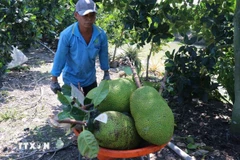
Harvesting jackfruit (Photo: VNA)

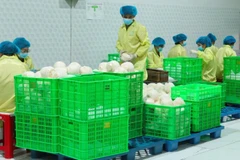
China to allow import of Vietnamese fresh jackfruits from June 1, 2026

To ensure smooth customs clearance, all orchards and packing facilities participating in exports must be registered and approved by competent authorities of both countries. The list of approved entities granted export codes will be published and regularly updated on the GACC website.