International Financial Centre draws investor interest ahead of November launch

Despite the obstacles, Vietnam is moving in the right direction. If executed effectively, the IFC could become a strategic step toward Vietnam’s goal of achieving high-income status by 2045.

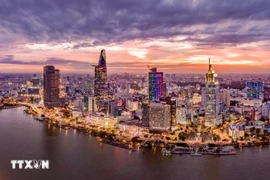
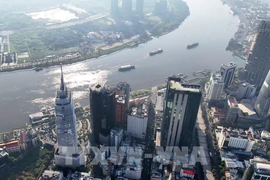
The International Financial Centre is slated for launch in November (Photo: VNA)

HCM City (VNA) - Vietnam’s planned International Financial Centre (IFC), slated for launch in November, is attracting growing attention from global investors seeking a transparent legal framework, diverse investment options, advanced infrastructure and a quality living environment - elements essential for the IFC to become a trusted hub for international capital.

Investors eye IFC launch

Officials in Ho Chi Minh City have in recent months hosted multiple delegations seeking updates on the IFC plan, according to a member of the project’s advisory team. The uptick in site visits highlights escalating investor focus as Vietnam intensifies efforts to elevate its standing in global finance.

The momentum coincides with gains in Vietnam’s financial markets. FTSE Russell recently elevated Vietnam to secondary emerging market status, while Ho Chi Minh City climbed three spots to 95th in the latest Global Financial Centres Index, overtaking Thailand’s Bangkok. These milestones have bolstered faith in the nation’s IFC ambitions.

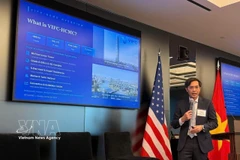
The topic dominated discussions at investor gatherings, including VinaCapital’s annual conference last week, which drew strong interest from foreign funds.

Vietnam still has substantial room for capital absorption, particularly in infrastructure and private sector expansion, said Don Lam, CEO and founding partner of VinaCapital. The IFC is poised to cultivate a sustainable long-term capital market to fuel these areas.

At the UK-Vietnam Business Summit hosted by the British Chamber of Commerce in Vietnam on November 5, UK Consul General Alexandra Smith said a well-executed IFC could deliver a transparent, globally aligned business ecosystem where investors grasp the rules and make decisions with greater speed and assurance. She noted that an effective IFC would instill sustained growth confidence among foreign investors and local private firms.

Phil Wright, Chief Operating Officer at HSBC Vietnam, observed that the IFC is still in nascent stages and needs sharper clarity on operational boundaries, allowable financial products and supervisory mechanisms. These details will be critical and are expected to be clarified in due course, he said.

Investor expectations

According to experts, the IFC’s success will depend foremost on its legal structure. Though the Vietnamese National Assembly has passed a Resolution on the establishment of the IFC, the decisive test will be in the detailed implementation.

Andrew Vallis, independent director at Ho Chi Minh City Securities Corporation, said a thriving IFC could spawn a new high-value industry for Vietnam, drawing foreign funds, know-how and high-skilled employment. Yet, he underscored that legal design poses a fundamental hurdle.

Major financial centres such as Hong Kong, Singapore and Dubai rely on the Common Law, which allows precedent-based decision-making and provide higher predictability for investors. Vietnam’s civil law system, in contrast, centres on Constitution-based regulations.

It is highly likely that IFC Vietnam will adopt the Common Law model – a wise decision, even though it will involve certain clashes with the domestic civil law system, said Vallis.

According to him, the Common Law brings uniformity and is trusted by the global investment community, allowing businesses to "know in advance what could happen" in transactions, thereby fostering trust and international capital flow. This will be a foundational shift, helping IFC Vietnam approach international standards of governance, transparency, and investor protection.

Nguyen Quoc Dung, CEO of EastSpring Vietnam, said the IFC should not operate as a standalone enclave but be integrated into the broader economy. He called for expanding investment opportunities beyond traditional equities and bonds to include derivatives, securitised products, and green-finance instruments.

He also urged accelerating state-owned enterprise privatisation to expand stock markets, alongside developing pension and green investment funds, and infrastructure bonds to pull in long-term capital.

“To lure top-tier investors, Vietnam must continue improving legal framework, transaparency, corporate governance and financial market infrastructure,” he said.

Human capital is also seen as a determining factor. While Vietnam has a young and dynamic workforce, investors insisted on greater emphasis on financial-sector skills and global governance capabilities.

Talent recruitment and cultivation will prove vital to the IFC’s triumph, said Christopher Jeffery, Pro-Vice Chancellor of International, Strategy & Engagement at the British University Vietnam.

Despite the obstacles, Vietnam is moving in the right direction. If executed effectively, the IFC could become a strategic step toward Vietnam’s goal of achieving high-income status by 2045, said investors./.
VNA

See more

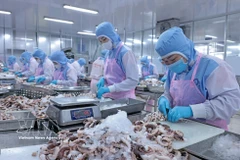
Processing octopus for export to the Japanese market at Huy Nam Company in An Giang (Photo: VNA)

Squid, octopus exports pick up early in 2026

In terms of product structure, squid has emerged as the main growth driver. Export turnover of squid exceeded 64 million USD, rising nearly 30%, while octopus exports brought in more than 47 million USD, up over 16%. The development indicates that demand for squid products is recovering faster in the short term.

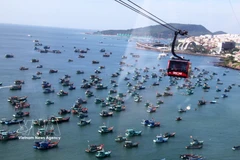
The world’s longest over-sea cable car to Hon Thom Island in the Phu Quoc special zone, An Giang province. (Photo: VNA)

An Giang steps up tourism development ahead of APEC 2027

Tourism in the province has recorded strong growth, affirming its position as one of the region’s leading destinations. Phu Quoc Island continues to attract the majority of international travellers, receiving more than 817,660 visitors, accounting for over 98.5% of total foreign arrivals to the province.

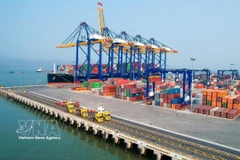
Import-export activities at Lach Huyen international port in Hai Phong (Photo: VNA)

Reducing risks, removing logistics bottlenecks amid Middle East volatility

According to Truong Xuan Trung, Trade Counsellor of Vietnam in the UAE, the Middle East serves not only as a consumption market but also as a key global transhipment hub, meaning instability in the region creates ripple effects across intercontinental transport networks. Shipping route adjustments and airspace restrictions have lengthened transit times, increased costs and disrupted delivery schedules, with some Vietnamese shipments forced to reroute or seek alternative markets.

Cargo is handled at container terminals No. 3 and No. 4 of Hai Phong International Gateway Port. (Photo: VNA)

Businesses seek “survival momentum” amid global geopolitical turbulence

This is an urgent move as the challenges of 2026 differ markedly from previous ones, shaped by overlapping external shocks ranging from geopolitical tensions disrupting supply chains to surging logistics and raw material costs, exchange-rate pressures, and increasingly complex tariff barriers in global markets.

At the 2025 trade connectivity week for mechanical, electrical and digital industries. (Photo: VNA)

Ho Chi Minh City gives boost to supporting industry firms

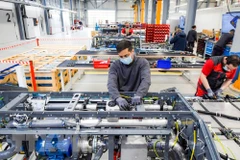
Supporting industry firms in Ho Chi Minh City are scrambling to embed themselves more deeply into both global and domestic supply chains, backed by a suite of local incentives that are speeding up their tech upgrades and market access.

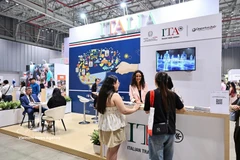
Italy's national pavilion at the ongoing Food & Hospitality Vietnam 2026 exhibition at Ho Chi Minh City's Saigon Exhibition and Convention Centre (SECC) draws visitors for hands-on experiences. (Photo: IVNA)

Italian food firms eye opportunities in Vietnam

Italy’s exports of food and beverages to Vietnam reached 105.1 million EUR in 2025, up 4% year-on-year, positioning the country among the leading EU suppliers to the Vietnamese market.

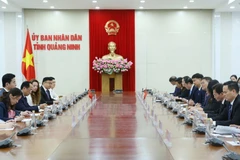
An overview of the working session (Photo: baoquangninh.vn)

Quang Ninh promotes all-round cooperation with Guangxi Zhuang Autonomous Region

Quang Ninh encourages Guangxi enterprises to invest in high-tech marine aquaculture and expand aquatic product exports in China. At the same time, the province aims to develop livestock farming in line with international standards and attract investment in deep-processing plants for agricultural products such as cinnamon, star anise and tea, linked with traceability systems at border gates.

Illustrative image (Source: VNA)

Vietnam becomes fastest growing market for Norwegian salmon in Southeast Asia

The Norwegian Seafood Council (NSC) reported at the “Norwegian seafood industry in Vietnam market 2026” event held in Ho Chi Minh City on March 25 that fresh Norwegian salmon exports to Vietnam jumped 16% in volume in the first two months of 2026 compared with a year earlier, while frozen salmon shipments surged about 37%.

At a petrol station (Photo: VNA)

Energy giants work hard to roll out E10 RON95 sale ahead of schedule

Petrolimex and PVOIL, are in a strong position to accelerate the transition toward cleaner fuels. These companies have been actively preparing infrastructure, upgrading blending systems, and coordinating supply chains to ensure the availability of E10 RON95 across their nationwide retail systems.

Deputy Prime Minister Nguyen Chi Dung visits Bosch Industrial in Stuttgart, Germany. (Photo: VNA)

Vietnam, Germany boost innovation, startup ecosystem connectivity

Deputy PM Nguyen Chi Dung highly valued CfE’s reputation and pioneering role in building Germany’s innovation-driven startup ecosystem, and called for stronger cooperation with NIC to support Vietnamese universities, research institutes and organisations in training and scientific research.