Illustrative image (Source: VNA)
 The scheme aims at facilitating bilateral trade, investment, tourism as well as the use of local currencies between the two countries.
This linkage also represents another milestone for the ASEAN Payment Connectivity initiative, which aims to connect the payment services of ASEAN countries using new financial technology to help foster financial integration and sustainable growth in the region.
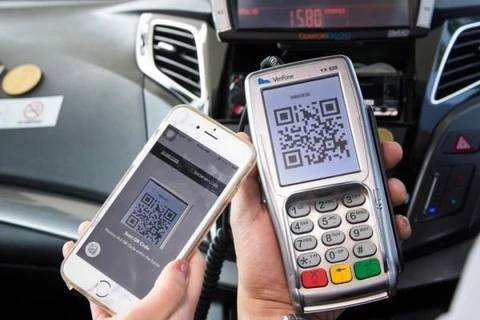
This service will facilitate cross-border payments of the people of both countries. This is especially the case when cross-border travel becomes the norm again, given that tourist flows between both countries were around 1.5 million in 2019. With this service, tourists from Thailand can make QR payments using their mobile phones to pay for goods and services in Vietnam and vice versa.
This will eventually help stimulate the economies of the two countries and the region as a whole.
SBV Deputy Governor Nguyen Kim Anh said that the launch of this pilot project marks a significant accomplishment in the relationship between the central banks and Vietnam and Thailand in general.
It also marks an important milestone in the collaboration of ASEAN central banks in implementing ASEAN’s initiative on payment connectivity using interoperable QR Codes to deepen regional economic integration and foster digital transformation of each economy, he said.
For his part, Ronadol Numnonda, Deputy Governor of the BOT, said that the benefits of this project will come in many forms. It will offer convenience and security for people travelling between Thailand and Vietnam, leading to growth in tourism and contributing to the two countries’ progress towards a more digitalised society, he said.
This project is made possible with the collaboration from various stakeholders from both countries under the joint stewardship of the SBV and the BOT. These include the National Payment Corporation of Vietnam (NAPAS) and the National ITMX (NITMX) as switching operators, as well as Vietnam Joint Stock Commercial Bank for Industry and Trade (Vietinbank) and Bangkok Bank as the settlement banks responsible for cross-border settlements for the service.
The service banks which provide this cross-border QR payment service to their customers via their mobile banking applications include Tien Phong Commercial Joint Stock Bank (TP Bank), The Joint Stock Commercial Bank for Investment and Development of Vietnam (BIDV), Saigon Thuong Tin Commercial Joint Stock Bank (Sacombank) from Vietnam, and Bangkok Bank from Thailand.
In addition, banks that have expressed their interests to join the project as service banks in the near future include The Joint Stock Commercial Bank for Foreign Trade of Vietnam (Vietcombank) from Vietnam and Bank of Ayudhya, CIMB Thai Bank, Kasikornbank, Krung Thai Bank, and Siam Commercial Bank from Thailand. At this stage, both central banks believe that this cross-border QR payment will result in a safer, more efficient and cost-attractive alternative for retail payment by the general public. It will also serve as a catalyst for many more collaborations on financial innovations in the coming years.
In the first phase, Thai tourists using Bangkok Bank’s mobile banking application can scan this Project’s Viet QR Codes to pay for goods and services at TP Bank and BIDV’s merchants. Conversely, tourists from Vietnam using TP Bank and Sacombank’s mobile banking applications can scan the Thai QR Codes of Bangkok Bank’s merchants in Thailand./.
VNA