Japanese and Vietnamese researchers have made considerable progressunder a joint project on technologies to produce bio-fuels fromagriculture waste, it was reported at a recent conference in Ho Chi MinhCity.
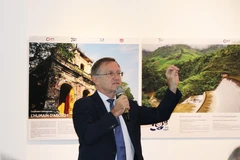
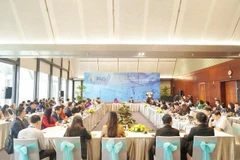
The researchers have developed a sustainable model toconvert bio-mass into bio-fuels such as bio-ethanol and bio-gas, AssocProf Vu Dinh Thanh, rector of the Ho Chi Minh City University ofTechnology ( HCM UT), told an annual symposium held to review theproject in HCM City on Oct. 12.
According to Thanh, underthe five-year Sustainable Integration of Local Agriculture and BiomassIndustries (JICA- JST ) project, two laboratories have been set up atthe HCM City University of Technology and Thai My village in thecity's Cu Chi District to serve research activities.
A workshop hasbeen set up in Thai My to pilot the bio-refinery technologies that havebeen developed to convert bio-mass into bio-energy.
AssociateProfessor Phan Dinh Tuan, head of the project, said while biogas hasbeen used widely in rural areas in Vietnam , there is yet anytechnology to treat toxic gas emission from the burning of biogas.
Therefore, one of the project’s main tasks are toeliminate toxic chemicals of biogas, Tuan said, adding that researchersare also looking for ways to turn the waste of ethanol and biogas intoenvironmental friendly fertilizer.
The JICA- JSTproject has been implemented in Vietnam since October 2009 by theHCMUT, the University of Tokyo , the Hanoi University of Technology,Ho Chi Minh City Department of Science and Technology and theInstitute of Tropical Biology.
It will wrap up next September./.
The researchers have developed a sustainable model toconvert bio-mass into bio-fuels such as bio-ethanol and bio-gas, AssocProf Vu Dinh Thanh, rector of the Ho Chi Minh City University ofTechnology ( HCM UT), told an annual symposium held to review theproject in HCM City on Oct. 12.
According to Thanh, underthe five-year Sustainable Integration of Local Agriculture and BiomassIndustries (JICA- JST ) project, two laboratories have been set up atthe HCM City University of Technology and Thai My village in thecity's Cu Chi District to serve research activities.
A workshop hasbeen set up in Thai My to pilot the bio-refinery technologies that havebeen developed to convert bio-mass into bio-energy.
AssociateProfessor Phan Dinh Tuan, head of the project, said while biogas hasbeen used widely in rural areas in Vietnam , there is yet anytechnology to treat toxic gas emission from the burning of biogas.
Therefore, one of the project’s main tasks are toeliminate toxic chemicals of biogas, Tuan said, adding that researchersare also looking for ways to turn the waste of ethanol and biogas intoenvironmental friendly fertilizer.
The JICA- JSTproject has been implemented in Vietnam since October 2009 by theHCMUT, the University of Tokyo , the Hanoi University of Technology,Ho Chi Minh City Department of Science and Technology and theInstitute of Tropical Biology.
It will wrap up next September./.