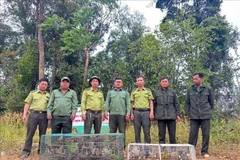
Hanoi (VNA) – A civet quickly darted out of its cage and disappeared into the lush forests of Cuc Phuong National Park, witnessed by over 20 tourists. This moment highlighted the "Going Home" tour, a unique offering from the park.
Launched in March 2021, this tour allows visitors to witness and participate in the release of rescued wildlife back into their natural habitat. It combines tourism with nature conservation efforts, which require strict processes, significant costs, and unwavering commitment from specialised teams. After being rescued and properly cared for, animals are returned to the pristine forest.
Over the years, hundreds of release events have involved thousands of animals across various species. Nguyen Van Chinh, Director of Cuc Phuong National Park, emphasises that the ultimate goal of rescue operations is to reintegrate animals into their natural environments. The "Going Home" tour helps convey this message directly, emotionally engaging the public and fostering responsible tourism toward nature and wildlife.
"I believe that anyone witnessing the moment animals return to the forest feels something special. It inspires awareness and responsibility for protecting wildlife, not just during tourism activities but in daily life," shared tourist Phan Van Tung.
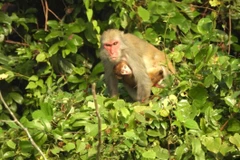
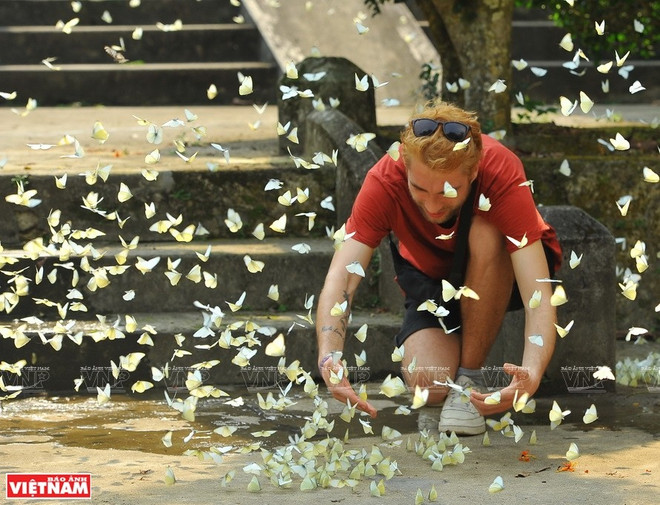
Cuc Phuong National Park also offers a prominent summer tour to see fireflies and wildlife at night. Visitors can learn about various nocturnal animals, including deer, pangolins, civets, wild cats, and otters.
Responsible tourism practices have also emerged in many national parks, including Phu Quoc, Cat Tien, Nui Chua, Cat Ba, Ba Be, Yok Don, and Pu Mat, as well as nature reserves like Pu Luong (Thanh Hoa province) and Son Tra (Da Nang city).
On April 10, Con Dao National Park in Ba Ria-Vung Tau province announced the launch of a long-term nature conservation tour on small islands where sea turtles lay eggs such as Hon Bay Canh, Bai Duong, Hon Tai, and Hon Cau.
Nguyen Khac Pho, Director of the park’s Management Board, noted the growing trend of experiential tourism that involves living in nature and participating in ecosystem conservation. Con Dao National Park has meticulously prepared to launch tours lasting from 5 to 10 days, planning to organise ten such trips in the summer of 2025.
Before embarking on their journey, tourists will receive training on the unique ecosystem of Con Dao, conservation principles, and basic survival skills. During the tour, participants will assist forest rangers in cleaning beaches, preparing markers for turtle nests, and maintaining egg incubation pits. In the evenings, they will patrol nesting areas, help measure and relocate eggs, and release baby turtles into the sea.
Inter-agency coordination needed
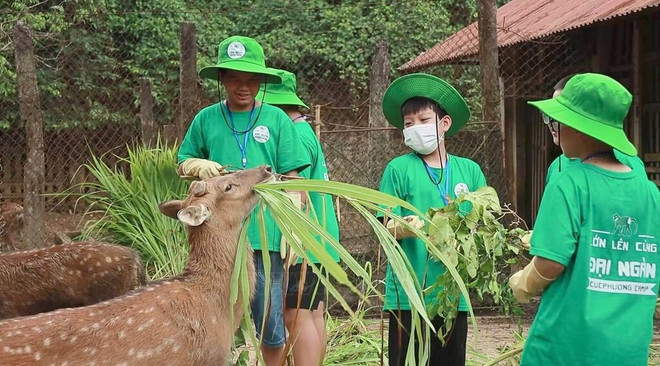
Efficiently managing and utilising natural resources, protecting the environment, and preserving biodiversity for sustainable tourism development is a key goal in Vietnam's tourism strategy until 2030. This tourism model shares profits with local communities while minimising negative impacts on the environment and contributing to cultural and wildlife preservation.
However, implementing experiential tourism tours connected to wildlife conservation is challenging.
Pham Kien Cuong, Director of the Environmental Education and Services Centre at Cuc Phuong National Park, stated that returning wildlife to nature must comply with strict conservation principles to mitigate risks to tourists.
The costs of rescue, conservation, and re-introduction are substantial, and tour designs need thorough research and cannot compete on price alone. If not organised methodologically, this type of tourism could pressure the natural habitats of animals. Thus, close coordination among stakeholders – tourism businesses, forest rangers, scientists, and local authorities – is essential.
Experts believe that future conservation-related tours will enhance quality, diversify activities, and expand family-friendly options. A notable example is the "Where Are We Going, Langurs?" programme at Son Tra Peninsula in Da Nang, which combines education and nature experiences focused on the critically endangered red-shanked douc langur.
Bui Van Tuan, a primate conservationist and Director of Hivooc Company, affirmed that the biodiversity value in Son Tra and other reserves needs to be elevated through appropriate tourism and education initiatives.
According to the Department of Forestry under the Ministry of Agriculture and Rural Development, national parks generate over 2 trillion VND (77 million USD) annually from forest tourism services, vital for forest protection and local income improvement.
Vietnam boasts a rich biodiversity resource of national and global significance, with nearly 180 protected areas offering great potential for experiential and educational tourism. Promoting nature-based tourism linked to wildlife conservation is believed to be essential for sustainable development in the near future./.