Logistics – a lever for Vietnamese exporters to navigate US tariff headwinds: workshop

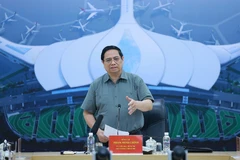
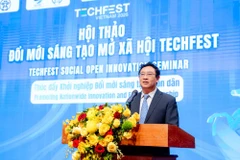
Deputy Director General of the Ministry of Industry and Trade (MoIT)’s Trade Promotion Agency Bui Quang Hung emphasised that logistics has evolved from a technical function into a core capability for Vietnamese exporters to maintain their competitive advantage in the US market.

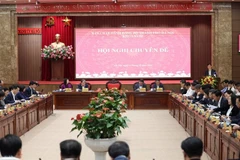
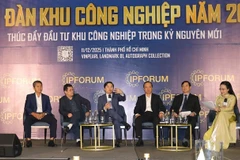
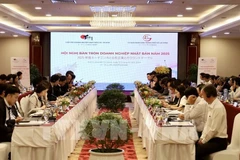
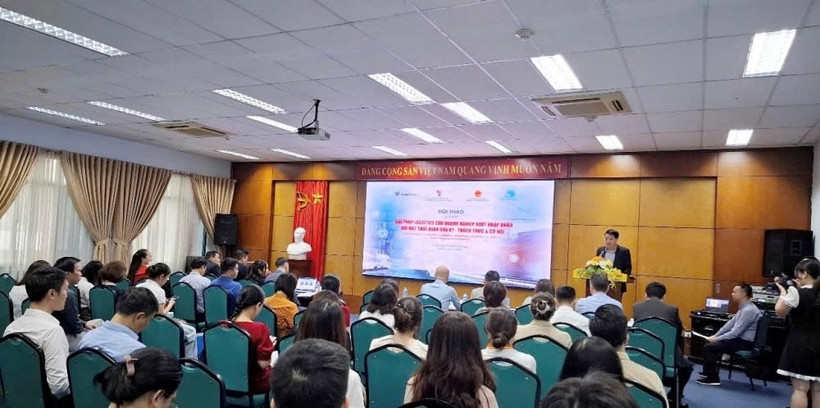
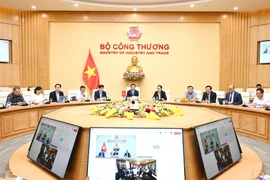
The workshop held in Hanoi on June 19 (Photo: MoIT)

Hanoi (VNA) - As Vietnamese exporters face formidable challenges from US tariff policies, logistics is emerging as a critical lever to maintain competitiveness in one of Vietnam’s most vital markets, heard a workshop on June 19.

Deputy Director General of the Ministry of Industry and Trade (MoIT)’s Trade Promotion Agency Bui Quang Hung emphasised that logistics has evolved from a technical function into a core capability for Vietnamese exporters to maintain their competitive advantage in the US market. He elaborated that logistics is the key to reduce cost, minimise the impact of tariffs, strengthen supply chains, and expand market penetration opportunities.

The US has long served as Vietnam's premier export destination, with bilateral trade reaching over 100 billion USD in 2024 and representing a substantial portion of the country's total export revenue. However, the new tariff landscape, including anti-dumping measures and reciprocal duties, has challenged Vietnamese producers.

Against the backdrop, it is a must for enterprises to optimise supply and logistic chains to uphold their competitive edge, he said, stating the adoption of such advanced technologies like AI and blockchain in logistics operation, together with the leverage of new-generation free trade agreements, are seen as critical tools to reduce costs and improve transparency while meeting stringent standards of the US market.

As of the end of May, Vietnam’s total trade turnover reached over 355 billion USD, marking a 15.7% increase year-on-year, according to MoIT data. The logistics, green industry, and high-tech sectors are seeing rising interest from global investors, especially from the US, Singapore, the Republic of Korea, and Japan, representing promising opportunities for Vietnamese enterprises to secure technology transfers, upgrade logistics infrastructure, and expand export markets.

Hung said along with market information, tariff policy updates, and intensive training courses on supply chain management, the ministry has paid due attention to logistics management, ensuring a smooth, efficient, and legally compliant logistics chain amidst intensifying global trade competition.
unnamed-11-20250619171259.jpg
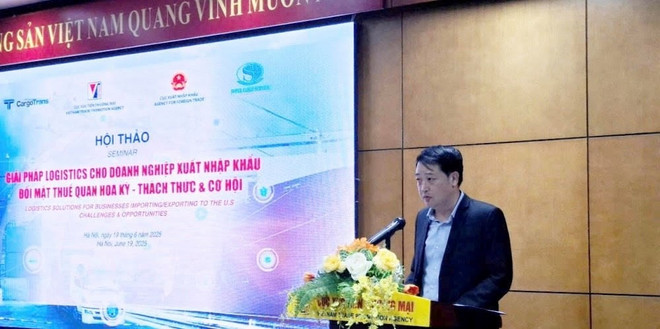
Deputy Director General of the Ministry of Industry and Trade’s Trade Promotion Agency Bui Quang Hung (Photo: MoIT)

The Trade Promotion Agency is committed to accompanying Vietnamese enterprises in enhancing logistics capacity, Hung stated, adding it is driving sustainable logistics solutions, promoting high-tech applications, and building a national brand for export products. These efforts are aimed at empowering Vietnamese businesses to thrive on the international stage, particularly in the US, a market full of both opportunities and challenges.

Meanwhile, Deputy Director General of the MoIT’s Agency for Foreign Trade Tran Thanh Hai warned of multiple challenges for Vietnam’s logistics sector, including falling demand for logistics services due to declining exports, market volatility, reduction in FDI inflows which could impact the formation of high-value supply chains, and competitive pressure from countries with similar production models.

In short term, together with trade negotiations with the US, Hai said it is necessary to adjust economic policies in response to the new situation, accelerate the disbursement of public capital, upgrade infrastructure, and continue support for enterprises with access to credit, loan guarantees, market data, and trade promotion efforts.

In long term, he advocated for continued FTA negotiations and signing to diversify markets, increase the locally-made rate, and move towards sustainable supply chains. Besides, institutional reforms, trade and investment transparency, and a business-friendly environment are also essential to form a contingent of pioneering Vietnamese enterprises.

Hai also suggested the business community develop long-term strategies, anticipate risks, enhance supply chain partnerships, and expand customer bases, adding they should build brands, capitalise on e-commerce, and avoid trade fraud.

US President Trump signed an executive order on April 2, imposing reciprocal tariffs on all imports from US trading partners. Although he announced a 90-day suspension for most countries, except for China, a week later, a 10% tariff has been imposed on goods from Vietnam and 55 other countries. From June 4, a 50% tariff has been levied steel and aluminum imports from all countries except for the UK. Negotiations between Vietnam and the US on reciprocal trade measures are underway./.
VNA

See more

Delegates at the seminar in Bangkok on June 17. (Photo: VNA)

Thanh Hoa seeks stronger cooperation with Thai businesses

Mai Xuan Liem, Permanent Vice Chairman of the Thanh Hoa People’s Committee, said Thailand is one of the province’s important export markets, with export turnover reaching more than 12 million USD in the first five months of 2026.

Delegates press the button to officially launch the Doan Hung Industrial Park – AMATA City Phu Tho project at the conference. (Photo: VNA)

Vietnam, Thailand strengthen investment ties, smart city cooperation

Thailand is currently Vietnam's largest trading partner within ASEAN, while Vietnam ranks as Thailand's sixth-largest trading partner globally. Bilateral trade reached 22.07 billion USD in 2025, with both sides aiming to increase the figure to 25 billion USD in the coming years. Thailand also has 805 valid investment projects in Vietnam with a combined registered capital of 15.4 billion USD.

Deputy Prime Minister Nguyen Van Thang speaks at the meeting with ministries and sectors in Hanoi on June 17 to review public investment disbursement and address bottlenecks affecting ODA projects. (Photo: VNA)

Deputy PM requests faster disbursement of ODA-funded projects

As of June 15, the disbursement rate for public investment funded by external sources had reached only 9.99% of the assigned plan. Although the figure was higher than in the same period last year, it remained well below the national average. Notably, one out of eight ministries and central agencies and 13 localities had yet to disburse any allocated capital.

Sorting green-skinned pomelos for export at the processing facility of Vina T&T Group in Vinh Long province. (Photo: VNA)

Vietnamese fruits strengthen foothold in China

The expansion of fruit trade has been supported by the implementation of the Regional Comprehensive Economic Partnership (RCEP) and ongoing efforts to upgrade the China – ASEAN Free Trade Area.

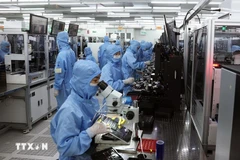
Production line for camera modules and electronic components at the factory of the Korean-invested MCNEX VINA Co., Ltd, located in Phuc Son Industrial Park, Ninh Binh province. (Photo: VNA)

High-tech FDI attraction set as strategic priority: official

The resolution sets out a number of specific targets for foreign investment attraction during the 2026–2030 period. Annual registered FDI is targeted at between 40 billion USD and 50 billion USD, while realised capital is expected to reach approximately 30–40 billion USD per year.

Production of electronic components at DBG Technology Vietnam Co., Ltd. in Yen Binh Industrial Park, Thai Nguyen province. (Photo: VNA)

Vietnam’s trade surplus with EU expands amid economic headwinds

Trade between Vietnam and the EU maintained momentum during the January–May period, supported by the EU – Vietnam Free Trade Agreement (EVFTA) and sustained demand for key Vietnamese exports, even as the EU grappled with inflationary pressures and sluggish consumer spending.

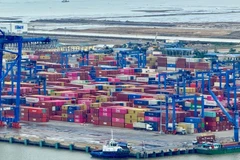
Containers are unloaded at Nghi Son International Port in Nghi Son ward, Thanh Hoa province. (Photo: VNA)

Vietnam eyes to shape national maritime industrial ecosystem

These advantages provide a strong foundation for the development of the marine economy and logistics services. As a result, the marine economy has been identified as a national strategic priority, with the coordinated development of maritime transport, seaports and shipbuilding serving as a key pillar in shaping a sustainable national maritime industrial ecosystem.

The road to the VSIP Can Tho Industrial Park connecting with National Highway 80 is under construction. (Photo; VNA)

Vietnam draws harder line on FDI quality under new resolution

The Ministry of Finance’s Foreign Investment Agency reported that total registered FDI neared 25 billion USD in the first five months of this year, a jump of almost 35% from a year earlier, with new project registrations driving the bulk of the expansion.