Hanoi (VNA) – Malaysia is shifting into high gear as it positions itself to become Southeast Asia’s leading hub for smart, sustainable mobility, powered by breakthroughs in electric vehicles (EVs), artificial intelligence (AI) and advanced manufacturing.
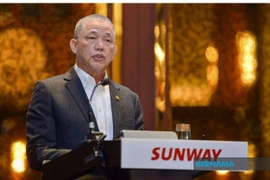
Speaking at the Global Automotive and Technology Expo (GATE) 2025 in Kuala Lumpur, Malaysian Minister of Investment, Trade and Industry Zafrul Abdul Aziz highlighted how these technologies are rapidly transforming Malaysia’s automotive landscape.
Zafrul said that AI is redefining how vehicles are designed, built and driven. From predictive safety systems to automated manufacturing lines, AI is enabling a new wave of smarter, safer and more efficient mobility solutions.
According to Zafrul, Malaysia’s strong semiconductor foundation, rare earth resources and established manufacturing ecosystem make the country uniquely positioned to become the region’s epicentre of smart mobility.
Malaysia’s long-term strategies are aligning to support this shift. Under the New Industrial Master Plan 2030 (NIMP 2030), the government is steering industries towards becoming high-value, sustainable and technology-driven. The National Automotive Policy 2020 (NAP 2020) strengthens this transition by promoting next-generation vehicles (NxGV) and energy-efficient mobility.
To support large-scale adoption of AI, Zafrul highlighted the development of the Sovereign AI Cloud – a digital infrastructure worth 480 million USD that is designed to protect Malaysia’s data sovereignty while strengthening innovation in key sectors such as mobility and semiconductor design. Malaysia aims to transform from a commodity producer to a technology, innovation and intellectual property creator.
He noted that Malaysia currently leads the Southeast Asian vehicle market for the first half of 2025. This momentum reflects strong consumer demand, improved localisation efforts and the growth of domestic technology capabilities.
The government is also aligning EV tax incentives with efforts to promote local assembly and localisation of components. This strategic shift is aimed at increasing the industry’s participation and enhancing Malaysia’s competitiveness in the regional supply chain./.