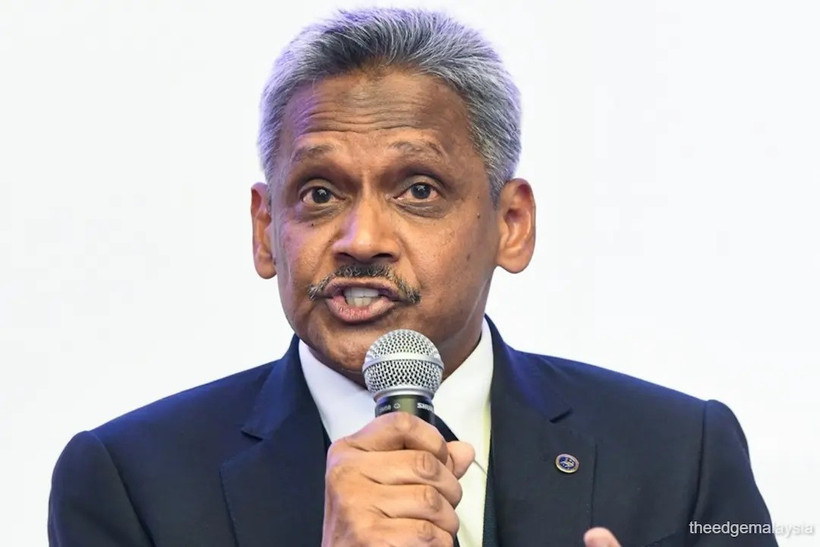
Kuala Lumpur (VNA) - ASEAN must address the immediate fallout from the rise in tariffs by defining the rules of origin more clearly, closing transhipment loopholes, and developing trade diversion safeguards, said Bank Negara Malaysia (BNM) Governor Datuk Seri Abdul Rasheed Ghaffour.
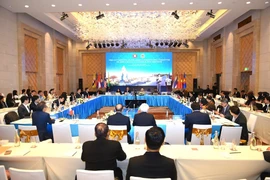
The official was quoted by local media as saying at the 48th Federation of ASEAN Economic Associations Annual Conference that the aim is to facilitate genuine trade and manage excess capacity from this region and its vicinity.
Over the longer term, the priority is to deepen regional integration and uphold pragmatic multilateralism, he stated.
This means accelerating implementation of various trade agreements such as the upgraded ASEAN Trade in Goods Agreement (ATIGA), the ASEAN Regional Comprehensive Economic Partnership (RCEP) and the soon-to-be completed ASEAN Digital Economy Framework Agreement (DEFA), he said.
Abdul Rasheed said these agreements can help ASEAN elevate intra-regional sourcing, reduce the cost of doing business and strengthen intra-regional trade and investment.
Diversifying and strengthening trade partnerships, particularly with other advanced and emerging economies, is not just a hedge against uncertainty, it is a strategy for recovery, he underscored.
Besides, he said ASEAN’s ties with China, Japan and the Republic of Korea go beyond culture and values and extend to value chains spanning industries.
Institutions like the Asian Infrastructure Investment Bank have committed up to 50 billion USD in climate-related projects across ASEAN, while the Japan-ASEAN Integration Fund has provided over 894 million USD in wide-ranging grants for economic integration, disaster management and human capital
development since 2006.
Beyond Asia, Abdul Rasheed highlighted that deepening an agreement with the European Union (EU) and Latin America offers a clear path to diversifying partnerships and unlocking new growth areas.
The ASEAN-EU trade already exceeds 200 billion USD annually, making ASEAN the EU’s third-largest trading partner. While trade with Latin America is smaller, around 32 billion USD, there is genuine potential.
By advancing high-standard, mutually-recognised trade agreements with other blocs, ASEAN can position itself as a credible, competitive global partner, he added./.
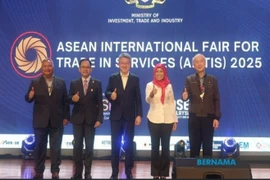
ASEAN services sector must transform to lead global economy: Malaysian official
Liew said the success of AIFTIS 2025 will reinforce ASEAN’s ability to become a global hub for high-value professional services. AIFTIS 2025 marks a strategic step in ASEAN’s ambition to shape, not just follow, the future of global services trade.