Malaysia launches ASEAN startup platform

Startup ASEAN platform brings all stakeholders together under one digital roof, expected to promote open innovation, improve access to capital, and strengthen ASEAN’s position as a dynamic and connected innovation powerhouse.

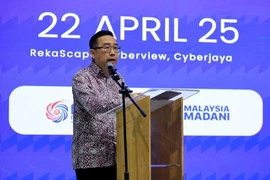
Kuala Lumpur (VNA) – Malaysia’s Ministry of Science, Technology and Innovation on June 25 officially launched “Startup ASEAN”, a digital platform serving as a unified hub connecting entrepreneurs, investors, governments, and startup ecosystem builders across ASEAN member states.

Speaking at the launch, ASEAN Secretary-General Kao Kim Hourn highlighted that the platform reflects ASEAN’s continued commitment to regional integration while leveraging innovation and technology to unlock unprecedented opportunities.

He also commended Malaysia, as ASEAN Chair in 2025, for its leadership in advancing the ASEAN Technology Startup Ignite initiative, one of the region’s key economic priorities this year. The year-long programme has successfully connected more than 11,000 startups with 5,000 investors and supported a thriving startup ecosystem valued at over 130 billion USD.

The new Startup ASEAN platform builds on this momentum, bringing all stakeholders together under one digital roof. It is expected to promote open innovation, improve access to capital, and strengthen ASEAN’s position as a dynamic and connected innovation powerhouse.

Kao also noted that Kuala Lumpur’s recent entry into the top 20 emerging startup ecosystems, ranking 18th in Startup Genome’s Global Startup Ecosystem Report 2025, demonstrates Malaysia’s solid national foundation and growing influence in regional innovation.

He expressed confidence that the platform, under Malaysia’s leadership, will play a key role in shaping a more inclusive and future-ready ASEAN. It is expected to facilitate startup-friendly policies, strengthen inter-member readiness, and foster meaningful partnerships across the bloc.

The platform’s launch comes just weeks after ASEAN leaders adopted the Kuala Lumpur Declaration, marking the 10th anniversary of the ASEAN Community and reaffirming the commitment to ASEAN Vision 2045. The vision outlines a resilient, innovative, and people-centered region based on four strategic pillars: politics-security, economy, society-culture, and connectivity.

The Secretary-General described the platform as a timely and tangible step toward building a responsive and adaptable ASEAN equipped to navigate the evolving global landscape. He affirmed the ASEAN Secretariat’s ongoing support for the initiative and called on all member states to work together to reinforce the regional innovation ecosystem./.


VNA

See more

Thailand enters technical deflation: Expert

Thailand enters technical deflation: Expert

Associate Professor Thanavath Phonvichai, President of the University of the Thai Chamber of Commerce and Chairman of the Centre for Economic and Business Forecasting, attributed the current bout mainly to lower production costs, particularly cheaper fuel and persistently low agricultural prices.

Indonesia spots four Sumatran tigers at national park

Indonesia spots four Sumatran tigers at national park

Camera traps installed in Bukit Tigapuluh National Park of Indonesia have recorded four individual Sumatran tigers (Panthera tigris sumatrae), providing strong evidence that the conservation area's ecosystem remains well preserved.

Deputy Prime Minister and Agriculture Minister of Thailand Thammanat Prompao (Photo: The Nation)

Agricultural envoys ordered to boost Thai crop exports

Deputy Prime Minister and Agriculture Minister of Thailand Thammanat Prompao said that the ministry is prioritising a “market-led, innovation-supported, higher income” strategy, built on three key pillars: strengthening confidence in core, established markets to protect Thailand’s market share; targeting high-potential products to open new opportunities, including dried seahorses, dried geckos, live crocodiles for consumption, and breeding crocodile parent stock for farming; and expanding networks by deepening cooperation with key trading partners, including China, and widening sales channels, such as digital platforms, so Thai products can reach consumers more directly.

Illustrative image (Photo: Internet)

Thailand maps out national semiconductor strategy

Under the strategy, Thailand will prioritise power, sensor, photonics, discrete and analog semiconductors, which are closely linked to the country’s established electronics manufacturing base and supply chains serving the automotive, energy, data centre and industrial sectors.

MDEC headquarters (Photo: nabalunews.com)

Malaysia’s digital exports surge

Malaysia's digital exports recorded 6.8 billion RM (1.67 billion USD) between 2024 and the first half of 2025, marking a milestone in the country’s development journey of digital economy.

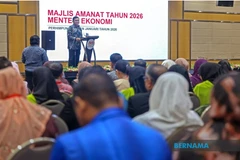
Malaysian Minister of Economy Akmal Nasrullah Nasir speaks at the Economy Minister Mandate 2026 on January 8. (Photo: Bernama)

Malaysia seeks to translate economic policies into practice

Malaysia enters the preparatory phase for the 13MP on the back of encouraging economic indicators in 2025. Gross domestic product (GDP) expanded by 5.2% in the third quarter of 2025, bringing average growth for the first nine months of the year to 4.7%.

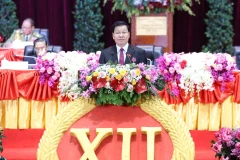
The Lao National Convention Centre in Vientiane, the venue of the 12th National Congress of the Lao People’s Revolutionary Party. (Photo: VNA)

Laos steps up drive to move beyond least developed country status

The Lao Government will also work to foster strong development momentum by mobilising public participation, encouraging self-reliance among citizens and businesses, and improving the quality of human resources, while building an independent and self-reliant economy capable of deeper regional and global integration.