Malaysia, Poland eye stronger ASEAN-EU partnership

At their meeting, the two leaders also discussed ASEAN-EU cooperation and appreciated the results achieved, especially the progress in the negotiations of the ASEAN-EU Free Trade Agreement (FTA).

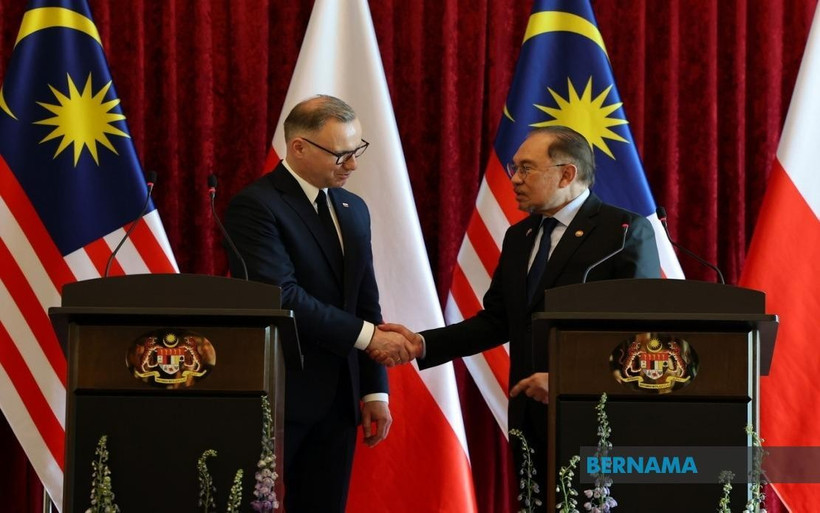
Malaysian Prime Minister Anwar Ibrahim (right) shakes hands with President of Poland Andrzej Duda at a joint press conference on June 10. (Photo: Bernama)

Kuala Lumpur (VNA) - Malaysia and Poland have expressed their readiness to deepen cooperation between the Association of Southeast Asian Nations (ASEAN) and the European Union (EU), leveraging their respective chairmanships to drive a more strategic and long-term interregional partnership.

Malaysia's ASEAN Chairmanship this year and Poland assuming the European Council presidency in the first half of 2025 have created a unique diplomatic opportunity to foster closer ASEAN-EU relations, particularly in trade, Malaysian Prime Minister Anwar Ibrahim said at a joint press conference with Polish President Andrzej Duda during his state visit to the Southeast Asian nation on June 10.

According to PM Anwar, the two sides had in-depth discussions on enhancing cooperation in defence and key economic areas such as food technology, digital technology, renewable energy and the halal industry. He appreciated Poland's expertise in green hydrogen and advanced food technology, which would support Malaysia's sustainable development goals and industry.

In addition, the Malaysian PM also welcomed a 19.5% year-on-year rise in bilateral trade between 2023 and 2024, describing it as a reflection of the “deepening economic partnership” between the two countries.

At their meeting, the two leaders also discussed ASEAN-EU cooperation and appreciated the results achieved, especially the progress in the negotiations of the ASEAN-EU Free Trade Agreement (FTA). PM Anwar highlighted that the EU, including Poland, remains a critical strategic and economic partner for Malaysia and the wider ASEAN region.

Meanwhile, President Duda said one of the key areas of discussion was strengthening cooperation between Malaysia and Central European countries involved in the Three Seas Initiative, aiming to offer a potential platform for increased economic dialogue and connectivity with ASEAN. He extended an invitation to Anwar to participate in future summits under this initiative.

The two leaders also discussed global security issues, including the conflict in the Middle East, the conflict between Russia and Ukraine, as well as ASEAN's view of the global and regional situation.

Poland ranked as Malaysia’s eighth-largest EU trading partner in 2024, with total bilateral trade reaching 1.33 billion USD. Malaysia’s main exports to Poland include electronics, rubber products and machinery, while Poland exports machinery, equipment and spare parts, electronic products and transport equipment to Malaysia./.
VNA

See more

Thailand enters technical deflation: Expert

Thailand enters technical deflation: Expert

Associate Professor Thanavath Phonvichai, President of the University of the Thai Chamber of Commerce and Chairman of the Centre for Economic and Business Forecasting, attributed the current bout mainly to lower production costs, particularly cheaper fuel and persistently low agricultural prices.

Indonesia spots four Sumatran tigers at national park

Indonesia spots four Sumatran tigers at national park

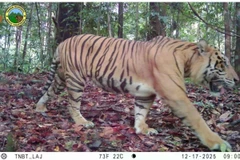
Camera traps installed in Bukit Tigapuluh National Park of Indonesia have recorded four individual Sumatran tigers (Panthera tigris sumatrae), providing strong evidence that the conservation area's ecosystem remains well preserved.

Deputy Prime Minister and Agriculture Minister of Thailand Thammanat Prompao (Photo: The Nation)

Agricultural envoys ordered to boost Thai crop exports

Deputy Prime Minister and Agriculture Minister of Thailand Thammanat Prompao said that the ministry is prioritising a “market-led, innovation-supported, higher income” strategy, built on three key pillars: strengthening confidence in core, established markets to protect Thailand’s market share; targeting high-potential products to open new opportunities, including dried seahorses, dried geckos, live crocodiles for consumption, and breeding crocodile parent stock for farming; and expanding networks by deepening cooperation with key trading partners, including China, and widening sales channels, such as digital platforms, so Thai products can reach consumers more directly.

Illustrative image (Photo: Internet)

Thailand maps out national semiconductor strategy

Under the strategy, Thailand will prioritise power, sensor, photonics, discrete and analog semiconductors, which are closely linked to the country’s established electronics manufacturing base and supply chains serving the automotive, energy, data centre and industrial sectors.

MDEC headquarters (Photo: nabalunews.com)

Malaysia’s digital exports surge

Malaysia's digital exports recorded 6.8 billion RM (1.67 billion USD) between 2024 and the first half of 2025, marking a milestone in the country’s development journey of digital economy.

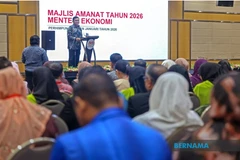
Malaysian Minister of Economy Akmal Nasrullah Nasir speaks at the Economy Minister Mandate 2026 on January 8. (Photo: Bernama)

Malaysia seeks to translate economic policies into practice

Malaysia enters the preparatory phase for the 13MP on the back of encouraging economic indicators in 2025. Gross domestic product (GDP) expanded by 5.2% in the third quarter of 2025, bringing average growth for the first nine months of the year to 4.7%.

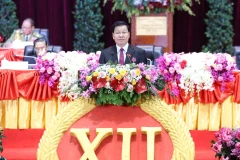
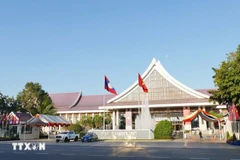
The Lao National Convention Centre in Vientiane, the venue of the 12th National Congress of the Lao People’s Revolutionary Party. (Photo: VNA)

Laos steps up drive to move beyond least developed country status

The Lao Government will also work to foster strong development momentum by mobilising public participation, encouraging self-reliance among citizens and businesses, and improving the quality of human resources, while building an independent and self-reliant economy capable of deeper regional and global integration.