Malaysia works hard to expand semiconductor ecosystem

According to Ben Simpfendorfer, head of the consultancy Oliver Wyman Forum, said Malaysia could explore potential areas such as solar panel manufacturing, battery storage systems, and clean energy products.

Kuala Lumpur (VNA) – Malaysia needs to broaden its manufacturing ecosystem beyond assembly lines and semiconductors to fully capitalise on foreign investments, towards becoming a more complete manufacturing hub.

According to Ben Simpfendorfer, head of the consultancy Oliver Wyman Forum, said Malaysia could explore potential areas such as solar panel manufacturing, battery storage systems, and clean energy products.

Malaysia has to move beyond basic assembly work and set itself up as a complete manufacturing hub, he said, noting that the country shouldn’t be just another stop in the process.

He said that while Malaysia has the opportunity to be a big winner in the reconfiguration of global supply chains, it needs to have a holistic master plan as well as an ecosystem that has both breath and depth.

Malaysia's strength lies in its solid legal framework and robust foreign investment policy incentives. However, the government still has much work to do to strengthen the resilience of its supply chains.

The next stage in the process is to focus on building a comprehensive ecosystem for the semiconductor industry, he stated.

Malaysia as one of the countries that stand to benefit as supply chains are de-risked and Chinese interest grows amid global trade tensions.

Last year, Malaysia crossed a milestone with 378.5 billion MYR (88 billion USD) in approved investments, the highest in the nation’s history, with key strategic investments coming in from the US, Germany, China, Singapore, and Hong Kong (China)./.


VNA

See more

Semiconductor wire production at an industrial park in former Hoa Binh province (now Phu Tho province). (Photo: VNA)

Vietnam’s GDP growth impressive amid global headwinds: Chinese media

It said with these results, the Vietnamese Government still has ample room to adjust monetary policy, unleash market vitality, and push ahead with institutional reforms. This, the paper noted, could enable Vietnam to achieve double-digit economic growth during the 2026-2030 period.

A voter casts her ballot in the general election at a polling station in Yangon, Myanmar. (Photo: Xinhua/VNA)

Myanmar begins second round of general election

This is the first election in Myanmar since the military government assumed power five years ago. A total of 57 political parties are participating in the election, including six parties running nationwide, with around 5,000 candidates vying for seats in the parliament.

A healthcare worker performs a swab test on a patient during influenza symptom screening at a community health centre in Banten, on January 7, 2026. (Photo: antaranews.com)

Indonesia reports first death related to so-called super flu

Yovita Hartantri, head of the New and Re-emerging Infectious Diseases Team at Hasan Sadikin Regional Hospital in Bandung, said the hospital treated 10 patients with influenza A subclade K between September and November last year. The patients exhibited a range of symptoms, with at least three developing severe complications.

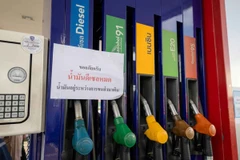
Thailand enters technical deflation: Expert

Thailand enters technical deflation: Expert

Associate Professor Thanavath Phonvichai, President of the University of the Thai Chamber of Commerce and Chairman of the Centre for Economic and Business Forecasting, attributed the current bout mainly to lower production costs, particularly cheaper fuel and persistently low agricultural prices.

Indonesia spots four Sumatran tigers at national park

Indonesia spots four Sumatran tigers at national park

Camera traps installed in Bukit Tigapuluh National Park of Indonesia have recorded four individual Sumatran tigers (Panthera tigris sumatrae), providing strong evidence that the conservation area's ecosystem remains well preserved.