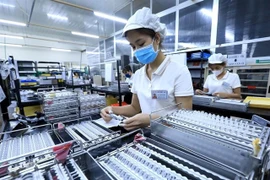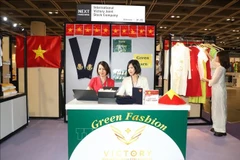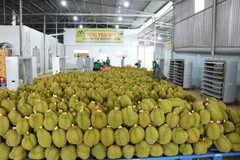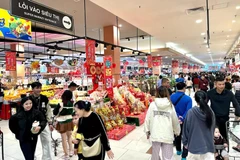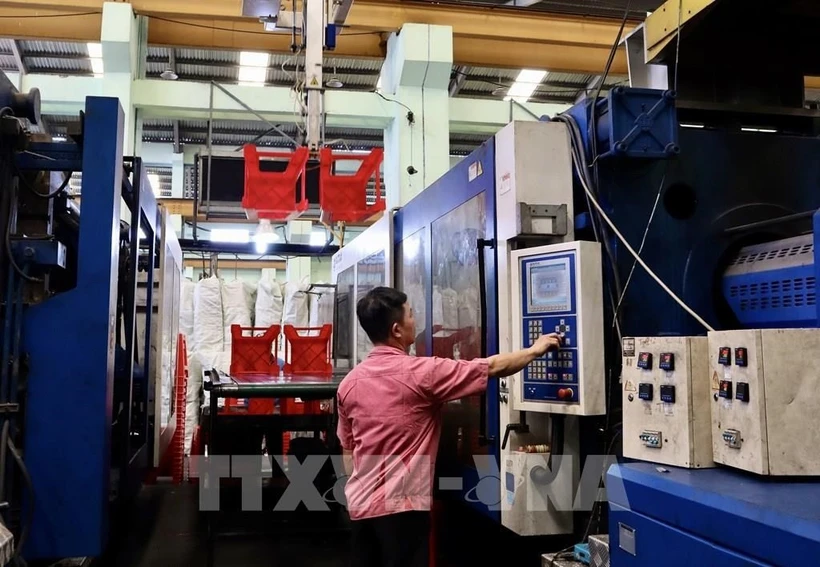
Hanoi (VNA) - Vietnam's manufacturing and processing enterprises are expressing optimism about business prospects in the second quarter of this year, according to the latest survey conducted by the National Statistics Office (GSO) under the Ministry of Finance.
Results of the business tendency survey of manufacturing enterprises in the second quarter showed that 45.8% of businesses expect better business performance in Q2 compared to the previous quarter. Meanwhile, 39.2% anticipate stability, and only 15% foresee more difficulties ahead.
Foreign-invested enterprises (FDI) are the most optimistic, with 87% forecasting either improvements or stability in production and operations. State-owned enterprises follow with 84.7%, and non-state firms at 84.1%.
Regarding production volume, 45.1% of businesses expect growth in Q2, 40.9% expect it to hold steady, and 14% anticipate a decline.
New orders are also projected to increase with 43.3% of businesses expect more new orders, 42.8% forecast stability, and 13.9% foresee a drop.
Up to 37.8% of enterprises expect an increase in export orders; 48.9% expect no change and 13.3% anticipate a decrease.
Despite ongoing support measures from the government, ministries, and local authorities, the GSO warns that Vietnam’s economy will continue to face numerous challenges in Q2. As a highly open economy, Vietnam remains vulnerable to global shocks, from economic fluctuations and geopolitical tensions to unpredictable epidemics and natural disasters.
One major concern is rising inventories, which surged 15.1% year-on-year. High inventory levels limit cash flow, making it harder for businesses to reinvest in upcoming production cycles and potentially forcing them to cut back on output if liquidity is not addressed promptly.
Vietnam’s large domestic market of over 100 million people offers significant potential, but without stronger stimulus policies, weak consumer demand will continue to weigh on businesses struggling to find domestic buyers.
Internationally, rising demands for green, clean, and high-tech production add further pressure. Companies are being forced to upgrade machinery, train high-skilled workers, and secure cleaner, higher-quality raw materials, thus requiring substantial capital investment.
Tax policy changes, particularly in key export sectors like electronics, textiles, footwear, wood, and metals, are also eroding competitiveness. Without timely diversification of export markets, securing new orders could become increasingly difficult.
Phi Thi Huong Nga, Head of the GSO’s Industry and Construction Statistics Department, emphasised that without swift adjustments and adaptations, sustaining Q1’s growth momentum will be difficult.
She stressed the need for timely support in helping businesses meet new export standards, access capital, adopt advanced technologies, and boost product quality and market competitiveness.
To ease difficulties for them, 40.4% of enterprises have urged banks to continue cuts in loan interest rates. Additionally, 28.3% of businesses called for price stabilisation of raw materials while 25.1% sought more streamlined administrative procedures, and 24% of them emphasised the need for stable material supply.
Regarding the textile and footwear sector, 47.9% of enterprises proposed a reduction in lending interest rates, while 26.9% requested support in streamlining loan application procedures. Some 28.8% of businesses called for cutting down administrative processing steps, 30.1% suggested improving logistics service quality, and 30.1% expressed a desire to participate more deeply in production and supply chains. The demand for lower interest rates was particularly high in key localities, with 68.8% of businesses in Ho Chi Minh City, 85.7% in northern Thai Binh province and 50% in southern Dong Nai province.
With strong support from the government and the quick, decisive actions taken by Party and government leaders, especially in response to recent US import tax adjustments, the industrial sector is expected to overcome current difficulties and maintain growth momentum in the next quarter, Nga said./.