Vietnam’s tech giant eyes revenue of up to 250 million USD from Japanese market by 2028

Vietnam’s CMC Technology Corporation expects revenue from the Japanese market to reach 200 - 250 million USD, accounting for about 50% of its total revenue in foreign markets.

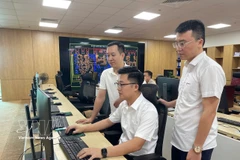
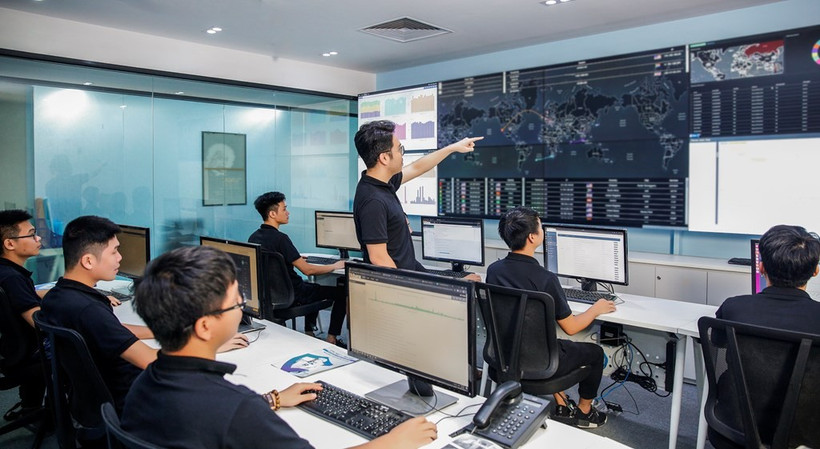
CMC cyber security team (Source: CMC)

Hanoi (VNA) – Vietnam’s CMC Technology Corporation always sees Japan as a strategic market during its globalisation, said Corporation Chairman Nguyen Trung Chinh.

According to the corporation, it aims to have 5,000 employees by 2028, of whom 1,000 will work in Japan. The business expects revenue from the Japanese market to reach 200 - 250 million USD, accounting for about 50% of its total revenue in foreign markets.

At the same time, CMC plans to invest 100 million USD to build mini data centres in Japan to serve the needs of digital transformation and artificial intelligence (AI) development.

The group has built three offices in Japan's Yokohama, Osaka and Tokyo. In particular, on September 18, 2024, on the occasion of the opening of the office in Tokyo, CMC announced the "Enable Your AI-X" strategy, aiming to work together with Japanese partners to exploit the potential of digital transformation and AI.

Chinh said that the corporation launched an initiative to accompany the Japan Business Federation (Keidanren) in opening the first representative office of the federation in Vietnam.

CMC is ready to support modern facilities in Ho Chi Minh City to open up more extensive and intensive cooperation opportunities for the business communities of the two countries.

He also emphasised CMC's active role in realising activities under the Vietnam - Japan Joint Initiative (VJJI 2024), especially in areas such as innovation, green transition, supporting industries, and high-quality workforce training.

Chinh said that his corporation will accompany the business communities of the two countries to create an era of innovation, science and technology, and AI.

In addition to economic connection, CMC is also actively implementing high-tech research cooperation programmes. It has signed a cooperation agreement with the VLSI Design and Education Center (VDEC) at the University of Tokyo, aiming to develop AI applications and semiconductors, and build an innovation ecosystem in the high-tech field in Vietnam./.

VNA

See more

Illustrative photo: AFP

AI Law takes effect, anchors national governance framework

Taken together, the new AI Law and its implementation roadmap not only complete Vietnam’s legal architecture for AI, but also lay a structured foundation for risk management, innovation and ecosystem development, aiming to ensure coherent and effective enforcement in the years ahead.

Viettel Networks and Ericsson sign their cooperation agreement on the sidelines of the Mobile World Congress 2026. (MWC 2026)

Viettel Networks, Ericsson partner to advance autonomous telecom networks

Under a newly signed cooperation agreement, Ericsson will provide network automation platforms and artificial intelligence (AI) technologies while working with Viettel to conduct real-world trials. The collaboration marks a new step forward, combining Viettel’s large-scale network operation expertise with Ericsson’s strengths in automation solutions and advanced technologies.

Prime Minister Pham Minh Chinh speaks with students at Hanoi University of Science and Technology (Photo: VNA)

Resolution 57: Developing high-quality sci-tech human resources key to master strategic technologies

After one year of implementing Resolution No. 57-NQ/TW of the Politburo, alongside notable achievements, the Central Steering Committee for science and technology development, innovation, and digital transformation has identified persistent shortcomings and bottlenecks requiring urgent attention - most notably a shortage of high-quality human resources in strategic technology fields.

The Saigon Hi-Tech Park (Photo: VNA)

Vietnam advances toward mastering UAV technology

Products are already making their way into the US market, but this is not merely a story of applying new technology in practice, but a gradual process of mastering core details and affirming international capabilities in the UAV industry, one of Vietnam’s strategic high-tech sectors.

Tran Quang Hung, Chairman of the Board of Directors of HIC, presents the company’s operating model at the launch event. (Photo: hanoimoi.vn)

Hanoi’s innovation centre to drive digital transformation, creative industries

HIC is envisioned as a central “brain” connecting data, resources, policies, technology and culture to address urban development challenges, operate the national innovation ecosystem, promote a sustainable digital economy and digital society, improve the quality of life for local residents, and foster creative industries, particularly cultural industries linked to Hanoi’s identity.

Participants pose for a group photo at the International Conference on Advanced Microscopy for Life Sciences and Materials held in Gia Lai on February 25. (Photo: ICISE)

International conference spotlights advanced microscopy in life sciences, materials

The microscopy user community in Vietnam remains fragmented, lacking a common platform for sharing technical expertise, research experience and collaboration opportunities. This limited connectivity has, to some extent, curtailed the full potential of microscopy technologies in advancing scientific progress and industrial applications at home and abroad.