
















Villagers bring stacks of conical hats to the communal yard for sale during the early-morning market. (Photo: VNA)
More than a trading place, the market is a social hub where locals meet, talk and preserve long-standing traditions. (Photo: VNA)
Outside the pagoda yard, traders sell la lui (young palm leaves) - the primary material for making Chuong conical hats. Sourced from Thanh Hoa and Ha Tinh provinces, the leaves are treated by rubbing with sand and sun-dried for two to three days until they turn a silvery white, becoming soft and easy to shape. They are then bundled into bunches of 50 to 100 leaves, priced between 65,000 and 200,000 VND (3 - 8 USD) depending on quality. (Photo: VNA)
From the initial frame, artisans carry out a series of meticulous steps including preparing the leaves, shaping the rings, forming the hat, stitching, inserting the inner lining and finishing the brim to complete a conical hat. (Photo: VNA)
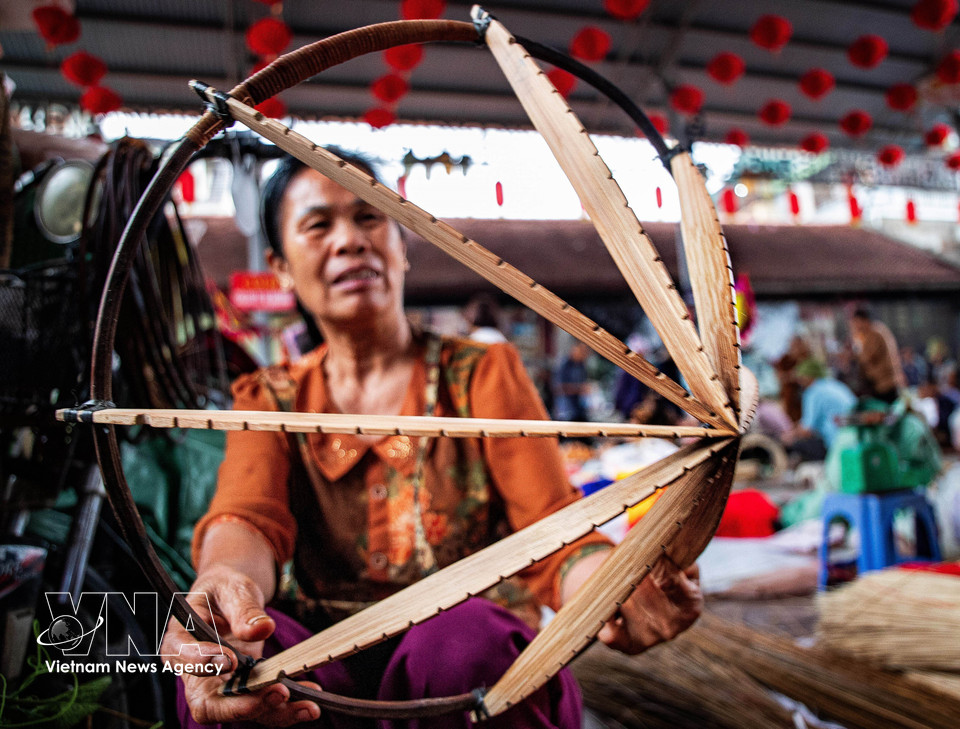
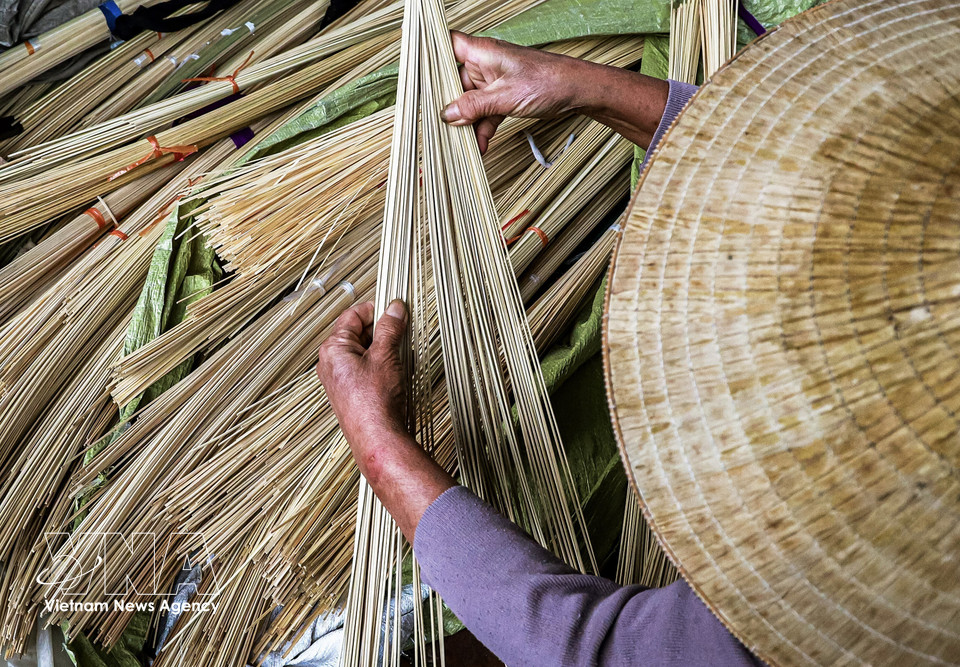
Thin bamboo strips are shaped into rings, forming the structure of the hat. (Photo: VNA)
Each Chuong hat features 16 rings, including one thicker ring that forms the brim. (Photo: VNA)
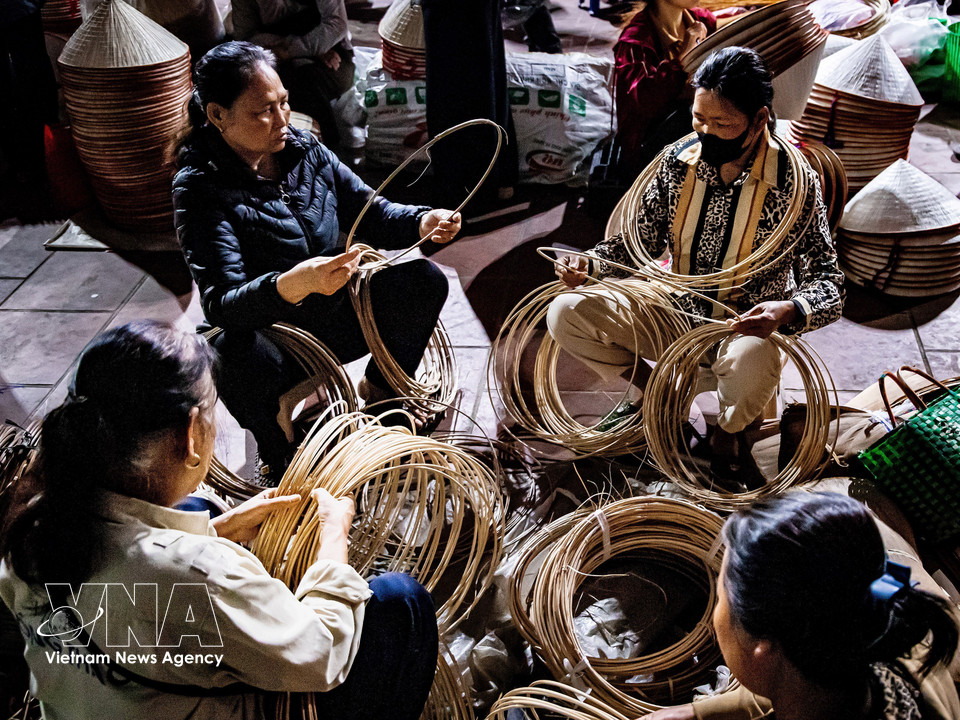
A wide range of materials and tools, such as frames, bamboo rings, palm leaves, nylon thread and sewing supplies, are sold at the market. (Photo: VNA)
Finished hats are priced between 40,000 and 150,000 VND, depending on quality and craftsmanship. (Photo: VNA)
The Chuong hat market runs from around 4:30 to 7:00 a.m. on designated lunar days each month. (Photo: VNA)
As the market ends, wholesale buyers gather to count and sort the hats they have purchased. (Photo: VNA)
0
1
2
3
4
5
6
7
8
9

Market keeps centuries-old conical hat craft alive

Chuong conical hat market in Thanh Oai commune, Hanoi, comes alive early from 4:30 a.m. Held for just about three hours on the 4th, 10th, 14th, 20th, 24th and 30th days of the lunar month, the market helps sustain a 300-year-old craft village.