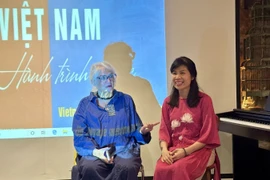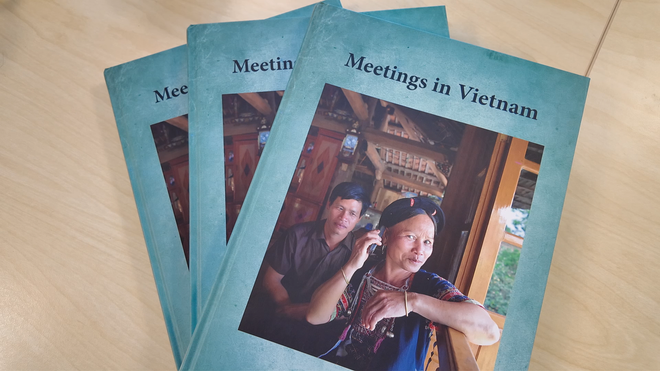
Hanoi (VNA) – What began as a brief assignment in Vietnam has gradually turned into an enduring, three-decade odyssey for Swedish journalists Lasse Edwartz and Ulf Johansson – return trips, thousands of photographs, and ultimately a lovingly crafted photo book titled “Meetings in Vietnam.”
Over 35 years, through 15 visits and thousands of images, their journey has become not only a visual record of Vietnam’s transformation, but also a story of human connection, memory, and friendship that transcends borders.
A turning point: from Mozambique to Vietnam
In 1988, the editorial board of Bohuslaningen Newspaper (Sweden) planned to send a reporter to Mozambique for an international training programme. Everything was in place, until the editors abruptly changed course: “We’re going to Vietnam instead.”
It came completely out of the blue, but it turned out to be absolutely right, Edwartz recalled. He said the moment they arrived, they knew instantly it was a perfect choice. The people, the landscapes, even the atmosphere, all felt familiar, welcoming, and instantly likeable.
The pair set out to explore Vietnam through their lenses, capturing the faces, stories and subtle shifts of a nation in the midst of remarkable changes.
Every encounter along their journey left an extraordinary impression, Johansson said. There were people from every walk of life, each with a story to tell.
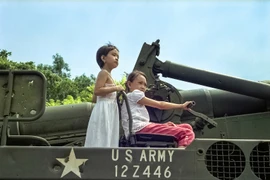
He added that the very first photo in their collection shows a young girl dressing simply. It was when life was difficult for many, yet, there was always optimism, resilience, and the sense of moving forward.
Meeting the “big sister” in Da Ban village
One of the central figures in their book is Mrs Binh, a Dao ethnic woman from Da Ban village in Tuyen Quang province. Edwartz and Johansson first met her in the early 1990s while covering the raw-material region linked to the Bai Bang Paper Mill – one of the major Vietnam-Sweden cooperation projects at the time.
The first impression was unforgettable, Edwartz said. She was hardworking, intelligent, influential within her community, and radiated positivity despite hardships.
Over time, the relationship evolved far beyond that of photographer and subject. Binh became a relative; they affectionately call her their “older sister.” Whenever they return to Vietnam, their first stop is always Da Ban to visit her and her family.
Her story forms a poignant highlight of the photo collection. She embodies the strength, vitality, and grace of Vietnamese women through decades of change.
According to Johansson, she helped them understand Vietnam. She joined them in many journeys and became a bridge to the people and culture here. With her, conversations came easily, people opened their hearts.
From 1,800 photographs to a single book
Across more than thirty years of travelling between Sweden and Vietnam, Edwartz and Johansson amassed thousands of images. The idea for the book “Meetings in Vietnam” emerged around four years ago.
At first, they simply wanted to preserve the memories, according to Edwartz. But the more they photographed, the more they realised these images told a bigger story – one of friendship, change, and the vitality of the Vietnamese people.
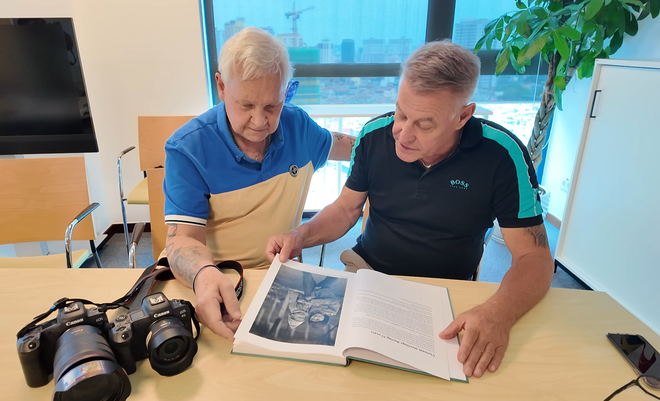
From over 1,800 photographs, the pair spent months selecting and editing a few hundred that best captured the essence of their encounters.
It took enormous effort, as they had to balance technical quality with emotion, ensuring each photograph retained the soul of the person in it, Johansson explained.
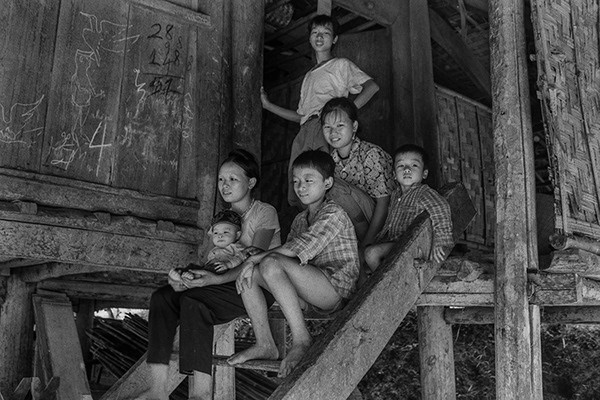
The book is organised into three sections of black-and-white images from the late 1980s to early 1990s, colour photographs reflecting Vietnam’s era of transformation, and a special chapter dedicated to the life and family of Mrs Binh.
A bridge from lens to heart
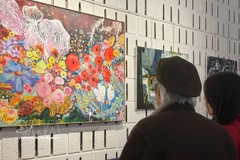
When their “Meetings in Vietnam” exhibition opened in Sweden, it received an overwhelmingly warm response. Many visitors who had previously been to the Southeast Asian nation were deeply moved; those who had never set foot there said the photographs brought visions of travelling abroad to Vietnam.
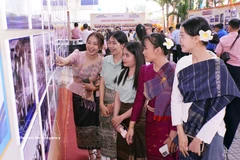
In Vietnam, the exhibition held in Da Ban was especially emotional. Local residents saw themselves and their village as they were more than twenty years ago, now immortalised in an international publication.
On a return, the pair found families proudly hanging their photographs on their walls. “For us, that was the greatest reward,” Johansson said.
According to him, they are not diplomats, but through photography, they have played the role of connecters. They hope these images help Swedes understand Vietnam better, and show Vietnamese people that they are respected, admired and cherished in Sweden.
The two journalists said they are continuing to gather new materials, hoping to produce a follow-up chapter to extend the story of Da Ban – a continuation of the journey captured in “Meetings in Vietnam.”/.