Hanoi (VNA) - At the 11th Plenary Session of the 13th Party Central Committee, Resolution No. 60-NQ/TW was issued, listing the proposed names of provinces, cities, and political-administrative centers (provincial capitals) for 34 administrative units after their merger.
According to the list, many newly merged provinces have had their administrative boundaries expanded toward the sea. For example, Can Tho City is set to merge with Soc Trang and Hau Giang provinces; Hai Duong Province will merge with Hai Phong City; and Hung Yen will merge with Thai Binh.
Notably, provinces in the Central Highlands will be merged so that mountainous areas gain access to the sea, and coastal provinces integrate with mountainous areas. For instance, Kon Tum will merge with Quang Ngai, Gia Lai with Binh Dinh, Dak Lak with Phu Yen, and Lam Dong, Dak Nong, and Binh Thuan will form one unit.
Expanding provincial space toward the sea
Director of the Department of Local Government (Ministry of Home Affairs) Phan Trung Tuan stated that Vietnam is a maritime nation with a long coastline and vast sea areas. Thus, marine-oriented development remains a major and strategic direction. The country’s socio-economic development is guided by this orientation, as seen in major road and rail plans that all link to coastal areas.
Due to the strategic importance of coastal development, the Ministry of Home Affairs has proposed reorganizing provinces to connect inland areas without sea access to the coastal regions. In all proposed provincial merger scenarios, the Ministry has taken the coastal development factor into account - not just for spatial or territorial expansion, but to ensure sustainable long-term development goals.
According to Mr. Tuan, Vietnam currently has 28 provinces and cities with coastlines, with the South Central Coast region boasting deep-water seaports such as Cam Ranh and Van Phong. These are strategic advantages for developing the maritime economy and international trade.
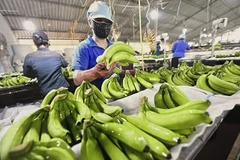
He added that the provincial mergers in the Central Highlands have been designed to link inland areas with coastal provinces, allowing these agricultural regions to maximize their land resources and boost production of key national crops. With synchronized transport infrastructure - by road, rail, and waterway - these areas can support each other in development.
This operational strategy also strengthens the relationship between coastal provinces and those in the Central Highlands - not only in export activities but also by promoting tourism strengths.
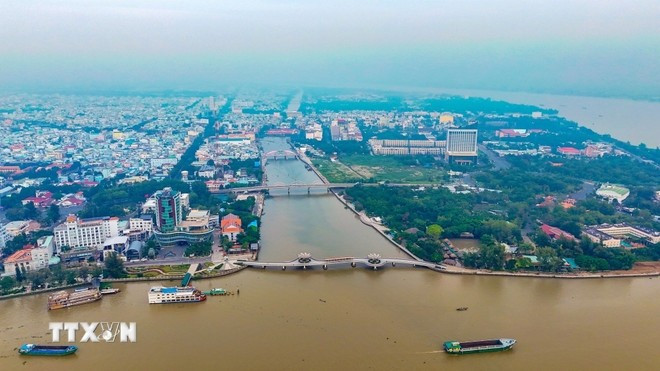
Can Tho, which has gone through multiple separations and mergers over the past 50 years, is now set to merge with Soc Trang and Hau Giang provinces.
Permanent Deputy Secretary and Chairman of the People’s Council of Can Tho city Pham Van Hieu emphasized that merging with a coastal province presents a turning point for Can Tho. It will enable the city to grow rapidly in the near future, significantly impacting the development of the entire Mekong Delta region.
All Western corridors should lead to the sea
Delving deeper into the East-West development axis following the mergers, Chairman of the Vietnam Urban Planning and Development Association and former Deputy Minister of Construction Tran Ngoc Chinh said that Vietnam’s unique S-shaped geography, stretching over 14 degrees of latitude, requires development not only along the North-South axis but also across East-West corridors.
According to Mr. Chinh, while the North-South axis remains the country’s main "lifeline," the East-West corridors are equally important for economic development and national security. This is especially true in the Central and Central Highlands regions, where rugged terrain and mountainous barriers hinder connectivity. Strengthening links between highland and coastal provinces will drive the economy and enhance defense capabilities.
Mr. Chinh expressed his confidence that increased integration between coastal provinces such as Phu Yen, Khanh Hoa, and Binh Dinh with the Central Highlands will boost both economic development and military logistics, thereby strengthening national defense.
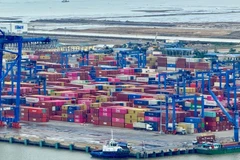
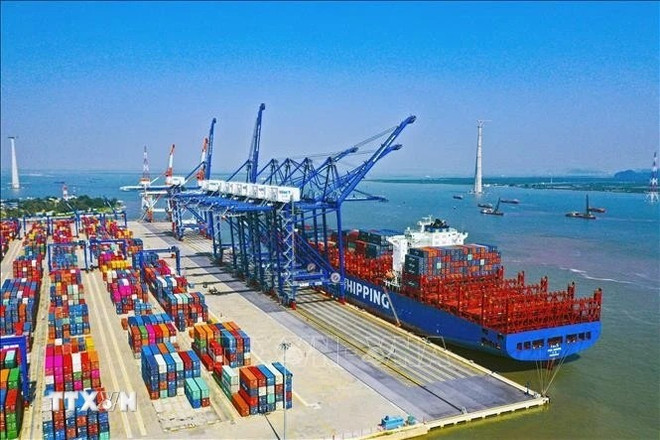
He also stressed that a comprehensive national development space must be built on strong connections between western corridors and the sea. Vietnam currently possesses several seaports of international stature, including Hai Phong, Thi Vai–Cai Mep, and Cam Ranh. These deep-water ports are key gateways for Vietnam to deeply integrate into global supply chains and enhance its national standing./.