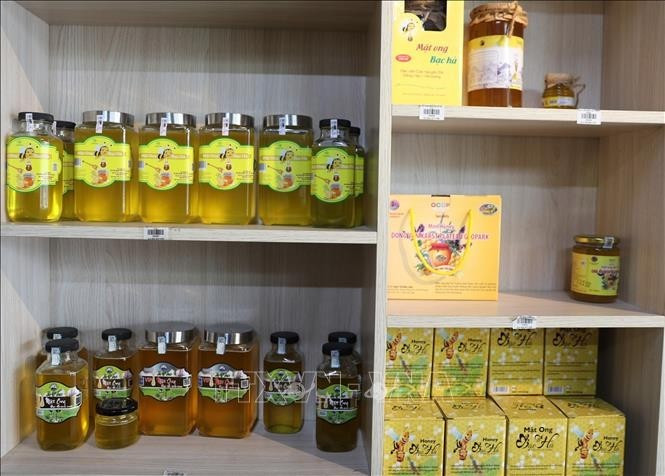
Ha Giang (VNA) - As summer approaches on the Dong Van Karst Plateau in the northern mountainous province of Ha Giang, preparations are underway for the annual mint honey season. Mint honey, an exquisite essence of rock, flower, and human effort, is not only a precious specialty of the plateau, but also brings high economic value to local residents. It remains a source of pride for local ethnic communities.
Mint plants, which grow naturally across the mountains of Quan Ba, Yen Minh, Dong Van and Meo Vac district, bloom between October and January. The small, bell-shaped purple-pink flowers attract bees with their subtle, sweet fragrance. From this, mint honey, known for its pale yellow-green hue and smooth, lightly sweet taste, is produced, offering a product unlike typical longan or lychee honey from other regions.
The honey-making process is entirely natural. After collecting nectar, worker bees pass it through enzymatic and evaporation stages within the hive before sealing it in wax cells. This traditional, chemical-free process helps preserve the nutritional value and purity of the final product.
Mint honey is not only a prized local specialty but also an important source of income. In 2024, Ha Giang province reported over 60,000 beehives, with 48,000 located on the plateau. Dong Van district alone manages 1,100 hectares of mint plants and 15,800 beehives. Annual honey output reaches around 240 tonnes, fetching prices between 500,000 VND (19.3 USD) and 800,000 VND per litre. For many ethnic minority families, this means a stable and significant livelihood.
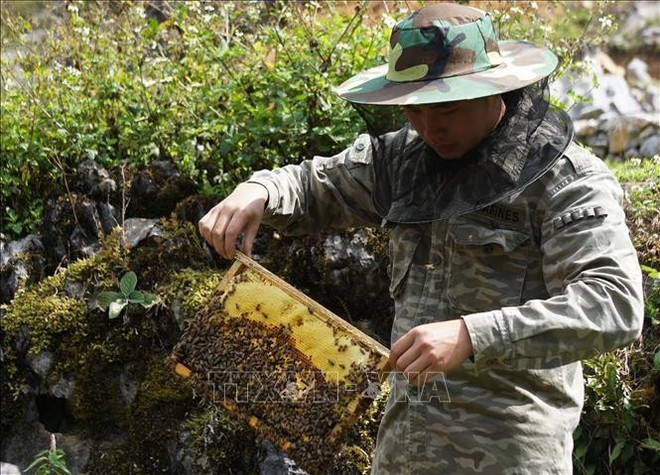
Local farmer Hoang Ngoc Cuong from Meo Vac shared that his family maintains over 70 hives. Last season, they harvested 250 litres of honey, most of which was pre-ordered by regular customers.
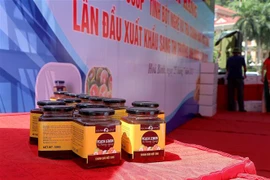
Over time, cooperatives and enterprises have emerged, professionalising beekeeping and product distribution. In Dong Van, one company, four cooperatives, and over 700 households are involved in beekeeping. They have been granted rights to use the “Meo Vac Mint Honey” geographical indication.
To support the sector, Ha Giang has invested over 30 billion VND since 2021, aiding in mint cultivation, indigenous bee breeding, and product promotion. Mint honey from Ha Giang has received a 4-star OCOP (One Commune One Product) rating and is protected under a geographical indication issued by the Intellectual Property Office under the Ministry of Science and Technology.
Despite its achievements, mint honey faces several challenges. A recent conference held by Dong Van district authorities identified key issues, such as shrinking mint-growing areas due to climate change and grazing, difficulties in quality control, and limited access to international markets.
Chairman of the Dong Van district People's Committee Do Quoc Huong urged relevant agencies to improve oversight and transparency, including publishing quality certification results and standardising pricing based on quality tiers. The district also emphasised issuing production zone certificates, developing a shared product logo, and strictly banning the import of foreign bee species to protect the native gene pool.
Beyond its economic role, mint honey is increasingly becoming part of the region’s tourism identity. During the bloom season, visitors to Ha Giang are drawn not only by the purple fields of mint flowers but also by the opportunity to witness or participate in the honey-harvesting process. Many community-based tourism initiatives in Dong Van and Meo Vac have integrated beekeeping experiences into their offerings, enhancing the local tourism value chain.
As consumer interest grows in naturally produced, traceable products, Ha Giang’s mint honey, with its distinct colour, aroma, and fully organic production, stands out as a promising contender for broader domestic and international markets. With coordinated efforts in production, branding, and marketing, the province aims to elevate mint honey as a national product and an export-worthy commodity.
Ultimately, mint honey represents more than a regional delicacy, it is the result of nature’s abundance, the diligence of Ha Giang locals, and a growing synergy between agriculture and tourism. Preserving and promoting this product means safeguarding the essence of the northern mountainous area, its rocky terrain, cool mist, and people./.