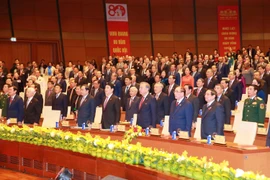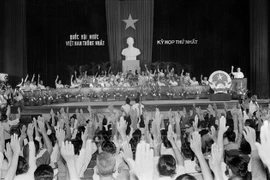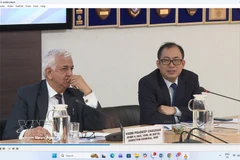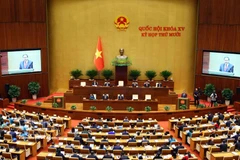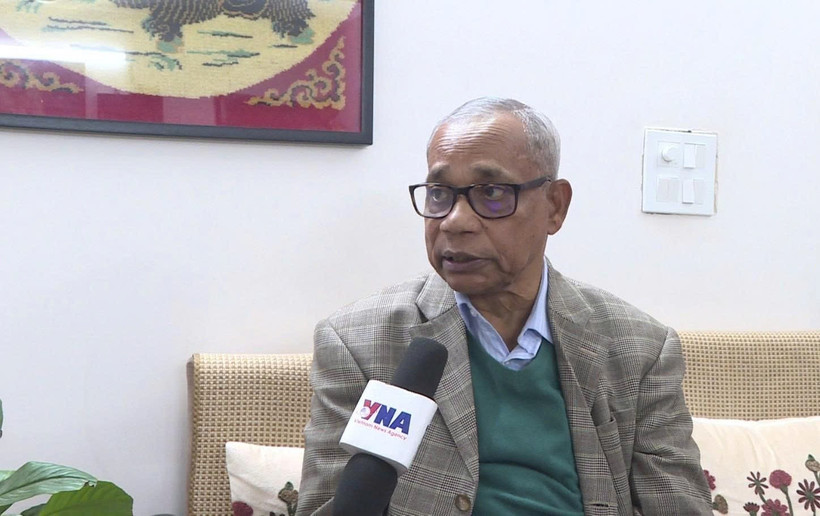
New Delhi (VNA) – Over the past eight decades, Vietnam’s National Assembly (NA) has played a central role in safeguarding political stability, ensuring institutional continuity, staying attuned to public aspirations, and turning the country’s development goals into concrete outcomes, according to Rup Narayan Das, a former official of India’s Lok Sabha (lower house).
Speaking to Vietnam News Agency correspondents in New Delhi on the occasion of the NA’s 80th anniversary (January 6, 1946–2026), Das said that amid today’s global uncertainties, maintaining stability and institutional continuity remains the foremost challenge to all nations. Without stability, he noted, economic growth or improvements in people’s quality of life is unattainable. In this regard, Vietnam’s NA has greatly fulfilled its historic mission.
From a comparative international standpoint, Das observed that although political systems vary, parliaments in both Vietnam and India share a common and vital function: providing an institutional space for dialogue, debate, and the reconciliation of differing views. This parliamentary framework is essential for preserving long-term political stability, minimising institutional shocks, and ensuring the smooth operation of the state apparatus.
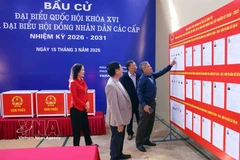
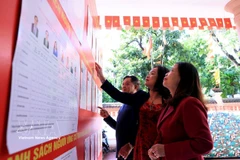
He also highlighted Vietnam’s practice of holding regular and synchronised elections, including general elections and elections of People’s Councils at all levels. Such periodic elections, Das stressed, are crucial in any political system to guarantee orderly and peaceful leadership transitions while maintaining policy continuity.
According to the Indian insider, stable and consistent development orientations and policies, even amid leadership changes, create the most favourable conditions for economic growth and are particularly attractive to investors, especially foreign ones. He underscored the role of both the NA and the Communist Party of Vietnam in upholding this stability through a leadership model that is continuous, inheritable, and responsive to domestic and global shifts.
These institutional strengths, Das noted, are reflected in Vietnam’s economic performance. Despite global headwinds, the country has sustained positive growth and gained international recognition as one of the fast-growing economies. It has also strengthened its position in the Asia-Pacific region, notably as a major manufacturing hub in various industries like textiles and electronics, while steadily expanding into high-tech sectors such as semiconductors and electronic equipment.
He perceived that these achievements are closely tied to the evolution of Vietnam’s NA, an institution that has continually improved its efficiency in legislation, supervision and decision-making on key national issues./.