National consensus is Vietnam’s core, most sustainable source of strength: French scholar

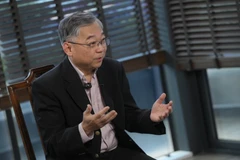
Emphasising the role of national unity in achieving this historic victory, Eric Coudray, history teacher in Annecy, Indochina war expert and doctor of contemporary history at Paul-Valéry University Montpellier, highlighted the importance of reconciliation and national harmony in Vietnam's development.

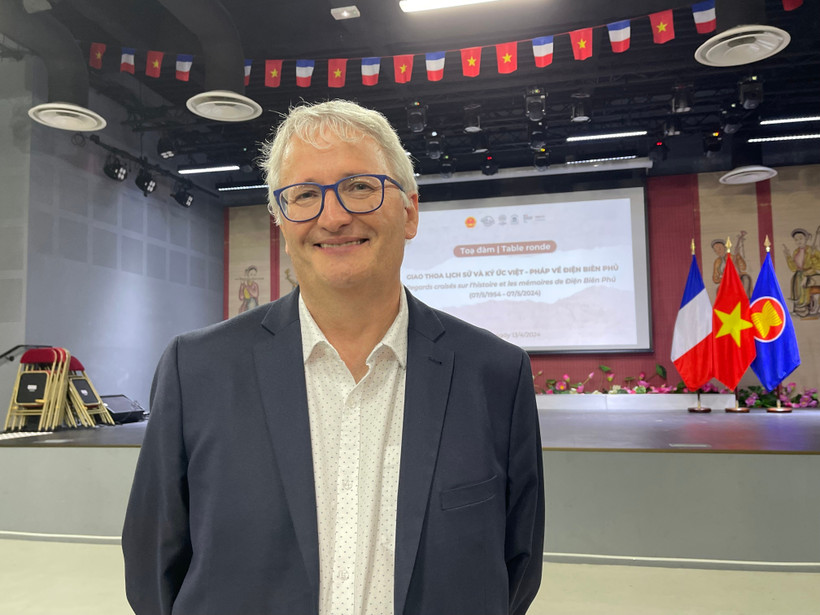
Eric Coudray, Indochina war expert and doctor of contemporary history at Paul-Valéry University Montpellier (Photo: VNA)

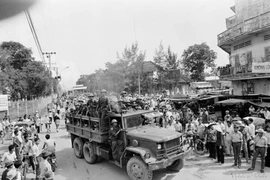
Paris (VNA) - Vietnam’s victory in Spring 1975 was the result of the longing for reunification and the tight organisation of the Liberation Army, with unity based on national consensus being the core and most sustainable source of strength, according to a French scholar.

In an interview to Vietnam News Agency correspondents in Paris on the occasion of the 50th anniversary of the Liberation of the South and National Reunification, Eric Coudray, history teacher in Annecy, Indochina war expert and doctor of contemporary history at Paul-Valéry University Montpellier, stressed that April 30, 1975 marked the end of nearly 30 years of continuous struggles that began in September 1945. It was an extremely fierce period in Vietnam's history, during which the country fought French colonialists and later US imperialists.

Emphasising the role of national unity in achieving this historic victory, Coudray highlighted the importance of reconciliation and national harmony in the country's development.

Reflecting on Vietnam's development journey 50 years after reunification, he praised the efforts in rebuilding the country after the war, affirming that the end of the war provided the new government with an opportunity to focus on building a unified nation and reconstructing war-torn areas, despite facing numerous challenges.

The true turning point, according to the scholar, came with the 1986 Doi Moi (Renewal) policy, when Vietnam opened up its economy, promoted trade, and integrated into the global market.

This policy truly propelled Vietnam into the process of modernisation, shedding the image of a nation known only for its colonial past, he assessed.

Coudray praised the country’s skillful approach in expanding its partnerships, reconciling with France and the US, thereby emerging as a modern nation in the Indo-Pacific region.

Regarding the France-Vietnam relations, the scholar said that since 1973, when the two countries resumed their diplomatic relations, their bond has been increasingly strengthened through shared history and culture, and later expanded into areas such as trade, science, education, defence, and tourism.

This relationship has also facilitated Vietnam's participation in the Francophonie Community, he remarked./.

VNA

See more

Thailand enters technical deflation: Expert

Thailand enters technical deflation: Expert

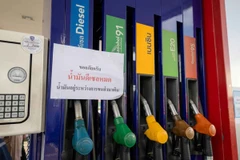
Associate Professor Thanavath Phonvichai, President of the University of the Thai Chamber of Commerce and Chairman of the Centre for Economic and Business Forecasting, attributed the current bout mainly to lower production costs, particularly cheaper fuel and persistently low agricultural prices.

Indonesia spots four Sumatran tigers at national park

Indonesia spots four Sumatran tigers at national park

Camera traps installed in Bukit Tigapuluh National Park of Indonesia have recorded four individual Sumatran tigers (Panthera tigris sumatrae), providing strong evidence that the conservation area's ecosystem remains well preserved.

Deputy Prime Minister and Agriculture Minister of Thailand Thammanat Prompao (Photo: The Nation)

Agricultural envoys ordered to boost Thai crop exports

Deputy Prime Minister and Agriculture Minister of Thailand Thammanat Prompao said that the ministry is prioritising a “market-led, innovation-supported, higher income” strategy, built on three key pillars: strengthening confidence in core, established markets to protect Thailand’s market share; targeting high-potential products to open new opportunities, including dried seahorses, dried geckos, live crocodiles for consumption, and breeding crocodile parent stock for farming; and expanding networks by deepening cooperation with key trading partners, including China, and widening sales channels, such as digital platforms, so Thai products can reach consumers more directly.

Illustrative image (Photo: Internet)

Thailand maps out national semiconductor strategy

Under the strategy, Thailand will prioritise power, sensor, photonics, discrete and analog semiconductors, which are closely linked to the country’s established electronics manufacturing base and supply chains serving the automotive, energy, data centre and industrial sectors.

MDEC headquarters (Photo: nabalunews.com)

Malaysia’s digital exports surge

Malaysia's digital exports recorded 6.8 billion RM (1.67 billion USD) between 2024 and the first half of 2025, marking a milestone in the country’s development journey of digital economy.

Malaysian Minister of Economy Akmal Nasrullah Nasir speaks at the Economy Minister Mandate 2026 on January 8. (Photo: Bernama)

Malaysia seeks to translate economic policies into practice

Malaysia enters the preparatory phase for the 13MP on the back of encouraging economic indicators in 2025. Gross domestic product (GDP) expanded by 5.2% in the third quarter of 2025, bringing average growth for the first nine months of the year to 4.7%.