National Spring Fair 2026 to boost trade, strengthen value chains

The proactive engagement of Vietnam’s trade offices overseas is also expected to contribute to the success of the fair. From mid-January, these offices have launched coordinated promotion and matchmaking efforts, inviting foreign partners to attend the fair as a gateway to Vietnam’s market, manufacturing capacity and investment environment.

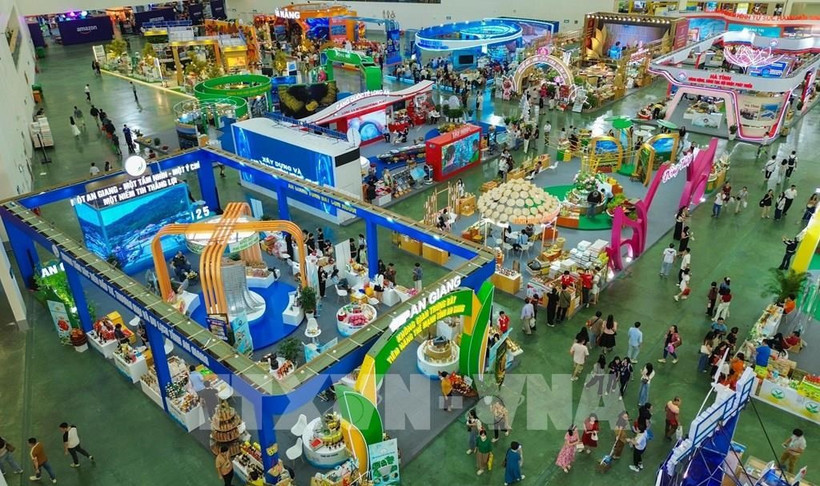
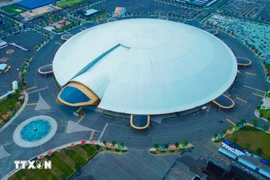
The National Spring Fair 2026 will take place at the Vietnam Exposition Centre from February 2 to 8. (Photo: VNA)

Hanoi (VNA) – Scheduled from February 2 to 8 at the Vietnam Exposition Centre (VEC) in Dong Anh commune, Hanoi, the National Spring Fair 2026 is expected to create vibrant trading momentum from the beginning of the year.

Organised on a large scale, with clearly structured exhibition zones and coordinated participation from ministries, localities and the business community, the fair is set to present a comprehensive picture of Vietnam’s production capacity, creativity and consumer market.

A key highlight of the event will be the Vietnam International Exhibition on Textiles, Leather and Footwear, Furniture and Handicrafts Value Chain (VIVC 2026). Held under the theme “From Materials to Markets – One Completed Value Chain”, the exhibition will connect enterprises across upstream and downstream segments, from materials and design to manufacturing and distribution.

The combination of business-to-business (B2B) and business-to-consumer (B2C) activities reflects a strategic shift towards strengthening entire value chains rather than promoting individual stages in isolation, thereby enhancing the ability of Vietnamese firms to integrate more deeply into global supply networks.

The proactive engagement of Vietnam’s trade offices overseas is also expected to contribute to the success of the fair. From mid-January, these offices have launched coordinated promotion and matchmaking efforts, inviting foreign partners to attend the fair as a gateway to Vietnam’s market, manufacturing capacity and investment environment.

From Japan, Quyen Thi Thuy Ha, head of the Vietnam Trade Office branch in Osaka, said her office moved quickly to draw up plans to organise delegations of Japanese companies once official information about the fair was released. She noted that Vietnamese goods currently account for only around 3–5% of Japan’s total import-export turnover, pointing to significant growth potential.

She added that for the textile and footwear sectors, free trade agreements such as the Comprehensive and Progressive Agreement for Trans-Pacific Partnership (CPTPP) and the Regional Comprehensive Economic Partnership (RCEP) offer advantages in rules of origin through regional input sourcing, helping improve the competitiveness of Vietnamese products in the Japanese market.

Do Ngoc Hung, trade counsellor and head of the Vietnam Trade Office, said the four Vietnamese trade offices in the US are coordinating closely to promote the fair and attract US businesses. Participation is being selected carefully, with priority given to sectors such as textiles, footwear, furniture and handicrafts, where mutual demand and capacity align, he added.

Alongside overseas outreach, domestic businesses are also placing high expectations on the Spring Fair 2026. Many see it as a key platform to showcase production capabilities, introduce products, seek partners and expand export markets, amid growing pressure to move up the value chain and strengthen Vietnamese brands.

Dang Thi Tuoi, director of external relations at CT Group, said the group plans to present a range of core technologies developed in-house, including drones, semiconductors, artificial intelligence and quantum computing, as well as solutions for new energy, green digital currencies and carbon credit trading. She said the fair is not merely an exhibition space but an opportunity for Vietnamese enterprises to demonstrate a shift from contract manufacturing to mastering technology, design and value chains under the “Made by Viet Nam” imprint.

Sharing similar expectations, Nguyen Ba Doan, sales director of the Viet Han High-Tech Manufacturing Plant, said the fair would serve as a hub for production and trade linkages between domestic firms and international partners./.
VNA

See more

Illustrative photo (Photo: VNA)

Vietjet to transport apricot, peach blossoms on Lunar New Year occasion

Vietjet Air will transport apricot and peach blossoms on domestic flights from/to Ho Chi Minh City, Hanoi, Da Nang, Da Lat and Hai Phong from January 15 to February 28 on the occasion of the Lunar New Year (Tet) festival, at 450,000 VND (17.13 USD) per bundle (excluding taxes and fees).

The Song Khoai Industrial Park (Quang Ninh province) attracts numerous enterprises for investment and production, creating jobs for local workers. (Photo: VNA)

Quang Ninh removes bottlenecks to attract 3 billion USD in FDI

Chairman of the provincial People’s Committee Bui Van Khang said that Quang Ninh aims to draw 101 non-state budget domestic investment projects with total registered capital of nearly 569 trillion VND (21.6 billion USD), and 3 billion USD in FDI capital in 2026.

Average economic growth of 6.3% per year, together with an estimated 8.02% expansion in 2025, has placed Vietnam among the world’s most dynamic economies. (Photo: VNA)

Indonesian scholar praises Vietnam as model of sustainable, inclusive growth

These achievements so far stem from the consistent leadership of the Communist Party of Vietnam, the spirit of self-reliance and resilience, and strong national solidarity, laying a solid foundation for the country’s strategic development goals towards 2030 and the vision to 2045, according to a senior researcher at the Centre for Southeast Asian Studies.

Vietnam – India trade hit historic high of nearly 16.46 billion USD in 2025. (Illustrative photo: VNA)

Vietnam – India trade sets new record at nearly 16.5 billion USD

India supplies key inputs such as iron and steel, chemicals, pharmaceuticals, textiles and garments, animal feed and aquatic products, while Vietnam exports technology-intensive goods, electronics, textiles and garments, chemicals, wood products, footwear, spices, coffee and pepper.

Experts discuss at the event (Photo courtesy of the organiser)

Venture capital falls for fifth straight year in 2025

This downturn continues the trend of decline that began in 2021 amid tighter global liquidity and a structural reset in investor risk appetite, according to the 'Vietnam Tech & Venture Capital Outlook 2025' report published by VinVentures.

With many advantages, Vietnam has opportunities to integrate more deeply into the global technology value chain. (Photo: VNA)

Vietnam emerges as typical case of Asia’s FDI success

Vietnam stands out as a representative example. The article cites US technology group Intel as a case in point. Since establishing its testing and assembly facility at the Saigon Hi-Tech Park in 2010, Intel has expanded operations through total investments of 1.5 billion USD.

Vietnamese, Chinese enterprises exchange experience at the networking and exchange programme in Da Nang city on January 13, 2026 (Photo: VNA)

Da Nang promotes logistics cooperation with Chinese businesses

With the goodwill and active engagement of partners, particularly the Chinese business community, the cooperation is expected to generate concrete and long-term opportunities, contributing to the development, deeper integration and sustainability of Da Nang’s startup and innovation ecosystem, said Le Son Phong, Deputy Director of the municipal Department of Science and Technology.

SCAVI Hue Co., Ltd. (100% invested by Financière B’Lao Group, France), specialising in garment manufacturing at Phong Dien Industrial Park in Hue. (Photo: VNA)

Business Confidence Index reaches seven-year high: EuroCham Vietnam

After several years affected by global volatility and disruptions, the Q4/2025 BCI indicates that European business sentiment in Vietnam has returned firmly to positive growth territory, surpassing levels seen prior to US tariff announcements and even before the COVID-19 pandemic. Specifically, 65% of surveyed companies assessed their current business conditions as positive in Q4/2025, with the figure rising to 69% when looking ahead to Q1/2026, suggesting that optimism is set to strengthen further as the new year begins.