Spring Fair 2026: A “dual lever” for international cooperation

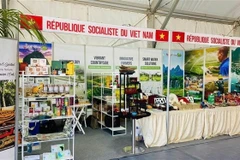
Vietnam is currently a major supplier of agricultural products, seafood, and garments to the Russian market. Vietnamese cuisine is also gaining increasing popularity in Russia, with around 1,000 Vietnamese restaurants and eateries in Moscow.

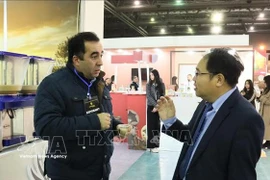
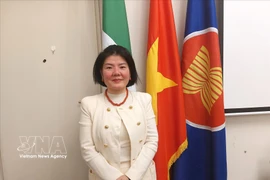
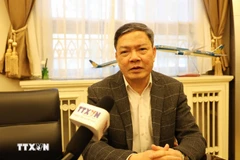
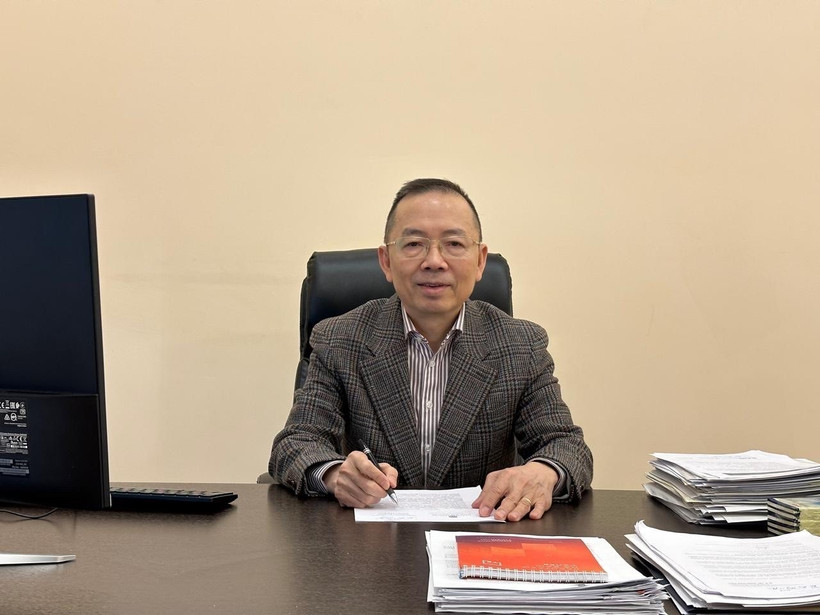
Vietnamese Trade Counsellor in Russia Duong Hoang Minh. Photo: VNA

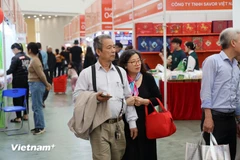
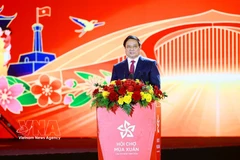
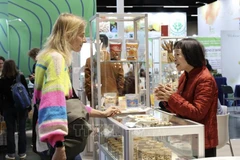
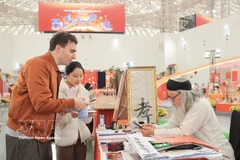
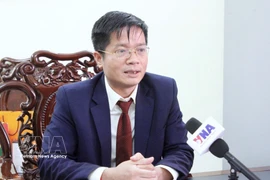
Hanoi, February 16 (VNA) – The first Glorious Spring Fair in Hanoi serves as a “dual lever” that not only fosters the development of domestic enterprises but also strengthens international connectivity and collaboration, said Vietnamese Trade Counsellor in Russia Duong Hoang Minh.

In an interview to Vietnam News Agency correspondents in Russia, Minh said in recent years, Russian fresh and frozen meat, seafood, and processed food products have gradually become familiar to Vietnamese consumers through modern distribution channels. Russian pharmaceuticals, service products, high-tech and digital solutions, and production machinery and equipment also see great potential in the Vietnamese market.

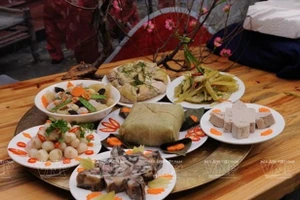
Meanwhile, he noted Vietnam is currently a major supplier of agricultural products, seafood, and garments to the Russian market. Vietnamese cuisine is also gaining increasing popularity in Russia, with around 1,000 Vietnamese restaurants and eateries in Moscow. Vietnamese agricultural produce, processed foods, and beverages such as tropical fruits, coffee, and seafood have become well known and favoured by Russian consumers. Branded products and goods of Vietnamese origin are appearing more frequently in Russian supermarkets and on e-commerce platforms.

However, the Trade Counsellor noted that many Vietnamese exports to Russia, including coffee, cashew nuts, and seafood, are still primarily shipped as raw materials without strong branding. Therefore, businesses should consider investing in production, processing, and brand-building in the Russian market to enhance added value and expand market share sustainably.

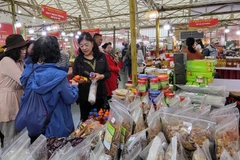
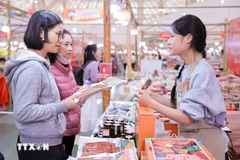
Regarding the Spring Fair, Minh expressed confidence that the event will play a vital role in promoting domestic enterprise development while creating opportunities for international cooperation. He emphasised three key benefits: improving product standards and fostering innovation; opening up opportunities for cooperation and technology transfer from international partners; and encouraging Vietnamese enterprises to invest in research and development, thereby driving innovation and building strong brands.

One of the key tasks of the Vietnamese Trade Office in Russia is to support domestic enterprises in accessing the market and identifying potential partners. The agency also proactively provides information about international trade fairs and exhibitions in Russia so that Vietnamese trade promotion agencies and businesses can participate and explore cooperation opportunities.

Another practical task involves compiling and updating lists of major Vietnamese trade fairs and exhibitions and sending them to Russia’s chambers of commerce and business associations, enabling them to dispatch business delegations to events in Vietnam. It also coordinates with relevant agencies, associations, and enterprises of Russia and Vietnam to organise seminars, forums, and business matching events.

Minh also shared plans for 2026, including organising a Vietnam Goods Week at a major supermarket chain in Russia in July; supporting Vietnamese business delegations to participate in the WorldFood Moscow exhibition in September; assisting Zarubezh-Expo in organising the “Expo Eurasia Vietnam 2026” industrial exhibition in June in Ho Chi Minh City within the framework of Vietbuild 2026; and supporting the Russian Export Centre in participating in the National Autumn Fair at the Vietnam Exhibition Center in late September or early October.

Through these activities, the Trade Counsellor expressed his hope of creating an effective platform for Vietnamese enterprises to grow, enhance product value, and build strong brands in the Russian market./.

VNA
See more

Industrial production surges in the first two months of 2026. (Photo: VNA)

Industrial production posts strong growth in first two months

According to the National Statistics Office (NSO) under the Ministry of Finance, the index of industrial production (IIP) in February was estimated to decrease 18.4% from the previous month but increase 1% year on year. Overall, in the January–February period, the IIP rose 10.4% compared with the same period last year.

A delegation from the Nghe An provincial People’s Committee inspects production and business activities at the VSIP Nghe An Industrial, Urban and Service Park. (Photo:nhandan.vn)

Nghe An steps up reforms to attract FDI

In 2025, the provincial People’s Committee licensed 25 new FDI projects and approved capital adjustments for 20 others, bringing the total newly registered and additional investment to more than 1 billion USD. Many large-scale projects in the Southeast Nghe An Economic Zone have already become operational, contributing to export growth, state budget revenues and job creation.

Nearly 35,500 enterprises are newly registered nationwide, with total registered capital reaching nearly 313.7 trillion VND and more than 167,500 registered workers. (Photo: VNA)

Nearly 35,500 new businesses set up in first two months

The enterprises registered combined capital of about 313.7 trillion VND and more than 167,500 employees. Compared with the same period last year, the number of new businesses surged by 70.7%, while registered capital rose by 36.1% and registered labour increased by 19.1%.

The yarn factory of Unitex Textile and Dyeing Company Limited applies new technology to optimise operations using an automated model. (Photo: VNA)

Resolution 68: International lessons for private sector development

A common feature in many successful economies is a fundamental shift in the perception of private enterprises. In countries such as Singapore, Germany, Republic of Korea (RoK) and China, private firms are viewed not mainly as entities requiring strict control but as development partners and key forces generating growth, jobs and innovation.

The production line of Regza Electronics Vietnam Co., Ltd. located in Dong Nai province. (Photo: VNA)

Vietnam’s overseas investment rises 2.3-fold in first two months

During the period, 36 new overseas projects were granted investment certificates with total registered capital from Vietnamese investors reaching 532.4 million USD, up 2.3 times compared to the same period last year. In addition, three projects adjusted their capital with an additional 7.8 million USD, 1.5 times higher than a year earlier.

Workers of PTSC Thanh Hoa check the system for crude oil imports. Vietnam saw strong increase in fuel imports in the first two months of this year. (Photo" VNA)

Vietnam records strong increase in fuel imports in two months

Statistics of Vietnam Customs showed that Vietnam spent more than 1.44 billion USD importing 2.18 million tonnes of petroleum products in the first two months of this year, representing a sharp increase of 31.4% and 43%, respectively, over the same period last year.

Prime Minister Pham Minh Chinh visits a macadamia cultivation model in Huoi Tao B village, Pu Nhi commune, Dien Bien province on March 8. (Photo: VNA)

PM requests boosting agricultural development in Northwestern region

PM Chinh encouraged local residents to explore additional crops and livestock suitable for intercropping in order to maximise land use efficiency. Farmers were also urged to strengthen cooperation with one another and with businesses by joining cooperatives, consolidating land resources and working together to expand production and improve incomes.

Farmers in the Mekong Delta province of An Giang harvest rice grown under the project 'Sustainable Development of One Million Hectares of High-Quality, Low-Emission Rice Associated with Green Growth in the Mekong Delta by 2030.' (Photo: VNA)

Promoting high-quality rice exports amid mounting challenges

According to the Ministry of Agriculture and Environment (MAE), an estimated 600,000 tonnes of rice worth 370 million USD was exported in January, up 12.4% in volume and 16.9% in value year-on-year. The average export price reached 616.6 USD per tonne, up 4%.