Steel industry faces challenges amid domestic focus shift

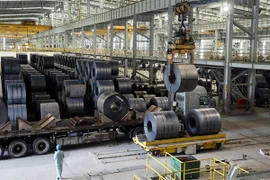
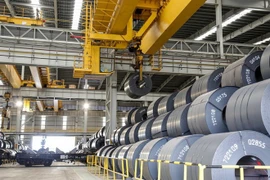
As Vietnamese steel companies pivot towards the domestic market due to weakening export demand, they are grappling with intense competition that has compressed profit margins across the sector.

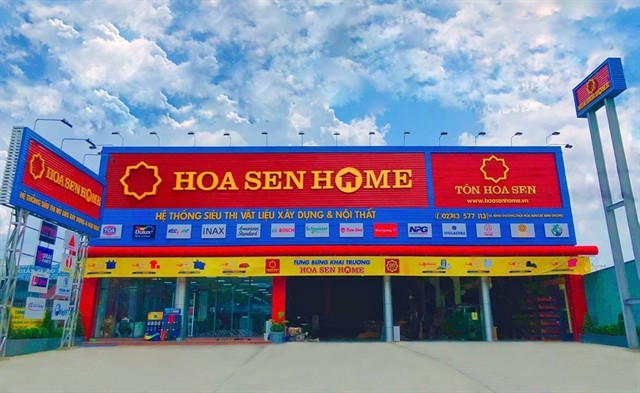
A store of Hoa Sen Group. (Photo hoasengroup.vn)

Hanoi (VNS/VNA) - As Vietnamese steel companies pivot towards the domestic market due to weakening export demand, they are grappling with intense competition that has compressed profit margins across the sector.

This strategic shift, prompted by difficult export conditions and increasing trade defence measures, aims to capitalise on previously overlooked growth segments within the domestic market.

At the end of 2025, the strategy to realign focus towards domestic sales showed some effectiveness, illustrating how major companies managed to grow their domestic revenue.

However, this shift has also highlighted the downside: overall industry gross margins have contracted due to fierce competition, which is increasing pressure on selling prices and negatively impacting the financial results of numerous firms.

For instance, Nam Kim Steel JSC (NKG) reported a 21% increase in domestic revenue for 2025, amounting to nearly 8.83 trillion VND (340 million USD), with domestic sales now accounting for 59.2% of its total revenue.

Conversely, export sales plummeted by 54.7%, dropping to 6.07 trillion VND and comprising just 40.8% of total revenue, down from 64.8% at the year’s start. This substantial decline has led to an overall revenue drop of 28.1% for Nam Kim, with profit after tax falling by 56.5%.

In light of these challenges, Nam Kim Steel also reported a loss of 9.34 billion VND in the fourth quarter of 2025, marking the first quarterly loss after ten consecutive profitable quarters, underscoring the impact of domestic competition and lower selling prices.

The company has responded by cautiously managing its short-term assets, reducing inventory by nearly 1.39 trillion VND, while increasing long-term construction costs significantly, reflecting investments in new projects.

Similar trends are observed across other major firms.

Hoa Sen Group (HSG) reported an 18% revenue decline to more than 8.38 trillion VND, with profit after tax down 62.3%.

Conversely, Tien Len Steel Corporation (TLH) faced even steeper challenges, with a staggering revenue drop of 53.2% in Q4 2025, resulting in a quarterly loss after three profitable quarters.

Analysts at BIDV Securities noted a clear disparity in the financial results of steel companies in 2025, where trading firms continue to find themselves at the lower end of profitability as steel prices remain at the bottom of the cycle, compounded by weak export demand and trade barriers.

In response to the domestic market’s competitive pressures, companies like Nam Kim are aggressively expanding their production capacity.

In 2025 alone, Nam Kim Steel’s long-term construction costs jumped to 4.44 trillion VND, primarily for the new Phu My Steel plant, scheduled to start operations in Q1 2026. This new facility is expected to boost Nam Kim’s production capacity significantly.

However, the challenges are not limited to production capacities.

As competitors like VNSteel and Dong A Steel also expand their operations, the oversupply in the domestic market may hinder the industry’s return to equilibrium.

Mirae Asset Securities has also highlighted the potential limits on achieving a supply-demand balance in the face of simultaneous capacity expansions by leading companies.

As the market evolves, firms are faced with increased operating costs as new plants come online, which will directly impact profitability in the initial stages of operation.

The financial pressures may be exacerbated by rising depreciation expenses that are typically recorded in the profit and loss statements once the plants become operational./.
VNA

See more

Industrial production surges in the first two months of 2026. (Photo: VNA)

Industrial production posts strong growth in first two months

According to the National Statistics Office (NSO) under the Ministry of Finance, the index of industrial production (IIP) in February was estimated to decrease 18.4% from the previous month but increase 1% year on year. Overall, in the January–February period, the IIP rose 10.4% compared with the same period last year.

A delegation from the Nghe An provincial People’s Committee inspects production and business activities at the VSIP Nghe An Industrial, Urban and Service Park. (Photo:nhandan.vn)

Nghe An steps up reforms to attract FDI

In 2025, the provincial People’s Committee licensed 25 new FDI projects and approved capital adjustments for 20 others, bringing the total newly registered and additional investment to more than 1 billion USD. Many large-scale projects in the Southeast Nghe An Economic Zone have already become operational, contributing to export growth, state budget revenues and job creation.

Nearly 35,500 enterprises are newly registered nationwide, with total registered capital reaching nearly 313.7 trillion VND and more than 167,500 registered workers. (Photo: VNA)

Nearly 35,500 new businesses set up in first two months

The enterprises registered combined capital of about 313.7 trillion VND and more than 167,500 employees. Compared with the same period last year, the number of new businesses surged by 70.7%, while registered capital rose by 36.1% and registered labour increased by 19.1%.

The yarn factory of Unitex Textile and Dyeing Company Limited applies new technology to optimise operations using an automated model. (Photo: VNA)

Resolution 68: International lessons for private sector development

A common feature in many successful economies is a fundamental shift in the perception of private enterprises. In countries such as Singapore, Germany, Republic of Korea (RoK) and China, private firms are viewed not mainly as entities requiring strict control but as development partners and key forces generating growth, jobs and innovation.

The production line of Regza Electronics Vietnam Co., Ltd. located in Dong Nai province. (Photo: VNA)

Vietnam’s overseas investment rises 2.3-fold in first two months

During the period, 36 new overseas projects were granted investment certificates with total registered capital from Vietnamese investors reaching 532.4 million USD, up 2.3 times compared to the same period last year. In addition, three projects adjusted their capital with an additional 7.8 million USD, 1.5 times higher than a year earlier.

Workers of PTSC Thanh Hoa check the system for crude oil imports. Vietnam saw strong increase in fuel imports in the first two months of this year. (Photo" VNA)

Vietnam records strong increase in fuel imports in two months

Statistics of Vietnam Customs showed that Vietnam spent more than 1.44 billion USD importing 2.18 million tonnes of petroleum products in the first two months of this year, representing a sharp increase of 31.4% and 43%, respectively, over the same period last year.

Prime Minister Pham Minh Chinh visits a macadamia cultivation model in Huoi Tao B village, Pu Nhi commune, Dien Bien province on March 8. (Photo: VNA)

PM requests boosting agricultural development in Northwestern region

PM Chinh encouraged local residents to explore additional crops and livestock suitable for intercropping in order to maximise land use efficiency. Farmers were also urged to strengthen cooperation with one another and with businesses by joining cooperatives, consolidating land resources and working together to expand production and improve incomes.

Farmers in the Mekong Delta province of An Giang harvest rice grown under the project 'Sustainable Development of One Million Hectares of High-Quality, Low-Emission Rice Associated with Green Growth in the Mekong Delta by 2030.' (Photo: VNA)

Promoting high-quality rice exports amid mounting challenges

According to the Ministry of Agriculture and Environment (MAE), an estimated 600,000 tonnes of rice worth 370 million USD was exported in January, up 12.4% in volume and 16.9% in value year-on-year. The average export price reached 616.6 USD per tonne, up 4%.