Spring Fair 2026: Lessons from Egypt, prospects for bilateral cooperation

A growing number of Egyptian companies are developing advanced technology products such as smart home automation systems, electric vehicle chargers and specialised IoT sensors used in industry, agriculture and health care, creating promising opportunities for cooperation with Vietnam.

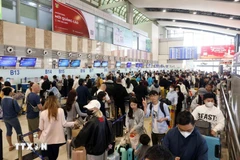
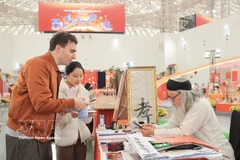
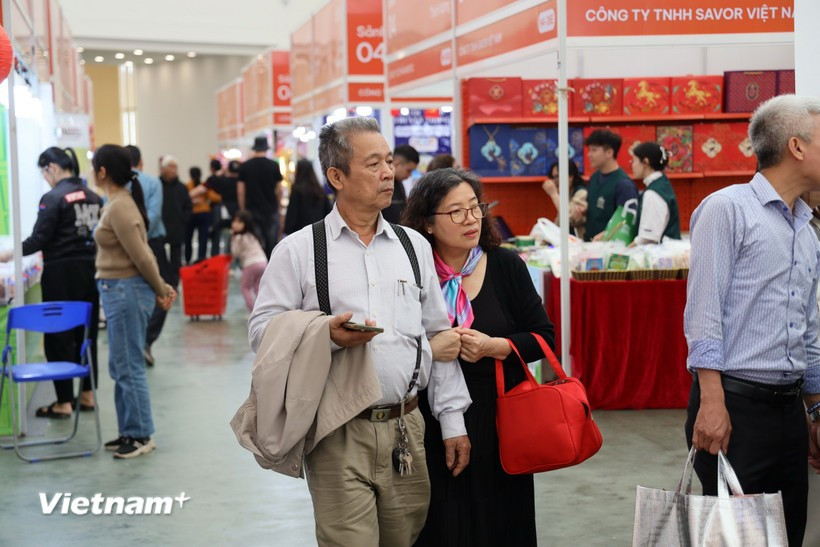
Customers at the Spring Fair 2026 in Hanoi (Photo: VNA)

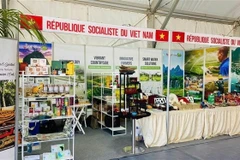
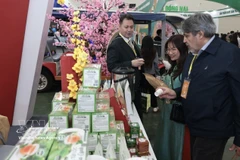
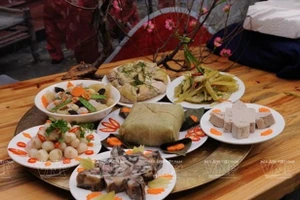
Hanoi (VNA) – The Spring Fair 2026, held for the first time in the capital city of Hanoi, has attracted a wide range of enterprises, cooperatives, craft villages and production and business units from multiple sectors.

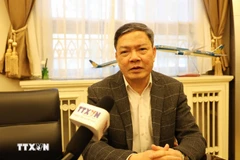
The diversity of products on display, combined with increasingly professional presentation and promotional methods, has helped bring many local brands closer to both domestic and international consumers. On this occasion, the Vietnam News Agency correspondents in Cairo interviewed Nguyen Duy Hung, head of the Vietnam Trade Office in Egypt, about experience gained from trade promotion activities, product strengths, and opportunities as well as challenges in business cooperation between the two countries.

Regarding Egyptian products that could be introduced to Vietnamese consumers through the Spring Fair and similar events in the future, Hung noted that Egypt has strengths in agricultural products, crop varieties and processed fruits. However, the country’s manufacturing sector is still undergoing restructuring, and despite notable progress in recent years, relatively few Egyptian products are widely exported globally.

Products with strong potential for promotion at fairs in Vietnam include fruits such as oranges, mandarins, mangoes, grapes and pomegranates, as well as agricultural produce including potatoes, onions and strawberries. At present, Vietnam has opened its market to Egyptian oranges, mandarins and grapes, while other products may require additional time before entering the Vietnamese market.

Other goods with potential in Vietnam include fertilisers, electrical cables, household appliances, textiles, ready-made garments and certain plastic products. Egypt is also rich in natural resources, including natural gas, petroleum, phosphate ore, iron ore and minerals such as gold, black sand and coal, which could help meet Vietnam’s demand for imported raw materials.

According to Hung, a growing number of Egyptian companies are developing advanced technology products such as smart home automation systems, electric vehicle chargers and specialised IoT sensors used in industry, agriculture and health care, creating promising opportunities for cooperation with Vietnam. Other potential areas of technological collaboration include artificial intelligence, embedded software, data analytics and fibre-optic networks.

Vietnamese products that are popular in Egypt are mainly raw materials or goods subject to relatively low import duties, including cashew nuts, pepper, desiccated coconut, green coffee beans, cinnamon, star anise and frozen fish fillets.

High import tariffs on finished Vietnamese products entering Egypt, in the absence of a bilateral free trade agreement, remain a major challenge for Vietnamese exporters. Additional obstacles include language barriers, cultural and religious differences, and geographical distance, which can make it difficult for Vietnamese businesses to promote products effectively in the Egyptian market.

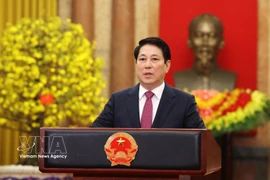
The diplomat said 2026 is the first year the two countries implement agreements regarding the upgrading of their relations to a Comprehensive Partnership following the state visit to Egypt by State President Luong Cuong. The agreements aim to boost trade and investment, significantly increase bilateral trade turnover and facilitate market access for goods from both sides.

The Vietnam Trade Office in Egypt has already outlined trade promotion activities for the year, focusing on cooperation with the Federation of Egyptian Chambers of Commerce (FEDCOC) and several provincial chambers of commerce in Cairo, Giza, Alexandria and the Red Sea region to organise quarterly trade promotion events connecting businesses and investment opportunities.

Efforts will also be made to invite Egyptian business delegations to participate in trade fairs and international exhibitions in Vietnam. At the same time, support will be provided for Vietnamese enterprises to attend international exhibitions in Egypt./.

VNA
See more

Industrial production surges in the first two months of 2026. (Photo: VNA)

Industrial production posts strong growth in first two months

According to the National Statistics Office (NSO) under the Ministry of Finance, the index of industrial production (IIP) in February was estimated to decrease 18.4% from the previous month but increase 1% year on year. Overall, in the January–February period, the IIP rose 10.4% compared with the same period last year.

A delegation from the Nghe An provincial People’s Committee inspects production and business activities at the VSIP Nghe An Industrial, Urban and Service Park. (Photo:nhandan.vn)

Nghe An steps up reforms to attract FDI

In 2025, the provincial People’s Committee licensed 25 new FDI projects and approved capital adjustments for 20 others, bringing the total newly registered and additional investment to more than 1 billion USD. Many large-scale projects in the Southeast Nghe An Economic Zone have already become operational, contributing to export growth, state budget revenues and job creation.

Nearly 35,500 enterprises are newly registered nationwide, with total registered capital reaching nearly 313.7 trillion VND and more than 167,500 registered workers. (Photo: VNA)

Nearly 35,500 new businesses set up in first two months

The enterprises registered combined capital of about 313.7 trillion VND and more than 167,500 employees. Compared with the same period last year, the number of new businesses surged by 70.7%, while registered capital rose by 36.1% and registered labour increased by 19.1%.

The yarn factory of Unitex Textile and Dyeing Company Limited applies new technology to optimise operations using an automated model. (Photo: VNA)

Resolution 68: International lessons for private sector development

A common feature in many successful economies is a fundamental shift in the perception of private enterprises. In countries such as Singapore, Germany, Republic of Korea (RoK) and China, private firms are viewed not mainly as entities requiring strict control but as development partners and key forces generating growth, jobs and innovation.

The production line of Regza Electronics Vietnam Co., Ltd. located in Dong Nai province. (Photo: VNA)

Vietnam’s overseas investment rises 2.3-fold in first two months

During the period, 36 new overseas projects were granted investment certificates with total registered capital from Vietnamese investors reaching 532.4 million USD, up 2.3 times compared to the same period last year. In addition, three projects adjusted their capital with an additional 7.8 million USD, 1.5 times higher than a year earlier.

Workers of PTSC Thanh Hoa check the system for crude oil imports. Vietnam saw strong increase in fuel imports in the first two months of this year. (Photo" VNA)

Vietnam records strong increase in fuel imports in two months

Statistics of Vietnam Customs showed that Vietnam spent more than 1.44 billion USD importing 2.18 million tonnes of petroleum products in the first two months of this year, representing a sharp increase of 31.4% and 43%, respectively, over the same period last year.

Prime Minister Pham Minh Chinh visits a macadamia cultivation model in Huoi Tao B village, Pu Nhi commune, Dien Bien province on March 8. (Photo: VNA)

PM requests boosting agricultural development in Northwestern region

PM Chinh encouraged local residents to explore additional crops and livestock suitable for intercropping in order to maximise land use efficiency. Farmers were also urged to strengthen cooperation with one another and with businesses by joining cooperatives, consolidating land resources and working together to expand production and improve incomes.

Farmers in the Mekong Delta province of An Giang harvest rice grown under the project 'Sustainable Development of One Million Hectares of High-Quality, Low-Emission Rice Associated with Green Growth in the Mekong Delta by 2030.' (Photo: VNA)

Promoting high-quality rice exports amid mounting challenges

According to the Ministry of Agriculture and Environment (MAE), an estimated 600,000 tonnes of rice worth 370 million USD was exported in January, up 12.4% in volume and 16.9% in value year-on-year. The average export price reached 616.6 USD per tonne, up 4%.