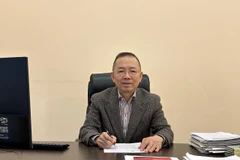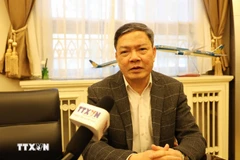
Hanoi (VNA) – Effective business matchmaking and the application of digital technologies are key factors Vietnam can draw upon to enhance trade promotion efficiency, according to Nguyen Viet Anh, Vietnam’s Trade Counsellor in Prague.
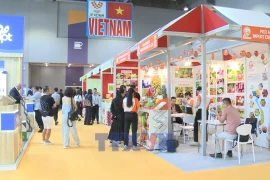
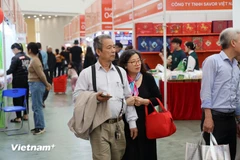
In an interview with Vietnam News Agency correspondents in the Czech Republic, Anh highlighted the host country’s longstanding and systematic experience in organising international trade fairs and exhibitions, notably through the model of the Brno Exhibition Centre (BVV). Established in 1928, it is one of Europe’s largest exhibition venues, hosting around 50 trade fairs annually across diverse sectors, including industry, agriculture, food processing, high technology and defence. A distinctive feature of the Czech model, he noted, is the close coordination between the State, enterprises and industry associations. The State plays a guiding and policy-support role, often acting as the sponsor of major events; businesses serve as the core exhibitors and networking actors; while professional associations and international organisations enhance technical depth and attract global participation. Czech trade fairs function not merely as product showcases but as platforms for B2B engagement, technology transfer and supply chain development. This integrated approach offers valuable lessons for Vietnam in professionalising large-scale events such as the Spring Fair.
Regarding products suitable for introduction to Vietnam, the counsellor identified machinery and industrial equipment, including mechanical tools, automation systems, agricultural machinery and public transport vehicles such as buses and trams, as areas of Czech strength aligned with Vietnam’s modernisation needs. High-quality consumer goods, including beer and beverages, dairy products, confectionery, pharmaceuticals, cosmetics and Bohemian crystal, can also appeal to Vietnam’s expanding middle class.
He underscored that the bilateral trade structure is largely complementary rather than directly competitive. The EU–Vietnam Free Trade Agreement (EVFTA) has significantly reduced tariffs, enhancing price competitiveness. However, challenges remain, including technical barriers, sanitary and phytosanitary standards, limited brand recognition of Czech products in Vietnam, high logistics costs and the time required to establish distribution networks.
In the context of smart consumption trends, the Czech Republic also offers competitive high-tech products and solutions, particularly in information technology and cybersecurity, nanotechnology applications in healthcare and environmental protection, medical equipment and biotechnology, renewable energy and environmental technologies, as well as smart mobility and electric vehicle solutions.
Introducing these products at the Spring Fair should not focus solely on sales but rather on fostering partnerships, joint ventures and technology transfer, he emphasised, adding that Vietnamese enterprises can become distribution partners and technology recipients, thereby gradually enhancing the scientific and technological content of domestic production.
Conversely, Vietnamese products such as garments, footwear, coffee, tropical agricultural produce, aquatic products, processed foods and electronic components have gained a foothold in the Czech market. A sizeable Vietnamese community in the Czech Republic provides an initial distribution channel, while EVFTA preferences and improved product quality facilitate market access. Nonetheless, strict EU technical standards, limited market intelligence and intense competition remain challenges.
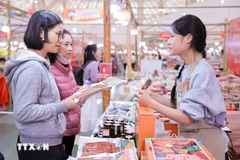
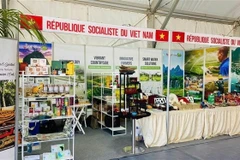
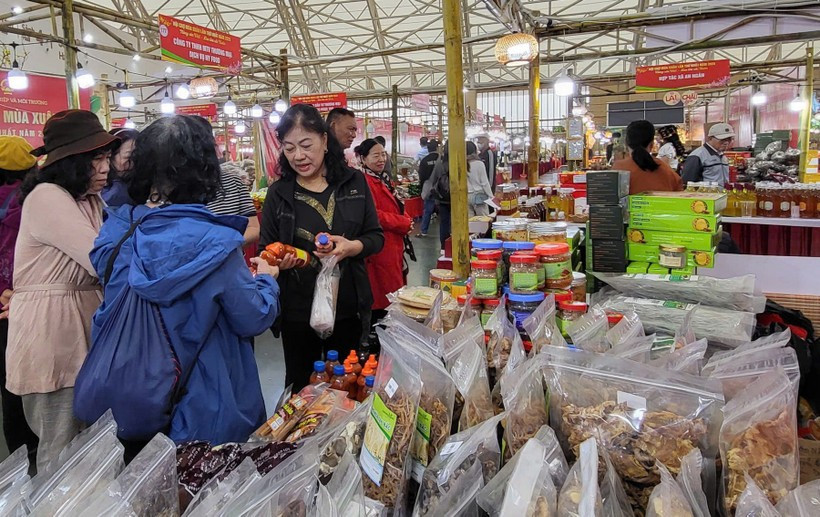
Anh expressed confidence that the Spring Fair 2026 will create a healthy competitive environment within Vietnam, enabling domestic enterprises to benchmark against international products, improve quality and design, and strengthen technological capabilities. Beyond a consumer event, the fair is expected to serve as a strategic platform for deeper trade, investment and high-tech cooperation, contributing to more substantive and sustainable Vietnam–Czech Republic economic ties./.
See more
Pepper exports poised for strong gains despite tightening supply
At this time of the year, farmers in major pepper-growing regions across the country are entering the harvest season for the 2026 crop. With farm-gate prices remaining high, the sector is optimistic that export turnover will continue to grow.
Budget revenue from foreign trade rises 12.3% in Jan–Feb
The customs authority said it will intensify monitoring of revenue sources, tighten control over customs valuation, origin and tax policies, and strengthen risk analysis to prevent tax evasion and revenue losses.
Vietnam Airlines to launch direct Ho Chi Minh City–Phuket route from April 2
Flight VN621 will depart from Ho Chi Minh City at 16:00 and arrive in Phuket at 17:50. On the return leg, flight VN620 will leave Phuket at 18:45 and land in Ho Chi Minh City at 20:55.
YADEA picks Vietnam as electric motorbike production hub in Southeast Asia
Liu Jia, General Director of YADEA Vietnam, said the factory is a key component of YADEA’s global strategy, designed to primarily serve the Vietnamese market in the initial stage, while gradually expanding its capacity to support exports to neighbouring Southeast Asian countries.
Timely regulation keeps fuel market stable as hoarding declines
Since March 8, following the latest price adjustment by the Ministry of Industry and Trade (MoIT) and the Ministry of Finance (MoF), cases of fuel hoarding and queues for stockpiling have declined.
Railway transport company raises fares amid fuel price surge
A VRT representative said the adjustment had been carefully considered to partly share the burden of rising fuel costs while still ensuring service quality as well as safe and stable operations.
Industrial production posts strong growth in first two months
According to the National Statistics Office (NSO) under the Ministry of Finance, the index of industrial production (IIP) in February was estimated to decrease 18.4% from the previous month but increase 1% year on year. Overall, in the January–February period, the IIP rose 10.4% compared with the same period last year.
Nghe An steps up reforms to attract FDI
In 2025, the provincial People’s Committee licensed 25 new FDI projects and approved capital adjustments for 20 others, bringing the total newly registered and additional investment to more than 1 billion USD. Many large-scale projects in the Southeast Nghe An Economic Zone have already become operational, contributing to export growth, state budget revenues and job creation.
Nearly 35,500 new businesses set up in first two months
The enterprises registered combined capital of about 313.7 trillion VND and more than 167,500 employees. Compared with the same period last year, the number of new businesses surged by 70.7%, while registered capital rose by 36.1% and registered labour increased by 19.1%.
Resolution 68: International lessons for private sector development
A common feature in many successful economies is a fundamental shift in the perception of private enterprises. In countries such as Singapore, Germany, Republic of Korea (RoK) and China, private firms are viewed not mainly as entities requiring strict control but as development partners and key forces generating growth, jobs and innovation.
Vietnam steps up cooperation with US businesses to attract international capital
Deputy Minister of Finance Nguyen Duc Chi expressed his hope that with their strengths in technology and international experience, US businesses can contribute significantly to the modernisation of Vietnam’s financial infrastructure and the development of technological solutions for the capital market.
Fuel import tariff proposed to be cut to 0% to stabilise supply
The draft proposes cutting the MFN tariff on unleaded motor gasoline and gasoline blending components such as naphtha and reformate from 10% to 0%. The tariff on diesel fuel, fuel oil, jet fuel and kerosene is also proposed to fall from 7% to 0%.
Rice exports up 5% in volume in first two months of 2026
In the first two months of the year, rice exports reached 1.3 million tonnes valued at 599.3 million USD, up 5% in volume but down 11.2% in value compared with the same period last year.
Reference exchange rate up 2 VND at week’s beginning
The State Bank of Vietnam set the daily reference exchange rate at 25,059 VND/USD on March 9, up 2 VND from the last working day of the previous week.
Vietnam’s overseas investment rises 2.3-fold in first two months
During the period, 36 new overseas projects were granted investment certificates with total registered capital from Vietnamese investors reaching 532.4 million USD, up 2.3 times compared to the same period last year. In addition, three projects adjusted their capital with an additional 7.8 million USD, 1.5 times higher than a year earlier.
Vietnam’s banking brand value surges to 14.7 billion USD in 2026
According to Brand Finance’s Banking 500 2026, Vietnam is represented by 13 banking brands in the global rankings, seven of which demonstrate notable double digit-growth over the past year, reflecting a progressive financial ecosystem.
Vietnam records strong increase in fuel imports in two months
Statistics of Vietnam Customs showed that Vietnam spent more than 1.44 billion USD importing 2.18 million tonnes of petroleum products in the first two months of this year, representing a sharp increase of 31.4% and 43%, respectively, over the same period last year.
Small consumer loan threshold proposed to increase to 400 million VND
A draft circular proposes increasing the threshold to 400 million VND for loans issued by credit institutions and 200 million VND for those provided by people’s credit funds.
PM requests boosting agricultural development in Northwestern region
PM Chinh encouraged local residents to explore additional crops and livestock suitable for intercropping in order to maximise land use efficiency. Farmers were also urged to strengthen cooperation with one another and with businesses by joining cooperatives, consolidating land resources and working together to expand production and improve incomes.
Promoting high-quality rice exports amid mounting challenges
According to the Ministry of Agriculture and Environment (MAE), an estimated 600,000 tonnes of rice worth 370 million USD was exported in January, up 12.4% in volume and 16.9% in value year-on-year. The average export price reached 616.6 USD per tonne, up 4%.